Water Damage Restoration in Atlanta, GA
Atlanta is the economic and cultural capital of the Southeast, home to nearly 500,000 residents within city limits and over 6 million across the greater metropolitan area. Characterized by dense historic tree canopies, rolling Piedmont terrain, and complex urban watersheds such as Peachtree Creek and Proctor Creek, Atlanta properties face severe seasonal water runoff challenges and aging municipal infrastructure.
Atlanta, GA Coverage Facts
- Jurisdiction
- Fulton County
- Target Response Time
- 45 to 60 Minutes On-Site
- Disaster Coverage
- 24/7, 365 Days a Year
- Covered ZIP Codes
- 30305, 30309, 30318, 30327
Housing Architecture & Water Risks in Atlanta, GA
Residential architecture in Atlanta spans historic 1920s craftsman bungalows in Inman Park and Virginia-Highland to mid-century ranches in Collier Hills and sprawling multi-million dollar estates throughout Buckhead. Many established homes feature deep basements or crawl spaces with vintage cast-iron waste stacks and pressurized copper plumbing susceptible to pinhole corrosion and sewer backflow.
Key Local Restoration Issues in Atlanta
Peachtree Creek & Urban Watershed Flash Flooding
Intense convective summer storms deliver localized rainfall exceeding 2 to 3 inches per hour, rapidly overwhelming urban drainage and causing Peachtree Creek to inundate basement foundations and low-lying ground-floor living areas.
Piedmont Red Clay Soil Foundation Hydrostatic Pressure
Atlanta rests on dense, expansive Piedmont red clay that swells dramatically when saturated, exerting immense lateral hydrostatic pressure against foundation walls and forcing groundwater through mortar joints and basement slabs.
Mature Hardwood Tree Canopy Roof Truss Impacts
Severe frontal windstorms and summer downbursts regularly bring down massive oak and pine limbs across Buckhead and Midtown, crushing structural roof trusses and allowing torrential rainwater to pour directly into finished living spaces.
Regional Climate & Weather Risks in Atlanta
Geology, Soil & Foundation Dynamics in Atlanta
Building Stock & Primary Dispatch Triggers in Atlanta
Historic southern craftsman bungalows, stately brick colonials on crawlspaces, modern infill townhomes, and suburban master-planned communities.
- •Crawlspace humidity saturation and mold proliferation on structural subflooring
- •Sewer lateral line backups exacerbated by tree root intrusion in mature neighborhoods
- •Burst copper supply lines during sudden winter freezes in unconditioned spaces
- •Attic HVAC air handler condensate pan overflows during hot, humid summer months
Local Water & Infrastructure Profile: Atlanta
Local Response & Property Access Protocols in Atlanta
Insurance Claim Documentation & Billing Guidelines in Georgia
In Georgia, water mitigation and insurance restoration claims are overseen by the Georgia Office of Insurance and Safety Fire Commissioner under O.C.G.A. § 33-4-6. Carriers operating in Georgia must acknowledge receipt of a loss notification within 15 business days and investigate claims with reasonable promptness, with statutory penalties applying if claims are delayed or denied in bad faith. Homeowners maintain the legal authority to select their own emergency restoration company. In Georgia's humid climate, rapid emergency water extraction and high-capacity dehumidification are critical to prevent microbial amplification within 48 to 72 hours. Certified restoration contractors supply adjusters with digital moisture baselines, structural drying logs, and itemized estimates that satisfy all standard HO-3 policy proof-of-loss requirements. Under Georgia Office of Insurance and Safety Fire Commissioner regulations, emergency mitigation must be meticulously documented to support covered water damage claims. Technicians compile daily psychrometric records measuring grains per pound (GPP), relative humidity, and temperature to confirm that drying chambers meet IICRC S500 desiccation targets. In Georgia's warm, humid climate, rapid moisture removal and EPA-registered antimicrobial applications are detailed in itemized Xactimate invoices, enabling direct insurer billing and rapid claim settlement for residential and commercial policyholders.
Policyholder Rights & Independent Contractor Selection in Georgia
Under Georgia insurance regulations, residential and commercial property owners maintain the full legal authority to hire any licensed, independent disaster restoration contractor of their choice. Insurance carriers and claims adjusters are prohibited from steering or mandating the use of preferred network vendors. WaterRestore Pro dispatches certified local mitigation specialists who adhere strictly to ANSI/IICRC S500 standards, recording daily psychrometric logs, moisture baselines, and thermal imaging scans. All repair scopes are compiled using standardized Xactimate line items and submitted directly to your insurance company, supporting direct carrier billing and protecting homeowners from upfront costs on covered peril claims.
Common Emergency Calls in Atlanta
Local ProtocolWater Damage Restoration→
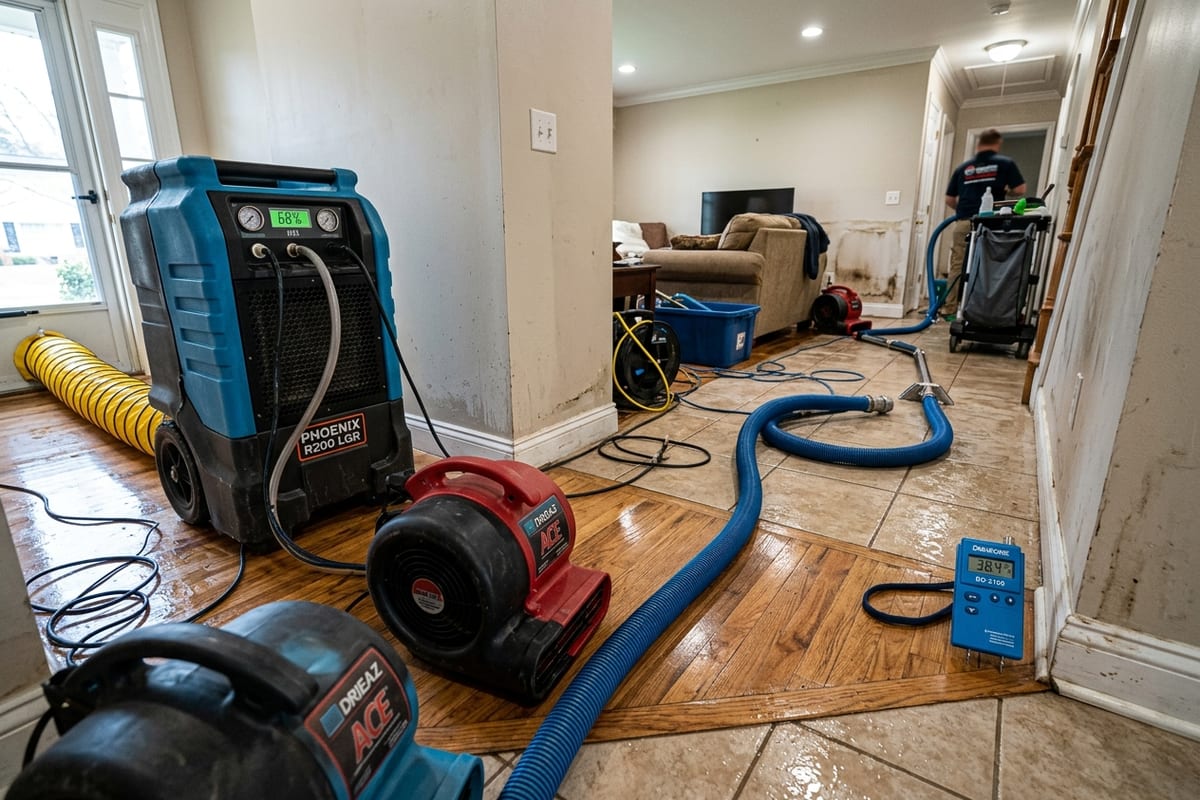
Professional water damage restoration stops progressive structural deterioration, extracts standing water with truck-mounted pumps, and dries internal wall cavities using industrial dehumidifiers within 72 hours to prevent hazardous mold growth.
 Local Protocol
Emergency Water Extraction→
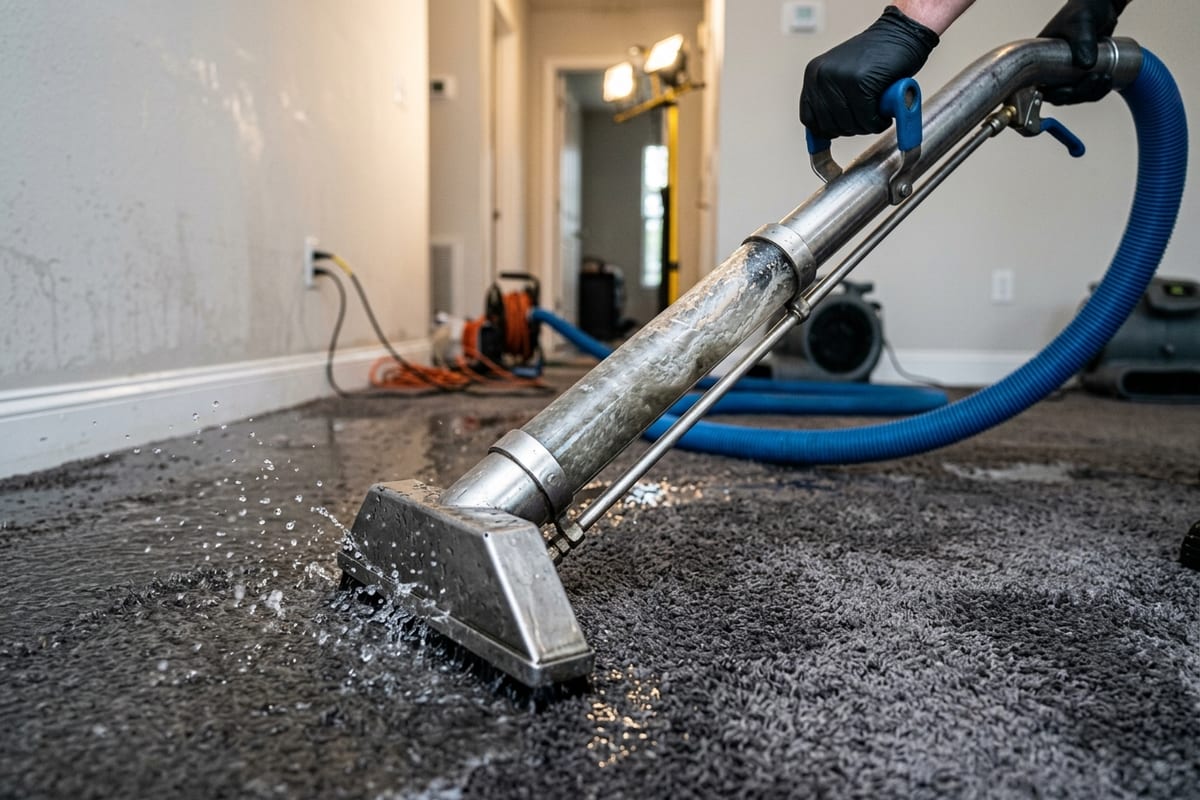
Emergency water extraction uses heavy-duty submersible pumps and truck-mounted vacuum units to physically extract hundreds of gallons of standing water per hour from flooded homes and businesses before structural framing absorbs it.
 Local Protocol
Mold Remediation & Removal→
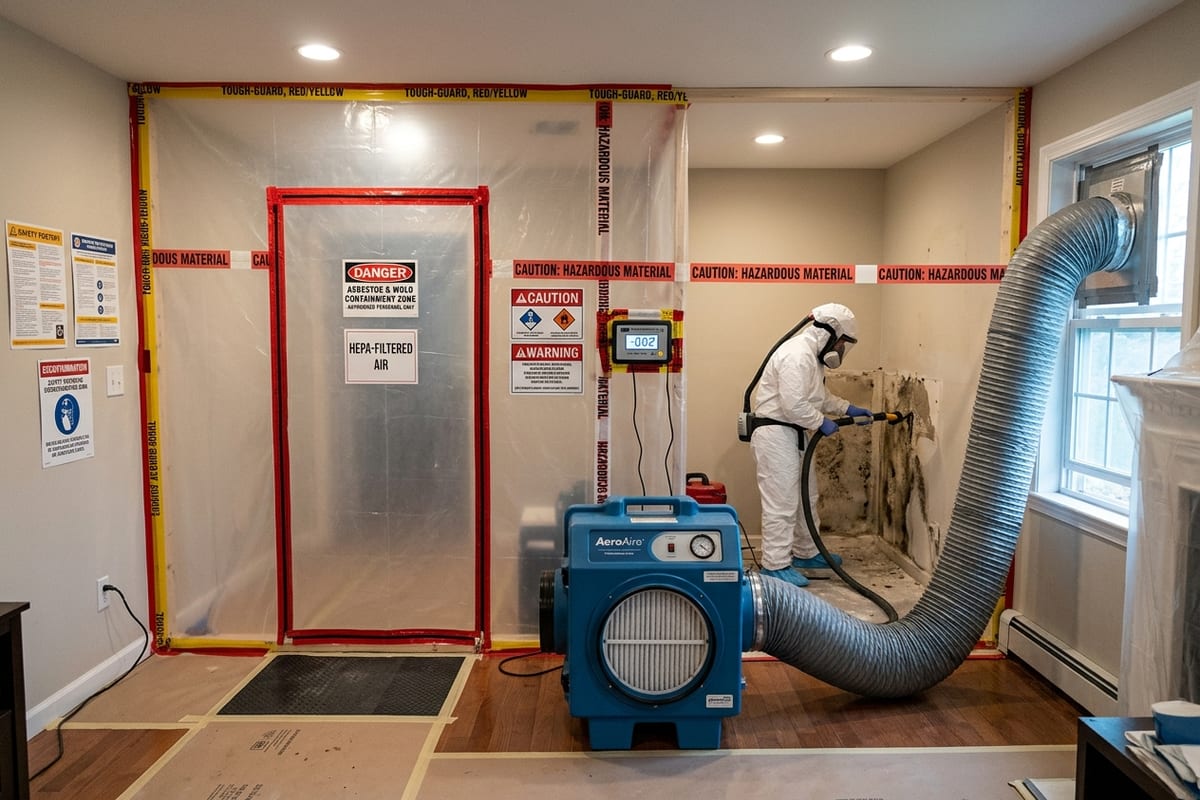
Certified mold remediation isolates active fungal colonies under negative air pressure, safely removes colonized building materials, and purifies indoor air with HEPA scrubbers to eliminate mycotoxins and prevent recurrence.
 Local Protocol
Sewage Backup & Biohazard Cleanup→
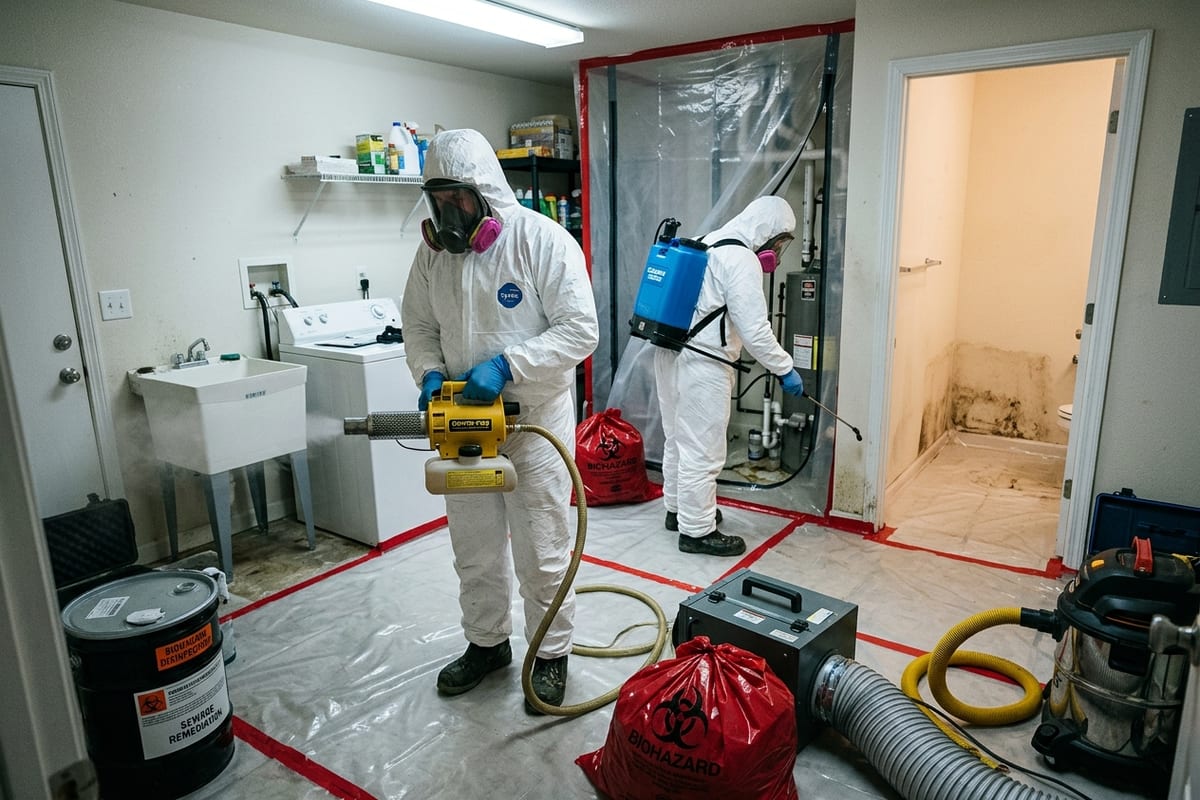
Sewage cleanup safely extracts hazardous Category 3 black water containing dangerous bacteria and pathogens, removes saturated porous building materials, and sanitizes contaminated surfaces with broad-spectrum disinfectants.
Check 45–60 Min Response Time for Your Atlanta ZIP Code
WaterRestore Pro dispatches IICRC-certified emergency teams across Fulton County 24 hours a day, 365 days a year. Verify rapid on-site coverage for your postal code:
Check Your ZIP Code Coverage
Verify immediate 45–60 minute emergency water extraction dispatch across our 50-state nationwide coverage network.
Frequently Asked Questions in Atlanta, GA
How do you remediate crawlspace mold and moisture in Atlanta homes?+
Atlanta's Georgia red clay traps water against foundations, while humid summer air through crawlspace vents causes heavy condensation on joists. WaterRestore Pro extracts water, applies EPA-registered antimicrobials, runs commercial desiccant dehumidifiers, and installs 20-mil vapor barriers.
Why do HVAC condensate leaks cause ceiling collapses in Atlanta?+
During Atlanta's humid summers, air conditioning systems produce gallons of condensation daily. If the primary condensate line clogs with algae and the secondary drain pan fails, water overflows, soaking drywall ceilings until they collapse. WaterRestore Pro extracts water and dries structural framing.
Will Georgia homeowners insurance cover water damage from a burst pipe?+
Yes, sudden and accidental pipe ruptures are covered under standard HO-3 policies. WaterRestore Pro provides thermal imaging proof, moisture drying logs, and itemized Xactimate estimates directly to your insurance adjuster.
Nearby Communities We Serve:
Standing Water in Your Home? Minutes Count.
Emergency water extraction units are on call 24 hours a day across all major metropolitan service areas. Call now for priority dispatch.