Commercial Structural Drying & Dehumidification
Structural drying uses industrial low-grain refrigerant (LGR) dehumidifiers, centrifugal air movers, and moisture sensors to draw bound moisture out of concrete foundations, wood framing, and subfloors to prevent permanent decay.
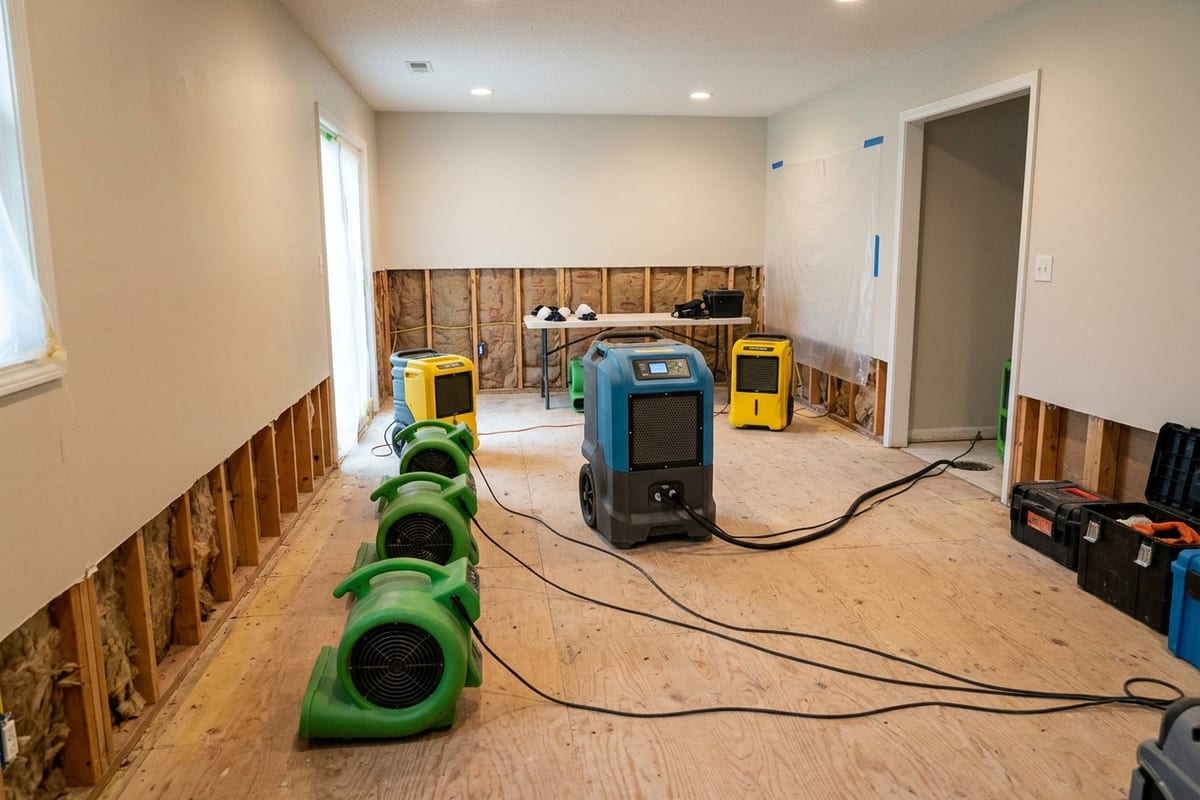
Understanding Structural Drying & Dehumidification
Physical water extraction removes surface water, but building materials absorb hundreds of gallons within their cellular structures. If relative humidity remains elevated, wooden wall studs warp, subfloors delaminate, and drywall loses structural integrity.
WaterRestore Pro deploys commercial-grade drying systems engineered for high-temperature and high-humidity environments. By controlling the psychrometric environment—temperature, relative humidity, and airflow velocity—our partners safely draw moisture out of dense structural components without causing over-drying cracks.
Structural Drying & Dehumidification at a Glance
- Target Dispatch Window
- 45 to 60 Minutes On-Site Nationwide
- Standard Drying Duration
- 3 to 5 Days Continuous Dehumidification
- Certified Standards
- IICRC S500 Water / S520 Mold Guidelines
- Insurance Compatibility
- Direct Xactimate Billing with All Major Carriers
Signs You Require Structural Drying & Dehumidification
If you observe any of the following symptoms in your home, professional mitigation should begin immediately to limit permanent structural degradation:
What Happens During the Structural Drying & Dehumidification Process?
Step 1: Comprehensive Psychrometric Baseline
Technicians measure ambient temperature, relative humidity, and grains per pound (GPP) of moisture to calculate the optimal drying setup.
Step 2: Directional Air Mover Placement
Centrifugal air movers are positioned at precise angles along walls to sweep away the boundary layer of moist air, accelerating evaporation.
Step 3: LGR & Desiccant Moisture Removal
Heavy-duty low-grain refrigerant dehumidifiers condense moisture vapor out of the air, pumping it safely into drains.
Step 4: Daily Moisture Chamber Auditing
Every 24 hours, technicians take pin and pinless moisture readings across framing to document the drying curve until dry standard is certified.
What Dictates the Cost of Structural Drying & Dehumidification?
Because water migration depth and contamination levels vary widely between properties, disaster restoration cannot be accurately quoted with flat rates over the phone. Certified technicians evaluate four objective factors:
Equipment Quantity & Electrical Demand
Large commercial spaces or multi-room flood disasters require multiple 20-amp circuits and arrays of industrial dehumidifiers.
Dense vs. Porous Materials
Thick hardwood and concrete slabs require slower, deeper drying cycles than standard gypsum drywall.
Number of Days to Reach Dry Standard
Drying duration typically ranges from 3 to 5 days, billed under standardized insurance itemized daily equipment rates.
Drying Timeline & Restoration Estimation Matrix
| Water Category | Standard Drying Timeline | Commercial Equipment Deployed | Material Salvageability | Primary Cost Drivers |
|---|---|---|---|---|
| Category 1 (Clean Water) | 3 to 5 Days | High-velocity centrifugal air movers, Low-Grain Refrigerant (LGR) dehumidifiers, weighted extraction tools. | High Salvageability: Drywall, baseboards, framing, and clean carpets are dried in-place without demolition if addressed within 48h. | Square footage of affected rooms, number of drying units deployed, equipment running days, thermal moisture mapping logs. |
| Category 2 (Grey Water) | 4 to 6 Days | Commercial LGR dehumidifiers, negative air scrubbers with HEPA filtration, botanical antimicrobial ULV foggers. | Selective Salvage: Carpet padding removed and discarded; carpets disinfected; structural framing and subfloor saved. | Padding disposal, antimicrobial applications, targeted flood cuts (24-inch drywall cuts), extended drying duration. |
| Category 3 (Black Water) | 5 to 7+ Days | Negative pressure air scrubbers, desiccant dehumidifiers, hospital-grade biocidal washes, full Level C PPE. | Non-Salvageable: All saturated porous materials (carpet, pad, drywall, insulation) must be removed per health codes. | Hazardous waste disposal, containment barriers, controlled demolition, thorough antimicrobial scrub, reconstruction. |
Direct Insurance Billing Notice (Xactimate Pricing Standard):
Restoration contractors utilize Xactimate®—the standardized estimating software used by State Farm, Allstate, Travelers, Liberty Mutual, and all major insurance carriers—ensuring line-item pre-negotiated rates for equipment, labor, and materials.
Homeowner Action Guidelines
Safe Actions While Waiting
- •Leave commercial drying equipment running continuously 24 hours a day as set by technicians; turning it off resets the evaporation cycle.
- •Keep windows closed if outdoor humidity is higher than indoor conditioned air.
Hazardous: Do Not Attempt
- •Do not reposition industrial air movers or unplug dehumidifiers without technician approval; this disrupts the engineered drying chamber.
Frequently Asked Questions About Structural Drying & Dehumidification
Why can't I just use household box fans to dry my flooded room?+
Box fans only circulate humid air across surfaces without pulling moisture out of the room. Without commercial LGR dehumidifiers to remove airborne moisture vapor, box fans simply spread damp air across other walls, accelerating mold growth.
How do you know when building materials are completely dry?+
Technicians compare daily pin and pinless moisture meter readings against an unaffected 'dry standard' reading taken in an unflooded room of your home. The job is complete only when all readings match the standard.
Structural Drying & Dehumidification Available Nationwide:
Related Disaster Restoration Services
Coordinating structural extraction, mold abatement, and complete property recovery.
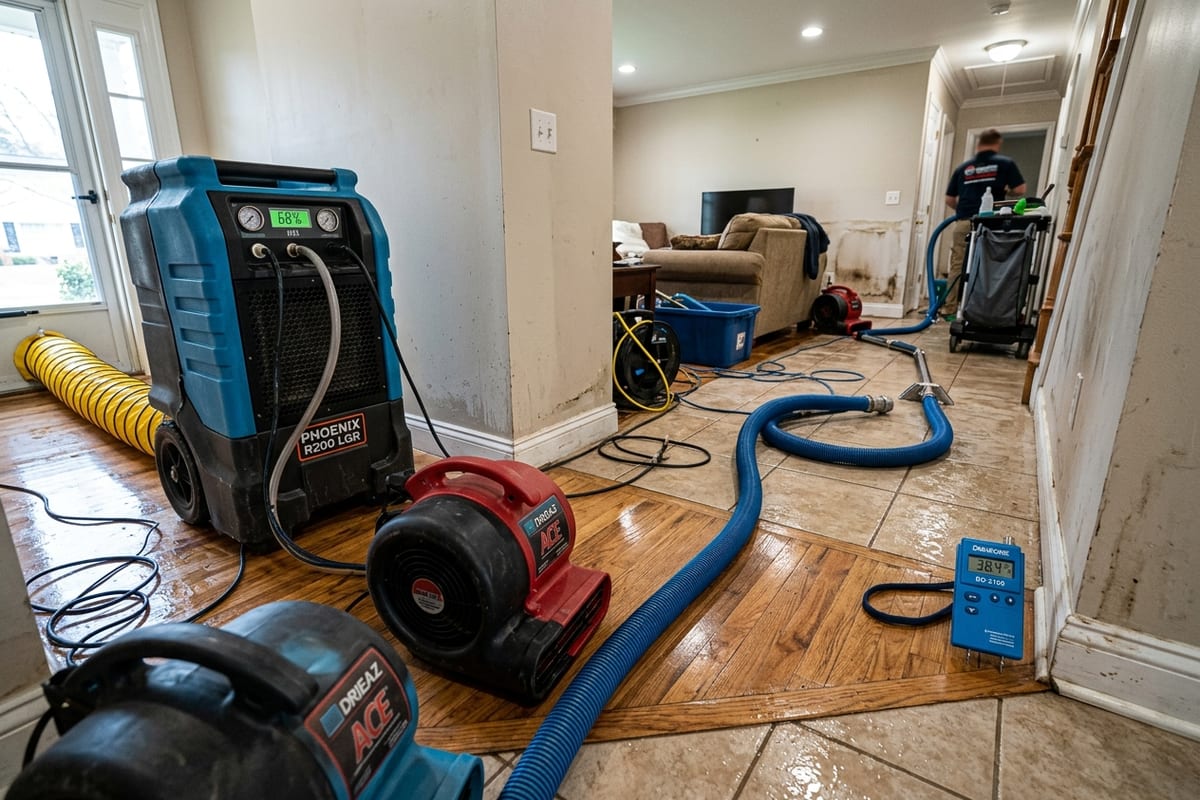
Water Damage Restoration→
Professional water damage restoration stops progressive structural deterioration, extracts standing water with truck-mounted pumps, and dries internal wall cavities using industrial dehumidifiers within 72 hours to prevent hazardous mold growth.
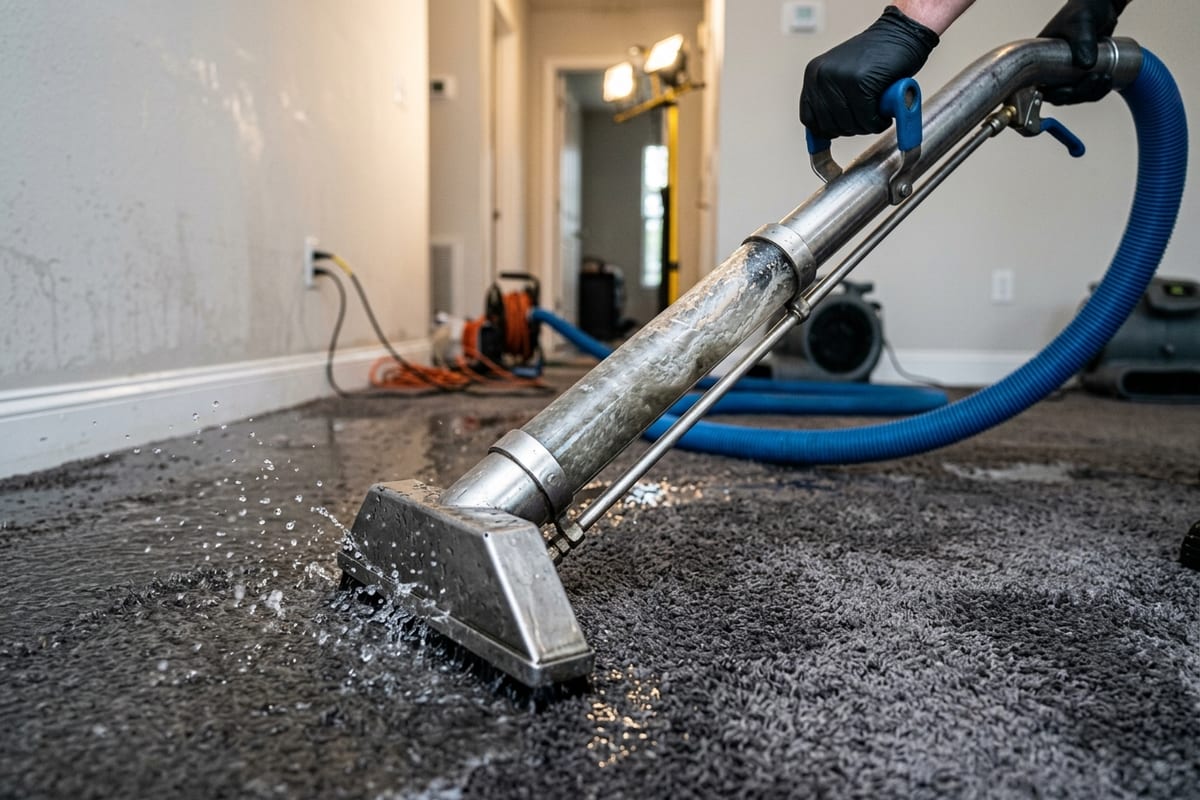
Emergency Water Extraction→
Emergency water extraction uses heavy-duty submersible pumps and truck-mounted vacuum units to physically extract hundreds of gallons of standing water per hour from flooded homes and businesses before structural framing absorbs it.
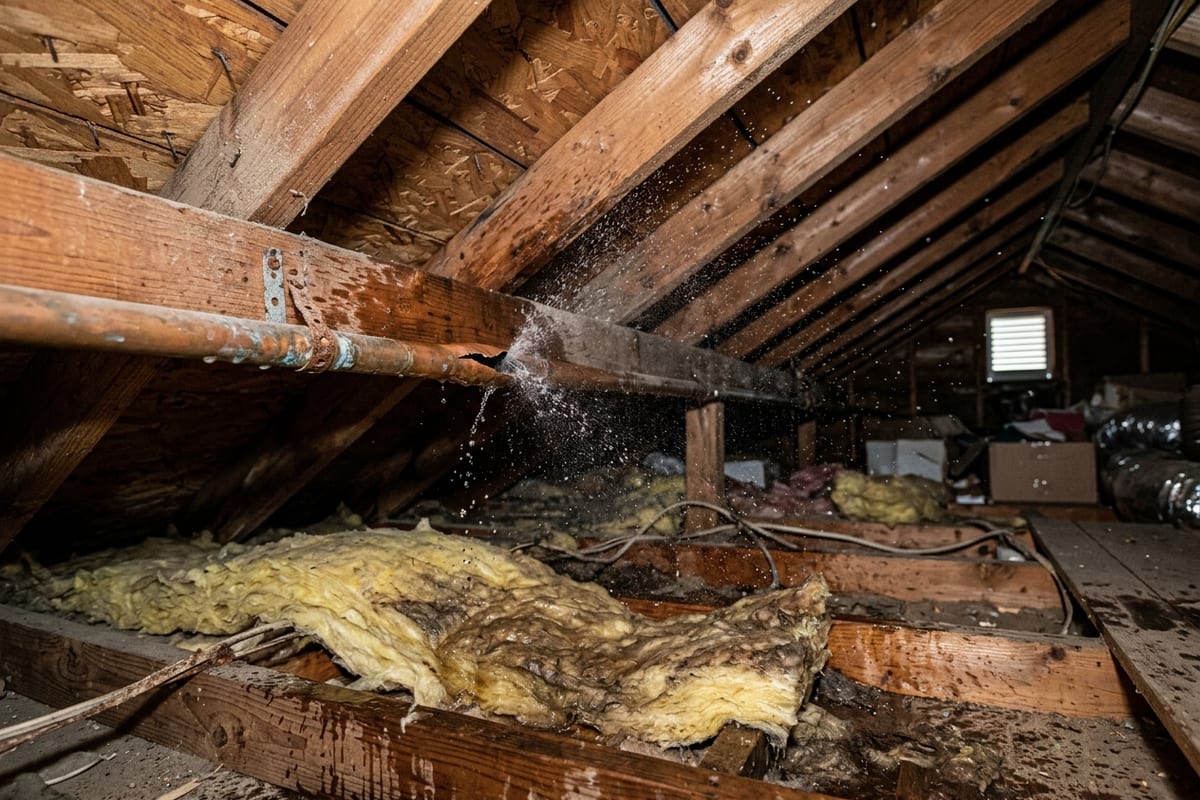
Burst & Frozen Pipe Cleanup→
Burst pipe cleanup addresses high-pressure plumbing ruptures in attics, crawlspaces, and interior walls by immediately stopping water flow, extracting water cascading through ceilings, and drying framing to prevent structural rot.
Standing Water in Your Home? Minutes Count.
Emergency water extraction units are on call 24 hours a day across all major metropolitan service areas. Call now for priority dispatch.