Water Damage Restoration in San Antonio, TX
San Antonio is the historic and economic anchor of South Central Texas, home to over 1.4 million residents and rich architectural traditions dating back over three centuries. Situated along the San Antonio River and Salado Creek drainage networks, the city spans a dramatic geological transition between the Balcones Escarpment to the north and the rolling coastal plain to the south. Severe convective rainstorms frequently drop catastrophic rainfall on shallow caliche subsoils, overwhelming municipal storm drains.
San Antonio, TX Coverage Facts
- Jurisdiction
- Bexar County
- Target Response Time
- 45 to 60 Minutes On-Site
- Disaster Coverage
- 24/7, 365 Days a Year
- Covered ZIP Codes
- 78201, 78205, 78209, 78212, 78216, 78230, 78240, 78249, 78258, 78260
Housing Architecture & Water Risks in San Antonio, TX
San Antonio's housing stock ranges from historic 1900s–1930s craftsman and Spanish colonial revival residences in King William and Monte Vista with pier-and-beam foundations to mid-century ranches in Alamo Heights and sprawling modern master-planned communities in Stone Oak. Under-slab copper piping in 1960s–1980s homes frequently suffers from pitting corrosion caused by local Edwards Aquifer mineral hardness, creating high-pressure slab leaks that saturate foundations.
Key Local Restoration Issues in San Antonio
Balcones Escarpment Convective Flash Flooding
Orographic lift along the Balcones ridge causes intense thunderstorm complexes that drop 3 to 5 inches of rain in hours, inundating properties along Olmos Creek, Salado Creek, and low-lying downtown avenues.
Edwards Aquifer Hard Water Slab Leaks
San Antonio's mineral-dense limestone groundwater causes aggressive calcium buildup and galvanic pitting in copper pipes embedded in concrete slabs, causing hidden slab leaks that buckle tile and hardwood.
Expansive Caliche & Clay Foundation Heave
Northern and eastern Bexar County clay soils expand violently during wet periods and shrink during summer droughts, causing differential foundation movement that shears residential sewer and supply lines.
Regional Climate & Weather Risks in San Antonio
Geology, Soil & Foundation Dynamics in San Antonio
Building Stock & Primary Dispatch Triggers in San Antonio
Spanish colonial revival, mid-century ranch homes on slab foundations, modern suburban master plans, and historic limestone structures.
- •Subterranean pipe shearing under foundation slabs caused by clay soil expansion
- •Flash flood street runoff entering low-lying suburban properties
- •Water softener and filtration system line splits in garages and utility rooms
- •Air conditioning condensate drain overflows during extreme summer cooling cycles
Local Water & Infrastructure Profile: San Antonio
Local Response & Property Access Protocols in San Antonio
Insurance Claim Documentation & Billing Guidelines in Texas
Property owners in Texas filing a water damage insurance claim are protected under the Texas Insurance Code Chapter 542 (Prompt Payment of Claims Act). Under Texas law, insurance carriers must acknowledge receipt of a claim, commence investigation, and request all necessary documentation within 15 calendar days (or 30 days during state-declared disaster weather events). Following receipt of required proofs of loss, carriers must accept or reject the claim within 15 business days and disburse payment within 5 business days of approval. Under Texas Department of Insurance (TDI) regulations, policyholders retain the statutory right to select their own independent, IICRC-certified restoration contractor rather than accepting a preferred carrier vendor. To ensure coverage approval, mitigation contractors must provide itemized Xactimate line-item estimates, daily psychrometric chamber logs, FLIR thermal imaging documentation establishing the moisture boundary, and clear evidence separating sudden accidental discharge from gradual deterioration. For covered peril claims, direct contractor billing can be coordinated under policy authorization forms to minimize upfront policyholder out-of-pocket costs aside from the statutory policy deductible. Under Texas Department of Insurance (TDI) oversight and ANSI/IICRC S500 guidelines, mitigation specialists in Texas must provide adjusters with a complete digital claim substantiation package. This requires initial FLIR thermal imaging surveys establishing the exact perimeter of moisture migration, daily psychrometric logs recording ambient temperature, relative humidity, and humidity ratio (GPP), and calibrated moisture probe readings across drywall, framing studs, and subfloors. Because Texas homes frequently experience slab foundation shifting from expansive clay, crews document that plumbing breaches occurred suddenly and accidentally. Itemized Xactimate estimates adhering to regional Texas unit pricing enable seamless carrier review and direct insurance billing, shielding policyholders from out-of-pocket costs aside from their statutory policy deductible.
Policyholder Rights & Independent Contractor Selection in Texas
Under Texas insurance regulations, residential and commercial property owners maintain the full legal authority to hire any licensed, independent disaster restoration contractor of their choice. Insurance carriers and claims adjusters are prohibited from steering or mandating the use of preferred network vendors. WaterRestore Pro dispatches certified local mitigation specialists who adhere strictly to ANSI/IICRC S500 standards, recording daily psychrometric logs, moisture baselines, and thermal imaging scans. All repair scopes are compiled using standardized Xactimate line items and submitted directly to your insurance company, supporting direct carrier billing and protecting homeowners from upfront costs on covered peril claims.
Common Emergency Calls in San Antonio
Local ProtocolWater Damage Restoration→
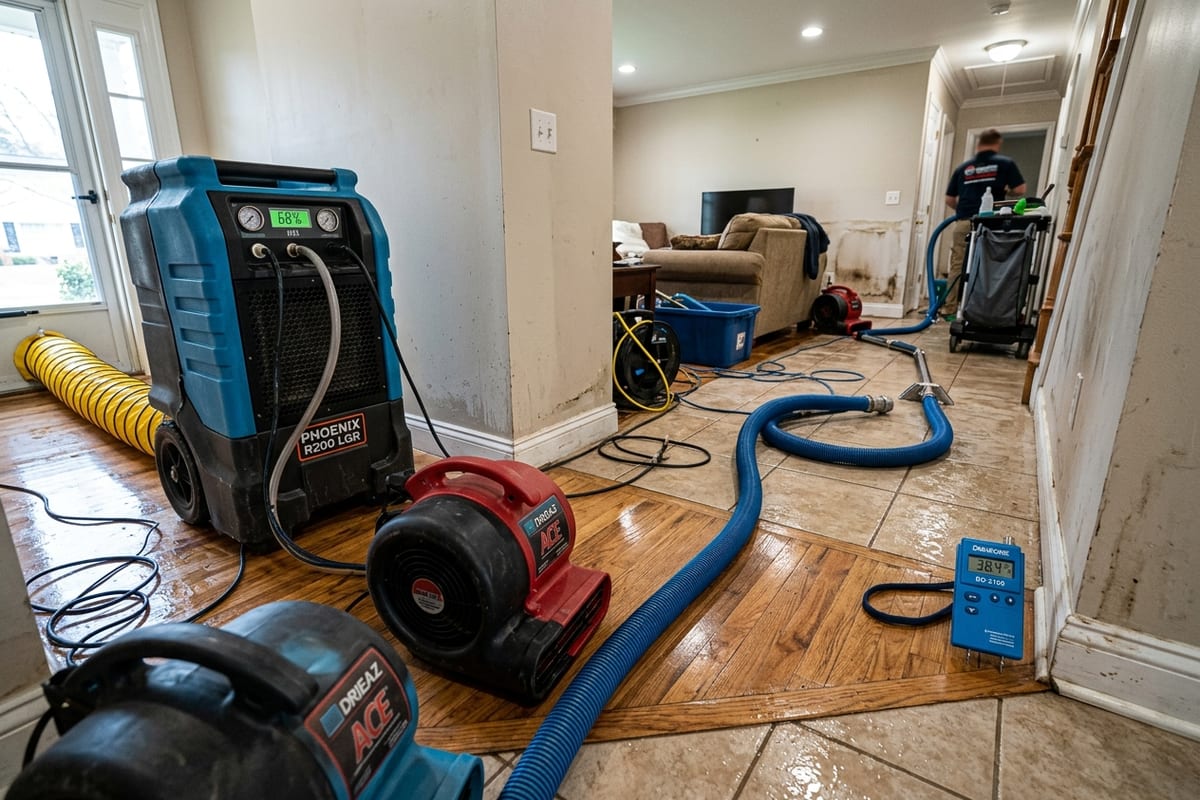
Professional water damage restoration stops progressive structural deterioration, extracts standing water with truck-mounted pumps, and dries internal wall cavities using industrial dehumidifiers within 72 hours to prevent hazardous mold growth.
 Local Protocol
Emergency Water Extraction→
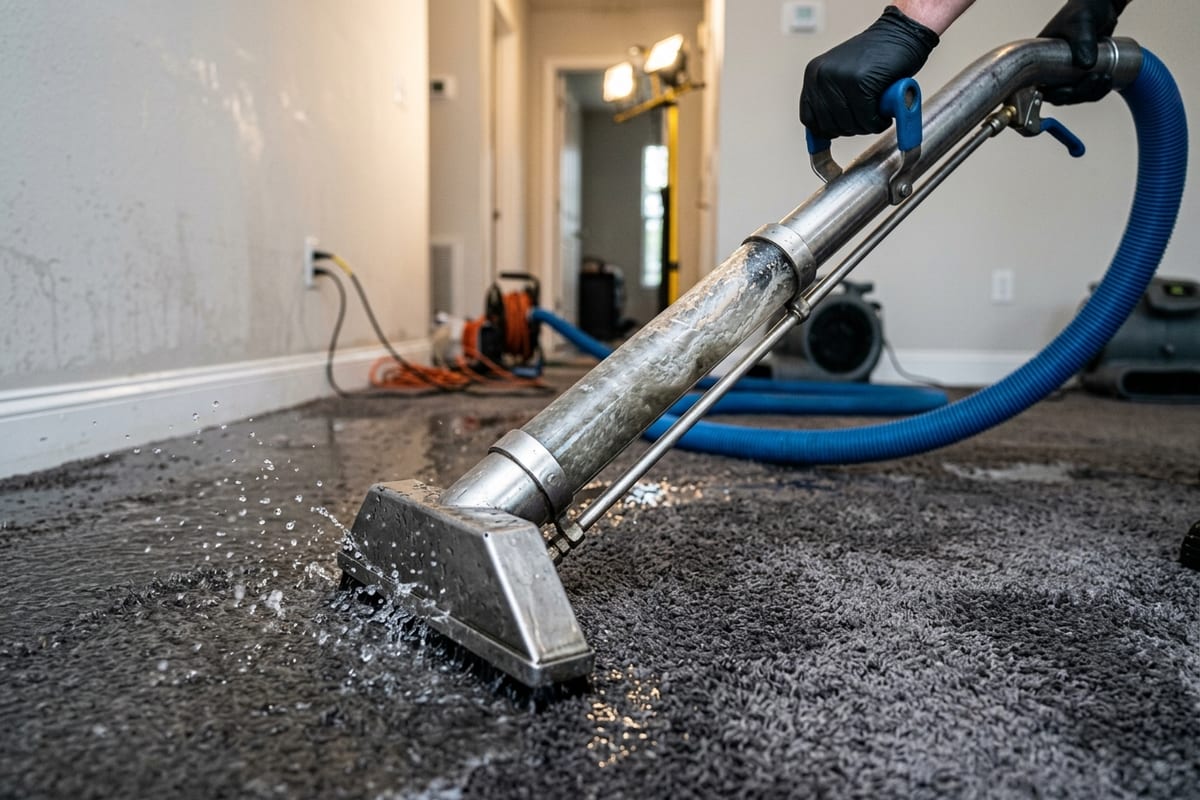
Emergency water extraction uses heavy-duty submersible pumps and truck-mounted vacuum units to physically extract hundreds of gallons of standing water per hour from flooded homes and businesses before structural framing absorbs it.
 Local Protocol
Slab Leak Water Damage Cleanup→
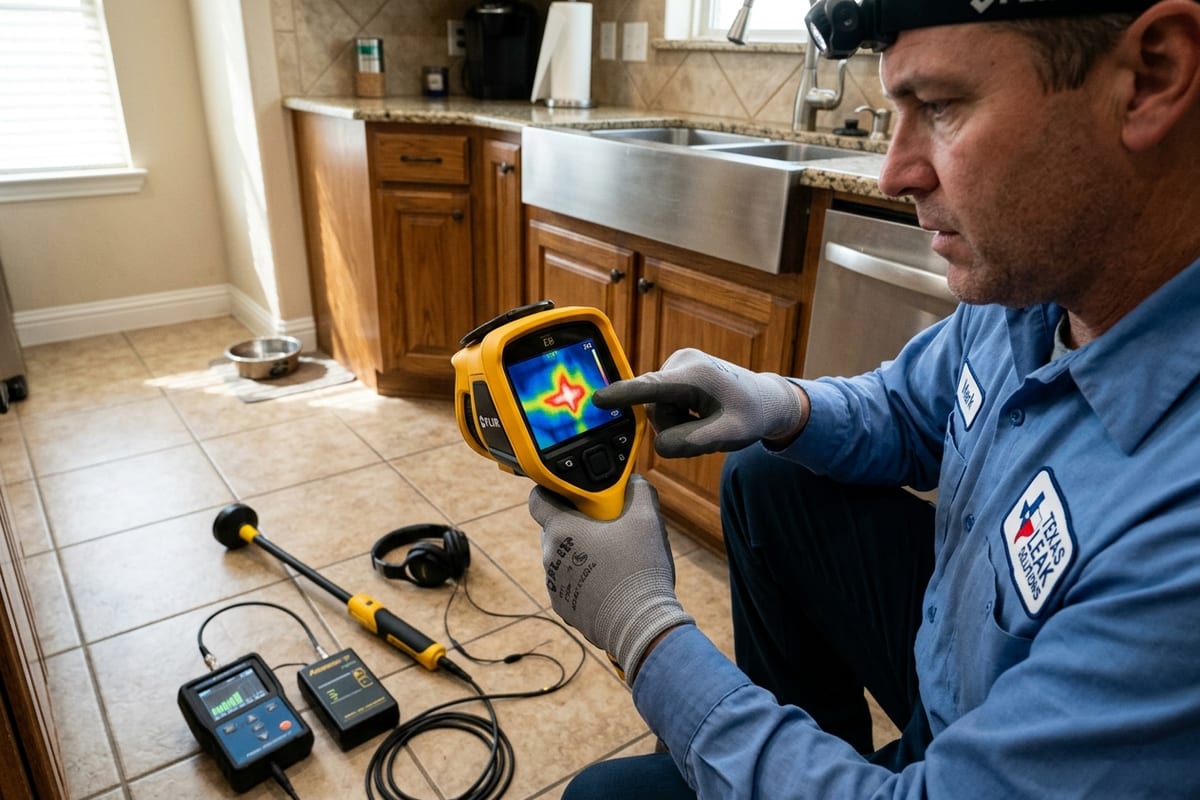
Slab leak water damage restoration extracts water migrating up through concrete foundation cracks into floors, baseboards, and walls, utilizing specialized desiccant dehumidifiers and drying mats to restore subfloor framing.
 Local Protocol
Mold Remediation & Removal→
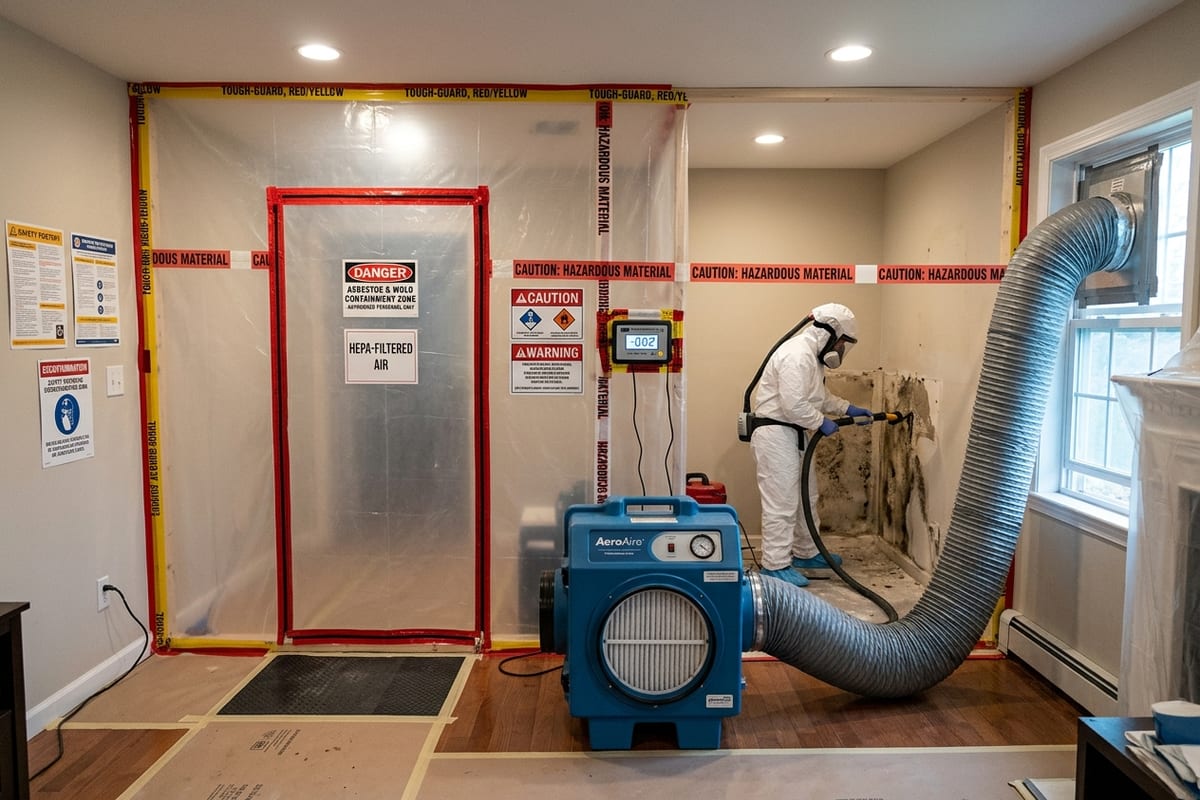
Certified mold remediation isolates active fungal colonies under negative air pressure, safely removes colonized building materials, and purifies indoor air with HEPA scrubbers to eliminate mycotoxins and prevent recurrence.
Check 45–60 Min Response Time for Your San Antonio ZIP Code
WaterRestore Pro dispatches IICRC-certified emergency teams across Bexar County 24 hours a day, 365 days a year. Verify rapid on-site coverage for your postal code:
Check Your ZIP Code Coverage
Verify immediate 45–60 minute emergency water extraction dispatch across our 50-state nationwide coverage network.
Frequently Asked Questions in San Antonio, TX
Why does San Antonio suffer from frequent slab foundation leaks?+
San Antonio's highly expansive clay soils swell when saturated and shrink during hot droughts. This violent ground movement flexes concrete slabs and shears underlying copper and PVC plumbing lines. WaterRestore Pro detects hidden slab leaks using acoustic probes and thermal imaging before drying the structure.
What steps are vital when Hill Country flash flood waters enter a home?+
Flash flood water is classified as Category 3 black water carrying roadway chemicals and biohazards. Evacuate immediately until waters recede, shut off main utilities if safe, and call WaterRestore Pro. Our crews extract flood water, discard unsalvageable porous items, and apply antimicrobial treatments.
How do I file an emergency water damage insurance claim in San Antonio?+
Contact WaterRestore Pro first for emergency stabilization to satisfy your policy's duty to mitigate further damage. We take comprehensive pre-mitigation moisture readings, photograph all affected materials, and supply your insurance company with certified Xactimate estimates.
Nearby Communities We Serve:
Standing Water in Your Home? Minutes Count.
Emergency water extraction units are on call 24 hours a day across all major metropolitan service areas. Call now for priority dispatch.