Certified Mold Remediation & Removal Services
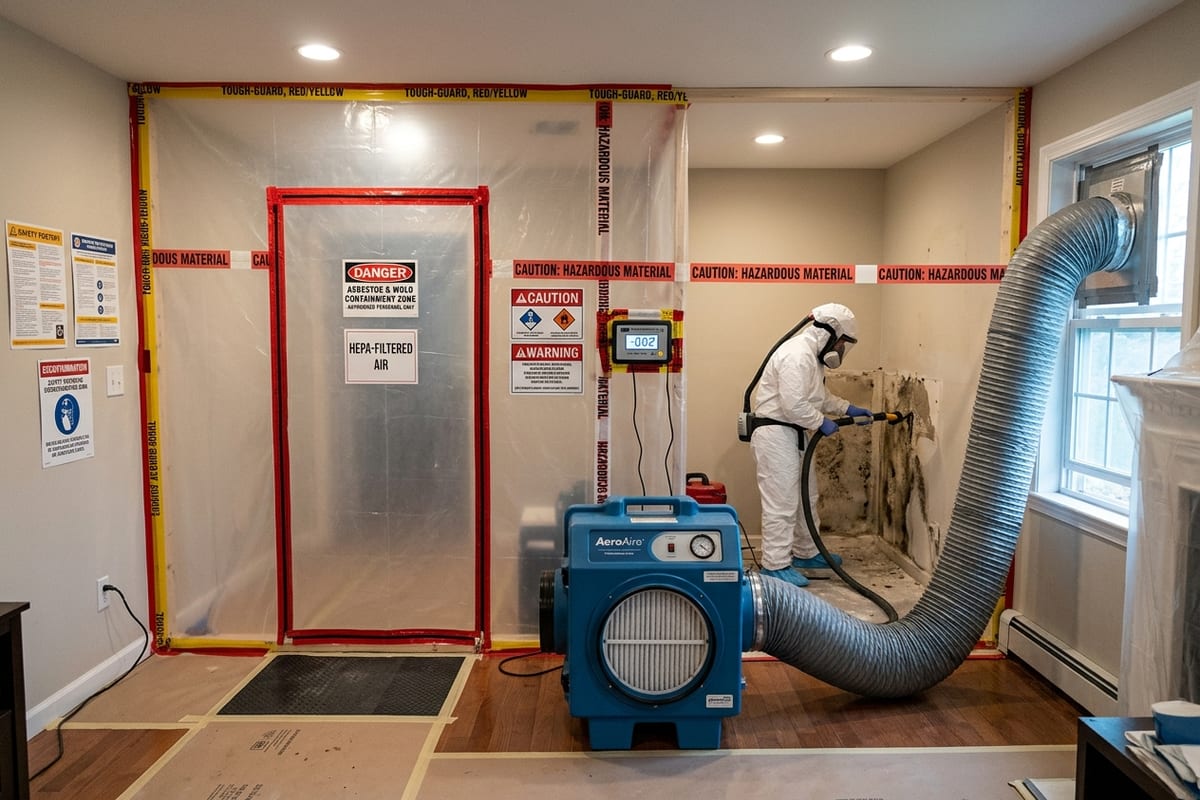
Certified mold remediation isolates active fungal colonies under negative air pressure, safely removes colonized building materials, and purifies indoor air with HEPA scrubbers to eliminate mycotoxins and prevent recurrence.
Understanding Mold Remediation & Removal
Elevated indoor humidity paired with sudden plumbing leaks or unresolved floodwater creates an ideal incubator for toxic black mold (Stachybotrys chartarum) and Aspergillus. Once moisture penetrates wallboard or subflooring, spores germinate in as little as 24 hours.
Improper mold removal by scraping or spraying bleach simply aerosolizes millions of microscopic spores throughout your HVAC ductwork, spreading contamination to other rooms. WaterRestore Pro connects property owners with certified mold remediation specialists who establish sealed containment barriers, negative air scrubbers, and HEPA air filtration.
Mold Remediation & Removal at a Glance
- Target Dispatch Window
- 45 to 60 Minutes On-Site Nationwide
- Standard Drying Duration
- 3 to 5 Days Continuous Dehumidification
- Certified Standards
- IICRC S500 Water / S520 Mold Guidelines
- Insurance Compatibility
- Direct Xactimate Billing with All Major Carriers
Signs You Require Mold Remediation & Removal
If you observe any of the following symptoms in your home, professional mitigation should begin immediately to limit permanent structural degradation:
What Happens During the Mold Remediation & Removal Process?
Step 1: Containment & Negative Air Pressure
Remediation crews erect 6-mil polyethylene plastic barriers and establish negative air pressure using industrial HEPA air scrubbers to prevent cross-contamination to clean areas of the home.
Step 2: Controlled Material Removal
Heavily colonized non-salvageable materials such as porous sheetrock and insulation are bagged in sealed hazard containers and safely removed.
Step 3: HEPA Vacuuming & Antimicrobial Scrubbing
All structural wood framing is detailed using HEPA-filtered vacuum systems followed by wire brushing and hospital-grade EPA antimicrobial applications.
Step 4: Post-Remediation Clearance Testing
Independent third-party air sampling verifies that indoor fungal spore counts have returned to normal ambient background levels.
What Dictates the Cost of Mold Remediation & Removal?
Because water migration depth and contamination levels vary widely between properties, disaster restoration cannot be accurately quoted with flat rates over the phone. Certified technicians evaluate four objective factors:
Extent of Surface Spread
Contamination exceeding 10 to 25 contiguous square feet requires formal containment protocols, certified remediation technicians, and post-remediation clearance testing.
HVAC System Contamination
If spores have entered the central air handler or ductwork, specialized whole-system duct disinfection is necessary.
Underlying Moisture Root Cause
Remediation must be paired with permanent elimination of the leak or humidity source to prevent mold returning.
Drying Timeline & Restoration Estimation Matrix
| Water Category | Standard Drying Timeline | Commercial Equipment Deployed | Material Salvageability | Primary Cost Drivers |
|---|---|---|---|---|
| Category 1 (Clean Water) | 3 to 5 Days | High-velocity centrifugal air movers, Low-Grain Refrigerant (LGR) dehumidifiers, weighted extraction tools. | High Salvageability: Drywall, baseboards, framing, and clean carpets are dried in-place without demolition if addressed within 48h. | Square footage of affected rooms, number of drying units deployed, equipment running days, thermal moisture mapping logs. |
| Category 2 (Grey Water) | 4 to 6 Days | Commercial LGR dehumidifiers, negative air scrubbers with HEPA filtration, botanical antimicrobial ULV foggers. | Selective Salvage: Carpet padding removed and discarded; carpets disinfected; structural framing and subfloor saved. | Padding disposal, antimicrobial applications, targeted flood cuts (24-inch drywall cuts), extended drying duration. |
| Category 3 (Black Water) | 5 to 7+ Days | Negative pressure air scrubbers, desiccant dehumidifiers, hospital-grade biocidal washes, full Level C PPE. | Non-Salvageable: All saturated porous materials (carpet, pad, drywall, insulation) must be removed per health codes. | Hazardous waste disposal, containment barriers, controlled demolition, thorough antimicrobial scrub, reconstruction. |
Direct Insurance Billing Notice (Xactimate Pricing Standard):
Restoration contractors utilize Xactimate®—the standardized estimating software used by State Farm, Allstate, Travelers, Liberty Mutual, and all major insurance carriers—ensuring line-item pre-negotiated rates for equipment, labor, and materials.
Homeowner Action Guidelines
Safe Actions While Waiting
- •Seal off the door to the affected room and keep windows closed until containment is established.
- •Turn off the central HVAC fan to prevent circulating airborne spores throughout the household.
Hazardous: Do Not Attempt
- •Do not spray household chlorine bleach on porous drywall; bleach leaves water behind that feeds root-like hyphae.
- •Do not run standard household fans or shop vacuums on visible mold; this spreads toxic spores throughout the home.
Frequently Asked Questions About Mold Remediation & Removal
Can I just use bleach to kill black mold on walls?+
No. The EPA and IICRC advise against using bleach on porous materials like drywall or wood framing. Bleach kills only surface discoloration while its water content penetrates deeper, feeding the underlying fungal roots.
How is mold remediation regulated and verified?+
Professional mold remediation adheres strictly to the IICRC S520 standard. For significant contamination, an independent licensed mold assessment consultant writes an environmental remediation protocol, followed by third-party post-remediation air clearance testing.
Mold Remediation & Removal Available Nationwide:
Related Disaster Restoration Services
Coordinating structural extraction, mold abatement, and complete property recovery.
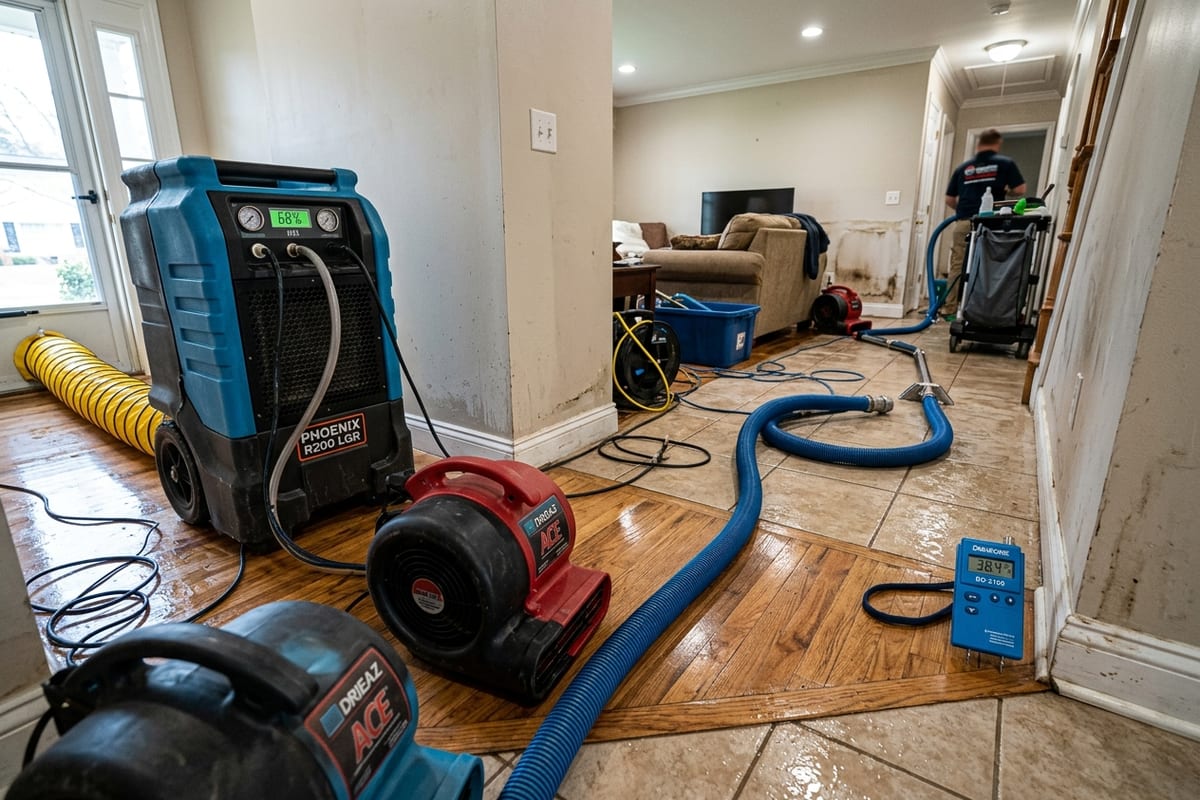
Water Damage Restoration→
Professional water damage restoration stops progressive structural deterioration, extracts standing water with truck-mounted pumps, and dries internal wall cavities using industrial dehumidifiers within 72 hours to prevent hazardous mold growth.
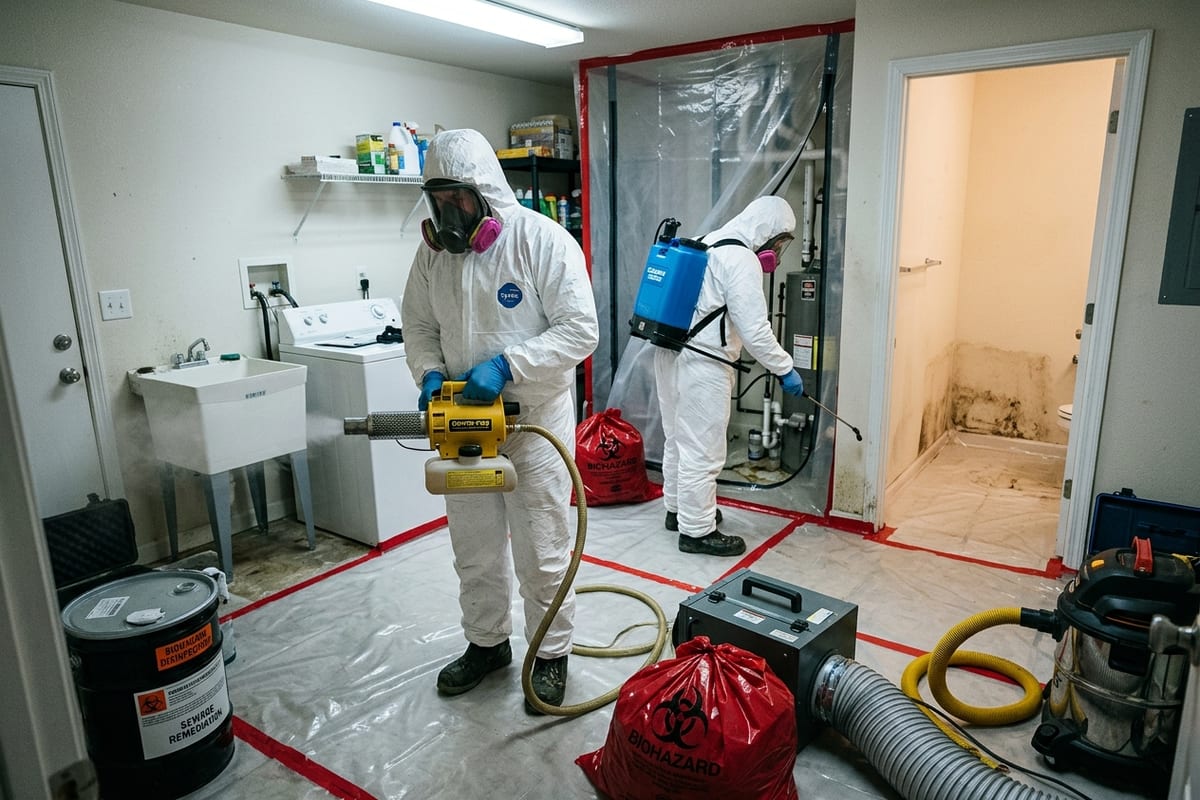
Sewage Backup & Biohazard Cleanup→
Sewage cleanup safely extracts hazardous Category 3 black water containing dangerous bacteria and pathogens, removes saturated porous building materials, and sanitizes contaminated surfaces with broad-spectrum disinfectants.
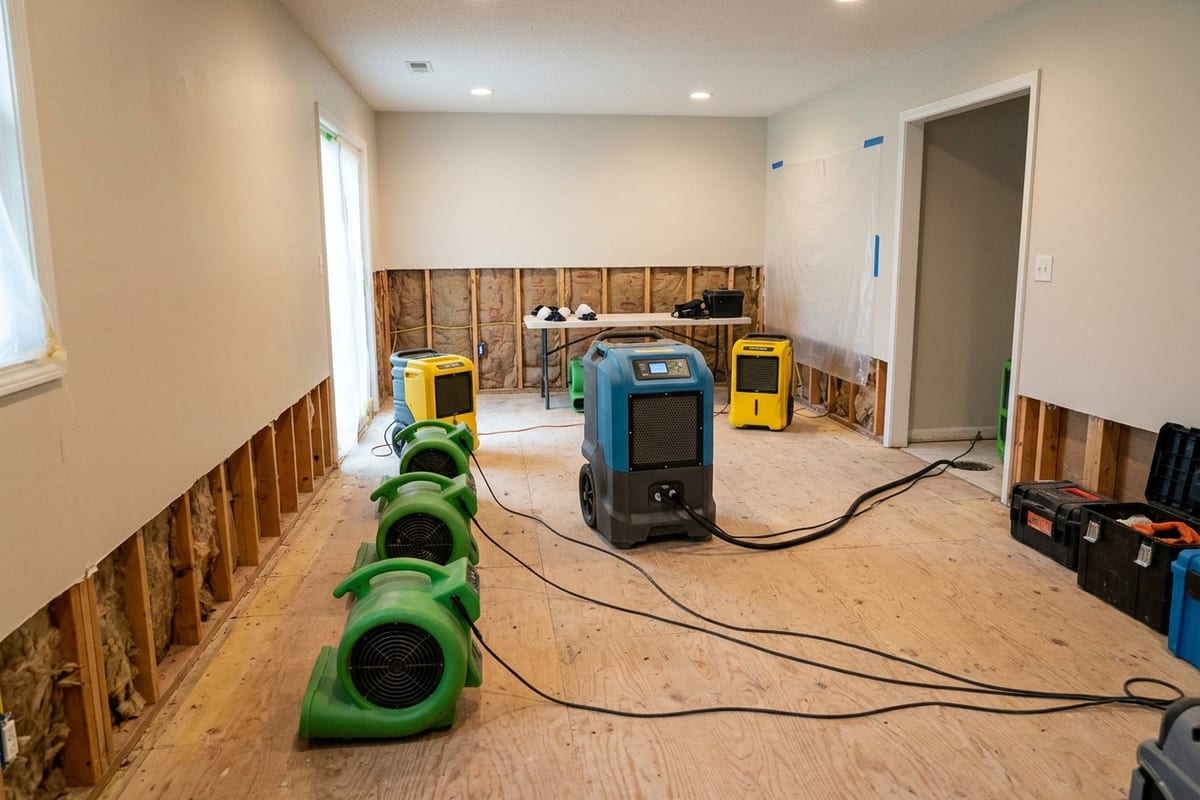
Structural Drying & Dehumidification→
Structural drying uses industrial low-grain refrigerant (LGR) dehumidifiers, centrifugal air movers, and moisture sensors to draw bound moisture out of concrete foundations, wood framing, and subfloors to prevent permanent decay.
Standing Water in Your Home? Minutes Count.
Emergency water extraction units are on call 24 hours a day across all major metropolitan service areas. Call now for priority dispatch.