Water Damage Restoration in Johns Creek, GA
Johns Creek is an affluent, master-planned suburban community in northeastern Fulton County along the Chattahoochee River corridor. Known for nationally ranked schools, gated golf course communities like St Ives, and extensive executive subdivisions, Johns Creek properties feature sprawling residential square footage that relies heavily on complex multi-zone plumbing and HVAC networks.
Johns Creek, GA Coverage Facts
- Jurisdiction
- Fulton County
- Target Response Time
- 45 to 60 Minutes On-Site
- Disaster Coverage
- 24/7, 365 Days a Year
- Covered ZIP Codes
- 30005, 30022, 30097
Housing Architecture & Water Risks in Johns Creek, GA
Residential architecture in Johns Creek consists almost entirely of executive single-family brick and stone homes built between 1985 and 2005. Most homes feature full daylight basements, complex multi-line domestic plumbing loops, and water heaters located either in basements or high-temperature attic areas.
Key Local Restoration Issues in Johns Creek
Attic Water Heater Tank Ruptures in Multi-Story Homes
Aging 50-to-75-gallon water heaters located in attics experience sudden tank corrosion and weld ruptures, dumping hundreds of gallons through second-story subflooring and destroying custom main-level ceilings.
Expansive Clay Soil Basement Wall Cracking
Piedmont red clay surrounding foundation basements in St Ives and Medlock Bridge expands during heavy rain events, creating horizontal shear cracks that allow pressurized groundwater to enter finished living areas.
High-Pressure Lawn Irrigation Main Line Shear
Seasonal soil settlement shifts high-pressure underground irrigation supply lines adjacent to foundation slabs, causing concealed subterranean leaks that erode foundation bearing soil.
Insurance Claim Documentation & Billing Guidelines in Georgia
In Georgia, water mitigation and insurance restoration claims are overseen by the Georgia Office of Insurance and Safety Fire Commissioner under O.C.G.A. § 33-4-6. Carriers operating in Georgia must acknowledge receipt of a loss notification within 15 business days and investigate claims with reasonable promptness, with statutory penalties applying if claims are delayed or denied in bad faith. Homeowners maintain the legal authority to select their own emergency restoration company. In Georgia's humid climate, rapid emergency water extraction and high-capacity dehumidification are critical to prevent microbial amplification within 48 to 72 hours. Certified restoration contractors supply adjusters with digital moisture baselines, structural drying logs, and itemized estimates that satisfy all standard HO-3 policy proof-of-loss requirements. Under Georgia Office of Insurance and Safety Fire Commissioner regulations, emergency mitigation must be meticulously documented to support covered water damage claims. Technicians compile daily psychrometric records measuring grains per pound (GPP), relative humidity, and temperature to confirm that drying chambers meet IICRC S500 desiccation targets. In Georgia's warm, humid climate, rapid moisture removal and EPA-registered antimicrobial applications are detailed in itemized Xactimate invoices, enabling direct insurer billing and rapid claim settlement for residential and commercial policyholders.
Policyholder Rights & Independent Contractor Selection in Georgia
Under Georgia insurance regulations, residential and commercial property owners maintain the full legal authority to hire any licensed, independent disaster restoration contractor of their choice. Insurance carriers and claims adjusters are prohibited from steering or mandating the use of preferred network vendors. WaterRestore Pro dispatches certified local mitigation specialists who adhere strictly to ANSI/IICRC S500 standards, recording daily psychrometric logs, moisture baselines, and thermal imaging scans. All repair scopes are compiled using standardized Xactimate line items and submitted directly to your insurance company, supporting direct carrier billing and protecting homeowners from upfront costs on covered peril claims.
Common Emergency Calls in Johns Creek
Local ProtocolWater Damage Restoration→
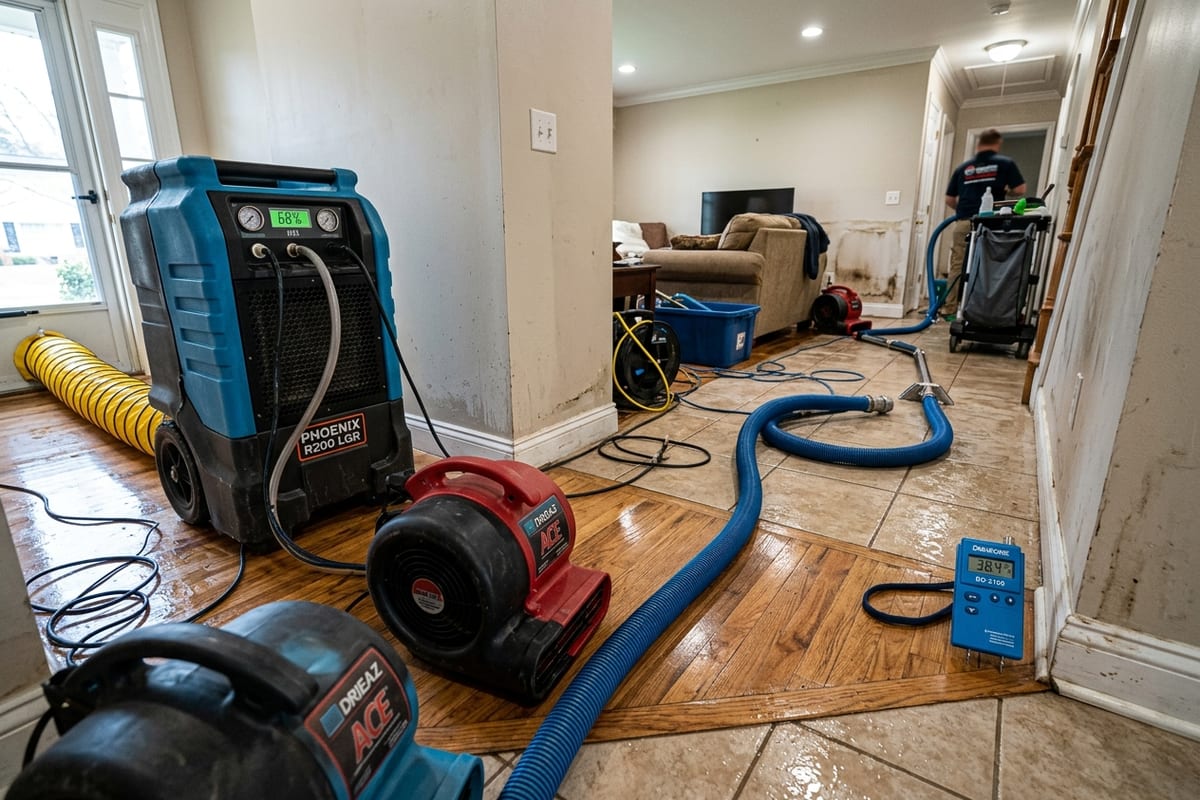
Professional water damage restoration stops progressive structural deterioration, extracts standing water with truck-mounted pumps, and dries internal wall cavities using industrial dehumidifiers within 72 hours to prevent hazardous mold growth.
 Local Protocol
Emergency Water Extraction→
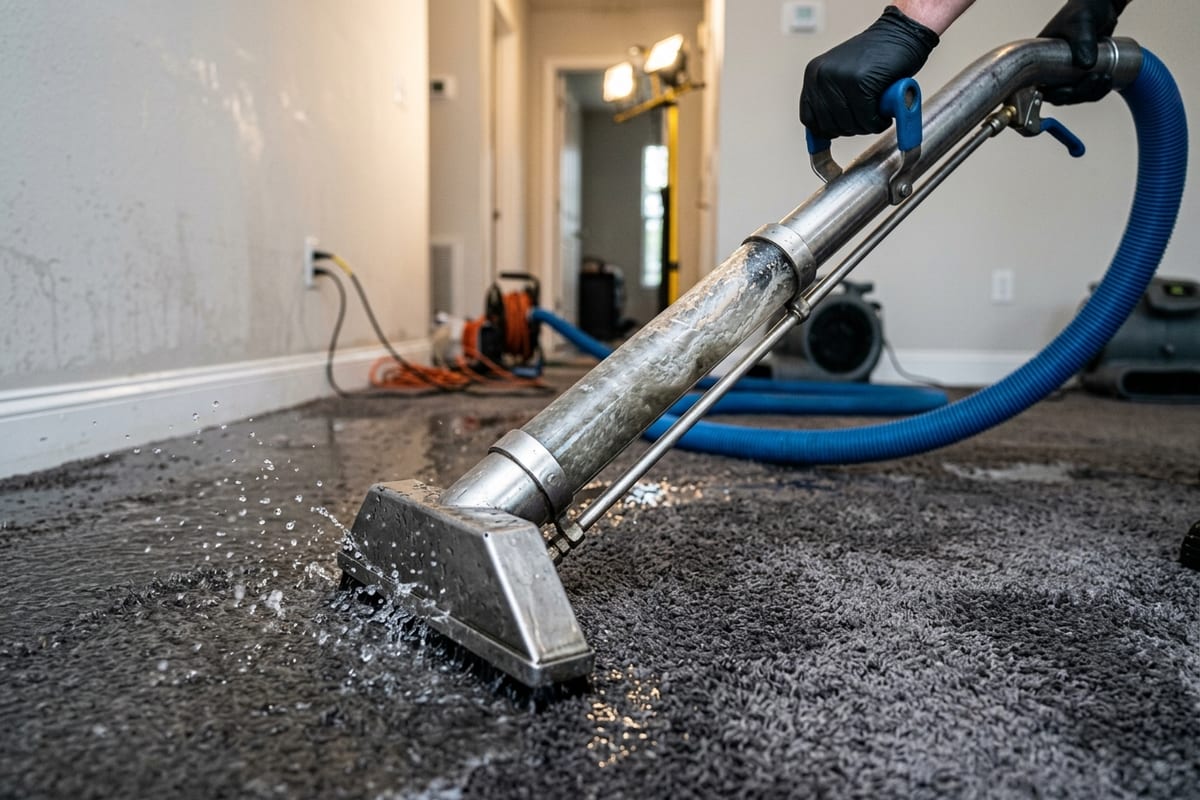
Emergency water extraction uses heavy-duty submersible pumps and truck-mounted vacuum units to physically extract hundreds of gallons of standing water per hour from flooded homes and businesses before structural framing absorbs it.
 Local Protocol
Burst & Frozen Pipe Cleanup→
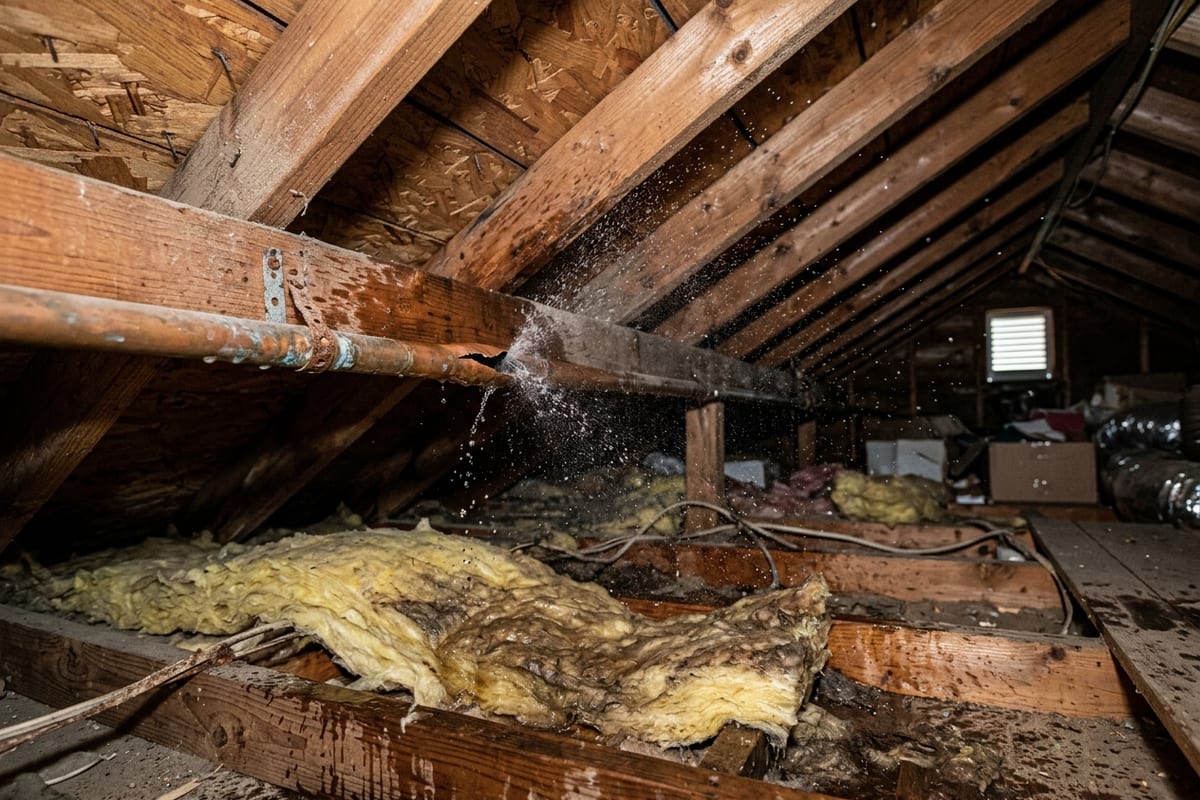
Burst pipe cleanup addresses high-pressure plumbing ruptures in attics, crawlspaces, and interior walls by immediately stopping water flow, extracting water cascading through ceilings, and drying framing to prevent structural rot.
 Local Protocol
Mold Remediation & Removal→
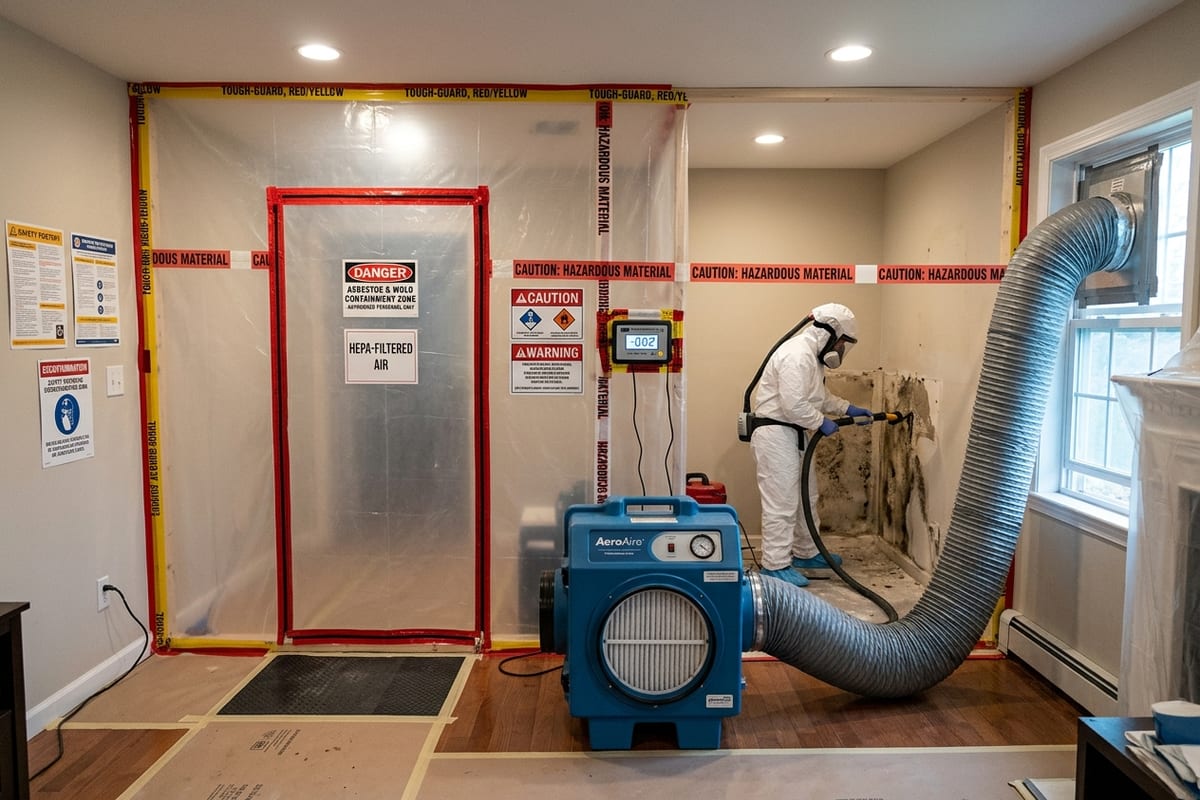
Certified mold remediation isolates active fungal colonies under negative air pressure, safely removes colonized building materials, and purifies indoor air with HEPA scrubbers to eliminate mycotoxins and prevent recurrence.
Check 45–60 Min Response Time for Your Johns Creek ZIP Code
WaterRestore Pro dispatches IICRC-certified emergency teams across Fulton County 24 hours a day, 365 days a year. Verify rapid on-site coverage for your postal code:
Check Your ZIP Code Coverage
Verify immediate 45–60 minute emergency water extraction dispatch across our 50-state nationwide coverage network.
Frequently Asked Questions in Johns Creek, GA
How fast do emergency crews respond in Johns Creek?+
Certified disaster restoration partners maintain quick dispatch units along Medlock Bridge Road and State Bridge Road, arriving on-site within 45 to 60 minutes 24/7.
Nearby Communities We Serve:
Standing Water in Your Home? Minutes Count.
Emergency water extraction units are on call 24 hours a day across all major metropolitan service areas. Call now for priority dispatch.