Water Damage Restoration in Post Falls, ID
Post Falls, the 'River City', is a rapidly expanding suburban and industrial center located along the Spokane River between Coeur d'Alene and the Washington state border in Kootenai County. Featuring riverside properties, historic downtown neighborhoods, and modern master-planned subdivisions, Post Falls residences encounter significant water risks from Spokane River dam releases, heavy panhandle winter snowpack, and pipe freeze disasters.
Post Falls, ID Coverage Facts
- Jurisdiction
- Kootenai County
- Target Response Time
- 45 to 60 Minutes On-Site
- Disaster Coverage
- 24/7, 365 Days a Year
- Covered ZIP Codes
- 83854, 83877
Housing Architecture & Water Risks in Post Falls, ID
Post Falls' residential stock includes mid-century single-story ranches, riverside custom homes, and extensive contemporary single-family developments built since 2000 over concrete slabs or crawlspaces. Properties along the Spokane River valley sit on porous gravel aquifers that fluctuate rapidly with upstream dam operations and seasonal snowmelt. In winter, heavy snow accumulation on roofs causes severe ice damming, while sub-zero Arctic temperatures routinely freeze domestic water pipes along perimeter walls and in unheated garages.
Key Local Restoration Issues in Post Falls
Spokane River High-Flow Groundwater Seepage
Upstream dam releases and snowmelt elevate alluvial water tables, forcing groundwater through crawl spaces and basement concrete floors.
Severe Winter Roof Ice Damming & Water Infiltration
Heavy snow accumulation melts and refreezes at eaves, forcing water under shingles into ceiling drywall and exterior wall cavities.
Sub-Zero Freeze Exterior Plumbing Ruptures
Bitter Arctic air masses freeze domestic water pipes in uninsulated exterior walls and crawl spaces, causing indoor flooding upon thawing.
Insurance Claim Documentation & Billing Guidelines in Idaho
In Idaho, water damage insurance claims are governed by the Idaho Department of Insurance (DOI) pursuant to Idaho Code § 41-1329 and IDAPA 18.01.27. Insurers must acknowledge claims within 14 calendar days and determine coverage within 30 days of receiving proof of loss. Idaho homeowners maintain the right to select their own restoration firm. Technicians provide thermal imaging surveys and daily dry chamber logs for insurance processing. Idaho Department of Insurance (DOI) regulations under Idaho Code § 41-1329 govern the prompt and fair settlement of property claims. Mitigation contractors compile daily atmospheric psychrometric logs, tracking GPP and relative humidity to prove continuous drying progress. Moisture meter readings across wood framing and drywall verify that materials reach dry standards. Standardized Xactimate billing is routed directly to insurance carriers for direct reimbursement.
Policyholder Rights & Independent Contractor Selection in Idaho
Under Idaho insurance regulations, residential and commercial property owners maintain the full legal authority to hire any licensed, independent disaster restoration contractor of their choice. Insurance carriers and claims adjusters are prohibited from steering or mandating the use of preferred network vendors. WaterRestore Pro dispatches certified local mitigation specialists who adhere strictly to ANSI/IICRC S500 standards, recording daily psychrometric logs, moisture baselines, and thermal imaging scans. All repair scopes are compiled using standardized Xactimate line items and submitted directly to your insurance company, supporting direct carrier billing and protecting homeowners from upfront costs on covered peril claims.
Common Emergency Calls in Post Falls
Local ProtocolWater Damage Restoration→
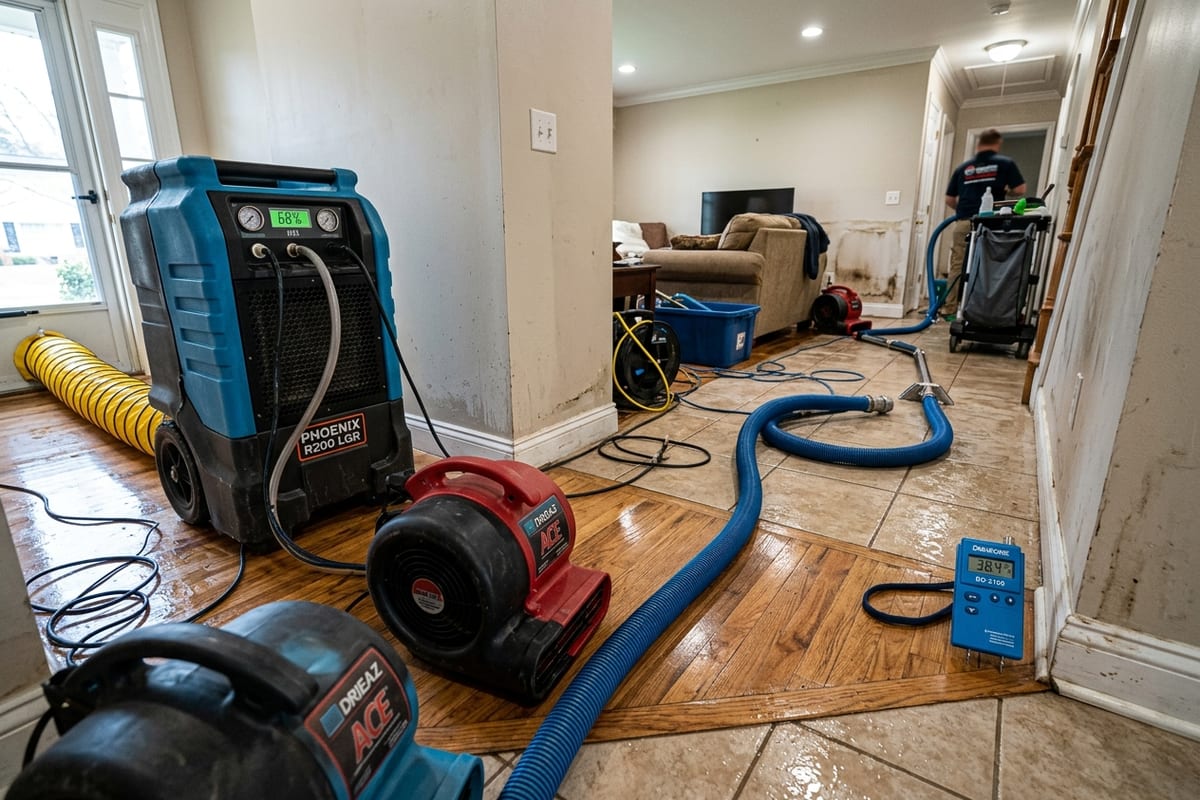
Professional water damage restoration stops progressive structural deterioration, extracts standing water with truck-mounted pumps, and dries internal wall cavities using industrial dehumidifiers within 72 hours to prevent hazardous mold growth.
 Local Protocol
Emergency Water Extraction→
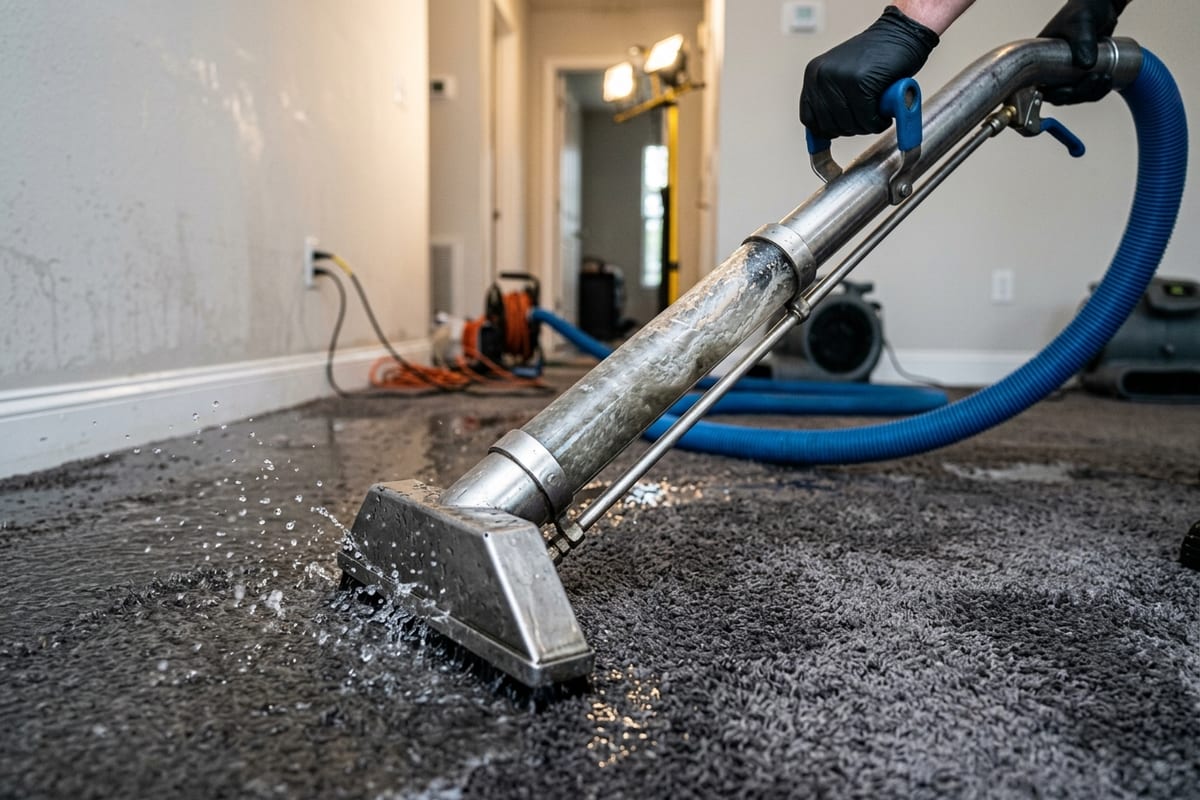
Emergency water extraction uses heavy-duty submersible pumps and truck-mounted vacuum units to physically extract hundreds of gallons of standing water per hour from flooded homes and businesses before structural framing absorbs it.
 Local Protocol
Burst & Frozen Pipe Cleanup→
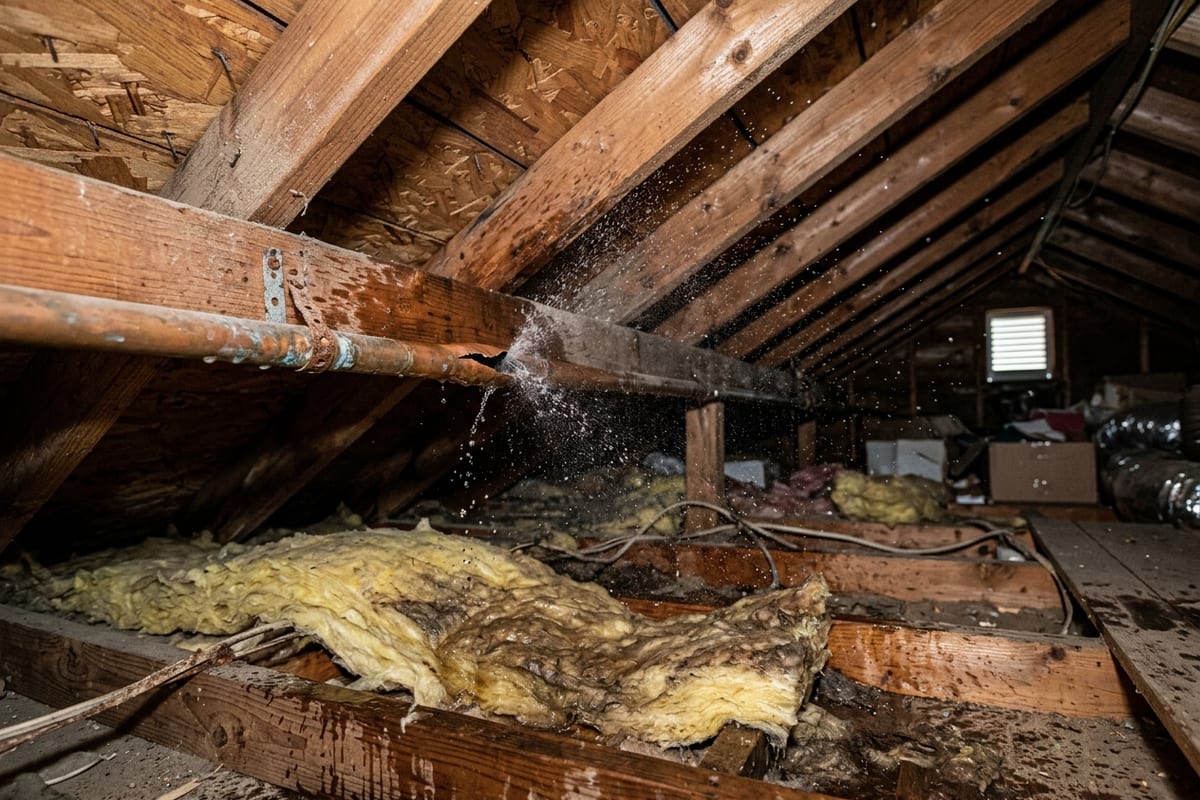
Burst pipe cleanup addresses high-pressure plumbing ruptures in attics, crawlspaces, and interior walls by immediately stopping water flow, extracting water cascading through ceilings, and drying framing to prevent structural rot.
 Local Protocol
Mold Remediation & Removal→
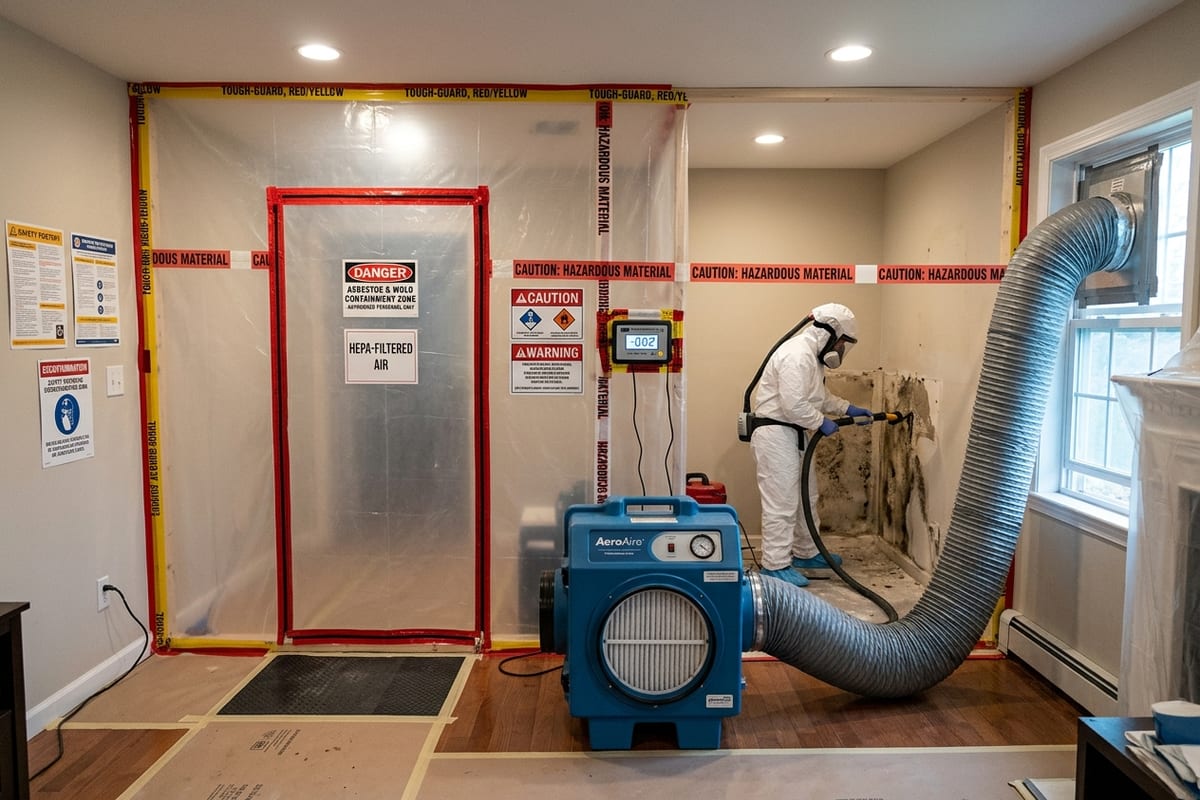
Certified mold remediation isolates active fungal colonies under negative air pressure, safely removes colonized building materials, and purifies indoor air with HEPA scrubbers to eliminate mycotoxins and prevent recurrence.
Check 45–60 Min Response Time for Your Post Falls ZIP Code
WaterRestore Pro dispatches IICRC-certified emergency teams across Kootenai County 24 hours a day, 365 days a year. Verify rapid on-site coverage for your postal code:
Check Your ZIP Code Coverage
Verify immediate 45–60 minute emergency water extraction dispatch across our 50-state nationwide coverage network.
Frequently Asked Questions in Post Falls, ID
How quickly do emergency crews reach Post Falls residences?+
Certified restoration teams operate 24 hours a day across Kootenai County, arriving on-site within 45 to 60 minutes.
How do technicians dry water damage caused by ice dams in Post Falls?+
Crews remove wet insulation and damaged ceiling drywall, treat framing with antimicrobials, and deploy industrial air movers and desiccant dehumidifiers to dry rafters.
Nearby Communities We Serve:
Standing Water in Your Home? Minutes Count.
Emergency water extraction units are on call 24 hours a day across all major metropolitan service areas. Call now for priority dispatch.