Water Damage Restoration in Las Vegas, NV
Las Vegas is Nevada's premier commercial and entertainment capital, located in the arid heart of the Mojave Desert. Beyond the world-famous Las Vegas Boulevard corridor, extensive residential communities across Summerlin, Centennial Hills, and Downtown Las Vegas face acute residential water emergencies driven by mineral-heavy hard water corroding domestic copper plumbing, concrete slab foundation shifts over impervious caliche layers, and sudden flash floods during intense summer North American monsoon storms.
Las Vegas, NV Coverage Facts
- Jurisdiction
- Clark County
- Target Response Time
- 45 to 60 Minutes On-Site
- Disaster Coverage
- 24/7, 365 Days a Year
- Covered ZIP Codes
- 89101, 89102, 89104, 89108, 89117, 89128, 89134, 89144, 89149
Housing Architecture & Water Risks in Las Vegas, NV
Residential architecture across Las Vegas is dominated by slab-on-grade single-family stucco homes and two-story stucco residences built between the 1970s and present day. Homes constructed in the 1980s and 1990s frequently feature soft copper water supply lines embedded directly within or underneath post-tensioned concrete slabs; high mineral content from Lake Mead water, combined with soil friction, causes under-slab pinhole ruptures that send warm pressurized water through floor tiles and drywall baseboards. Furthermore, the desert valley's impenetrable caliche layer prevents rapid rainwater percolation during torrential summer cloudbursts, funneling desert runoff into garages, courtyards, and ground-floor living areas, demanding immediate commercial water extraction, non-invasive slab leak acoustic detection, and industrial LGR dehumidification compliant with IICRC S500 standards.
Key Local Restoration Issues in Las Vegas
Sub-Slab Copper Supply Pinhole Ruptures
Hard water minerals and aggressive shifting soil wear down under-slab copper supply lines, causing hidden pressurized water leaks beneath living room tile and wood laminate flooring.
Late Summer Monsoon Desert Wash Flash Floods
Severe desert monsoon downpours drop up to 2 inches of rain in under an hour, overwhelming street drains and inundating ground-level entryways and recessed garages.
High-Temperature Water Heater & Softener Line Blowouts
Intense triple-digit desert heat combined with high municipal water pressure causes older water heaters and water softener supply lines in uninsulated garages to rupture violently.
Regional Climate & Weather Risks in Las Vegas
Geology, Soil & Foundation Dynamics in Las Vegas
Building Stock & Primary Dispatch Triggers in Las Vegas
Single- and two-story stucco homes on concrete slab foundations, master-planned desert communities, and luxury high-rise casino-corridor condominiums.
- •Water heater expansion tank bursts accelerated by extreme attic and garage heat
- •Reverse osmosis (RO) system line splits and water softener failures
- •Flash flood street runoff breaching front doors, garage thresholds, and patio sliders
- •Brittle polybutylene and CPVC pipe fractures from highly alkaline hard municipal water
Local Water & Infrastructure Profile: Las Vegas
Local Response & Property Access Protocols in Las Vegas
Insurance Claim Documentation & Billing Guidelines in Nevada
Nevada water damage insurance claims are overseen by the Nevada Division of Insurance under NRS 686A.310 and NAC 686A.600. Insurers must acknowledge claims within 20 working days and settle claims within 30 days after proof of loss receipt. Nevada law protects consumer contractor selection. In high-desert environments, technicians track rapid moisture evaporation and structural retention using calibrated meters and itemized Xactimate estimates. Nevada Division of Insurance regulations under NRS 686A.310 require objective and detailed proof of loss for water mitigation claims. In the arid desert climate, technicians maintain daily psychrometric records to confirm controlled drying rates and prevent structural framing distortion. Non-invasive moisture meters and thermal imaging cameras document moisture levels. Standardized Xactimate estimates are billed directly to insurance carriers to ensure rapid claim resolution.
Policyholder Rights & Independent Contractor Selection in Nevada
Under Nevada insurance regulations, residential and commercial property owners maintain the full legal authority to hire any licensed, independent disaster restoration contractor of their choice. Insurance carriers and claims adjusters are prohibited from steering or mandating the use of preferred network vendors. WaterRestore Pro dispatches certified local mitigation specialists who adhere strictly to ANSI/IICRC S500 standards, recording daily psychrometric logs, moisture baselines, and thermal imaging scans. All repair scopes are compiled using standardized Xactimate line items and submitted directly to your insurance company, supporting direct carrier billing and protecting homeowners from upfront costs on covered peril claims.
Common Emergency Calls in Las Vegas
Local ProtocolWater Damage Restoration→
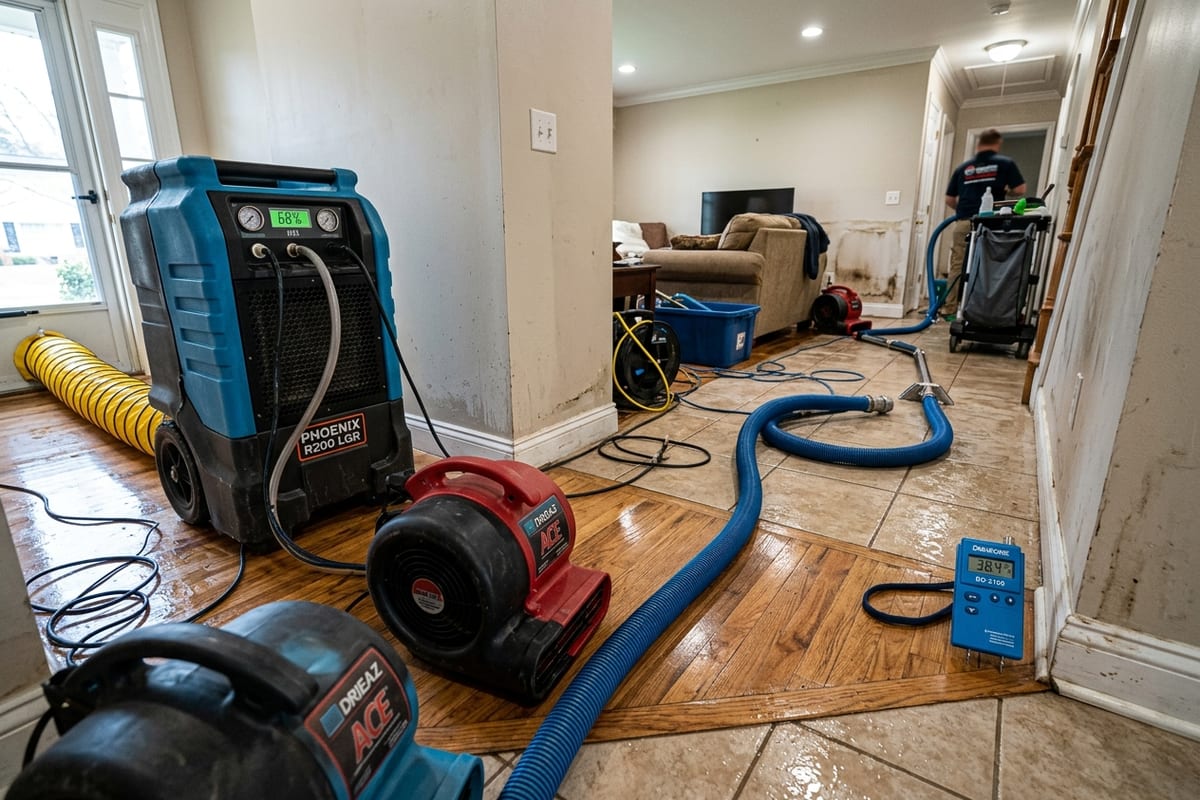
Professional water damage restoration stops progressive structural deterioration, extracts standing water with truck-mounted pumps, and dries internal wall cavities using industrial dehumidifiers within 72 hours to prevent hazardous mold growth.
 Local Protocol
Emergency Water Extraction→
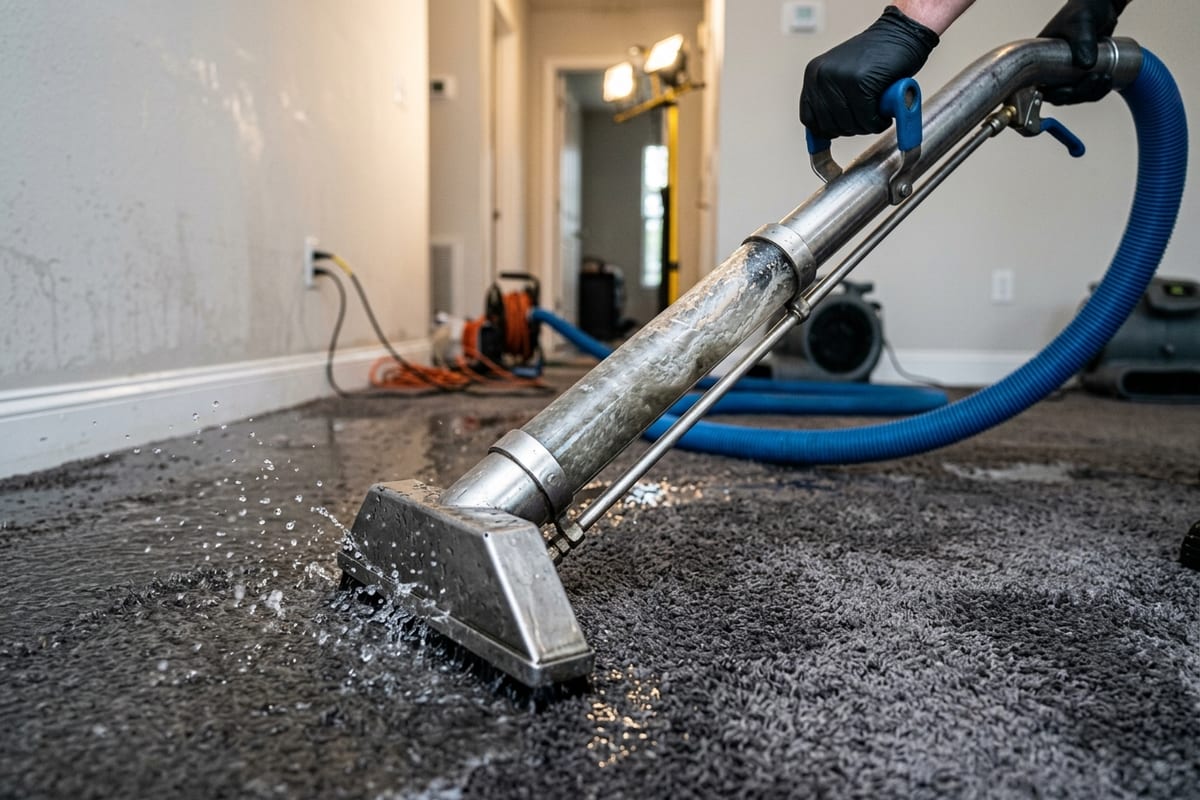
Emergency water extraction uses heavy-duty submersible pumps and truck-mounted vacuum units to physically extract hundreds of gallons of standing water per hour from flooded homes and businesses before structural framing absorbs it.
 Local Protocol
Burst & Frozen Pipe Cleanup→
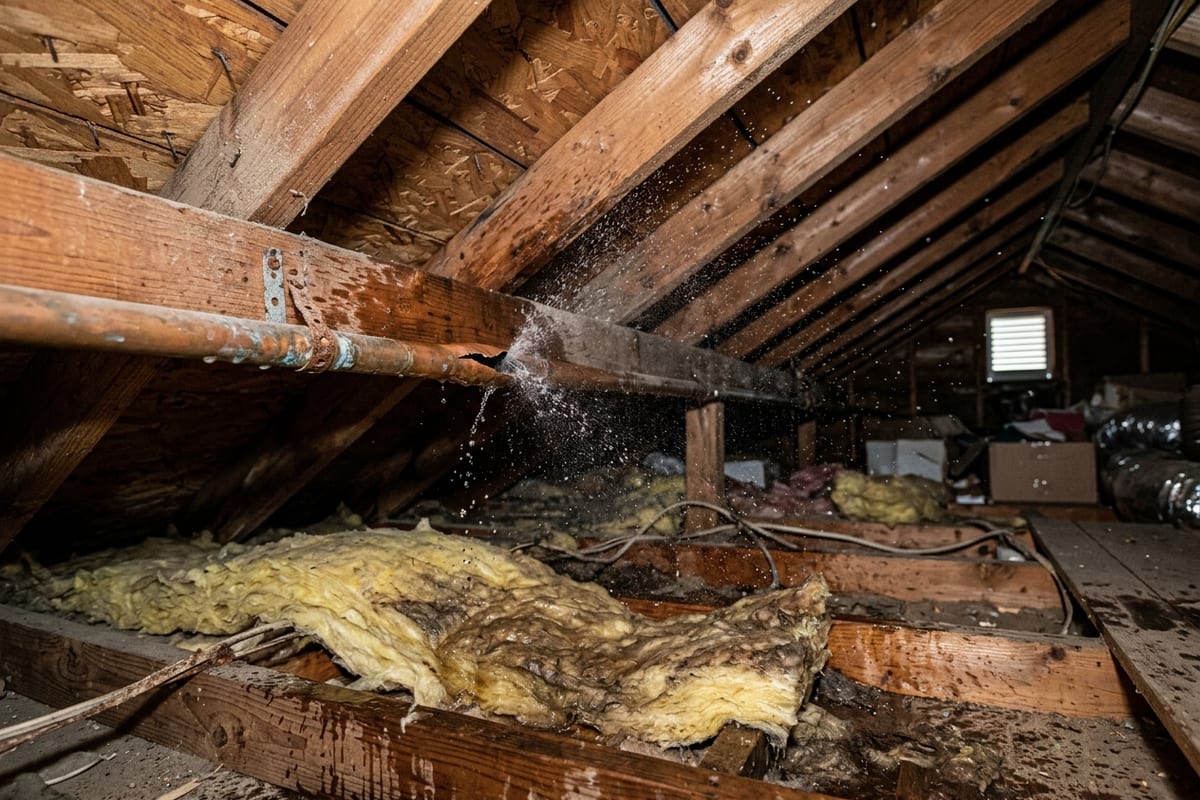
Burst pipe cleanup addresses high-pressure plumbing ruptures in attics, crawlspaces, and interior walls by immediately stopping water flow, extracting water cascading through ceilings, and drying framing to prevent structural rot.
 Local Protocol
Slab Leak Water Damage Cleanup→
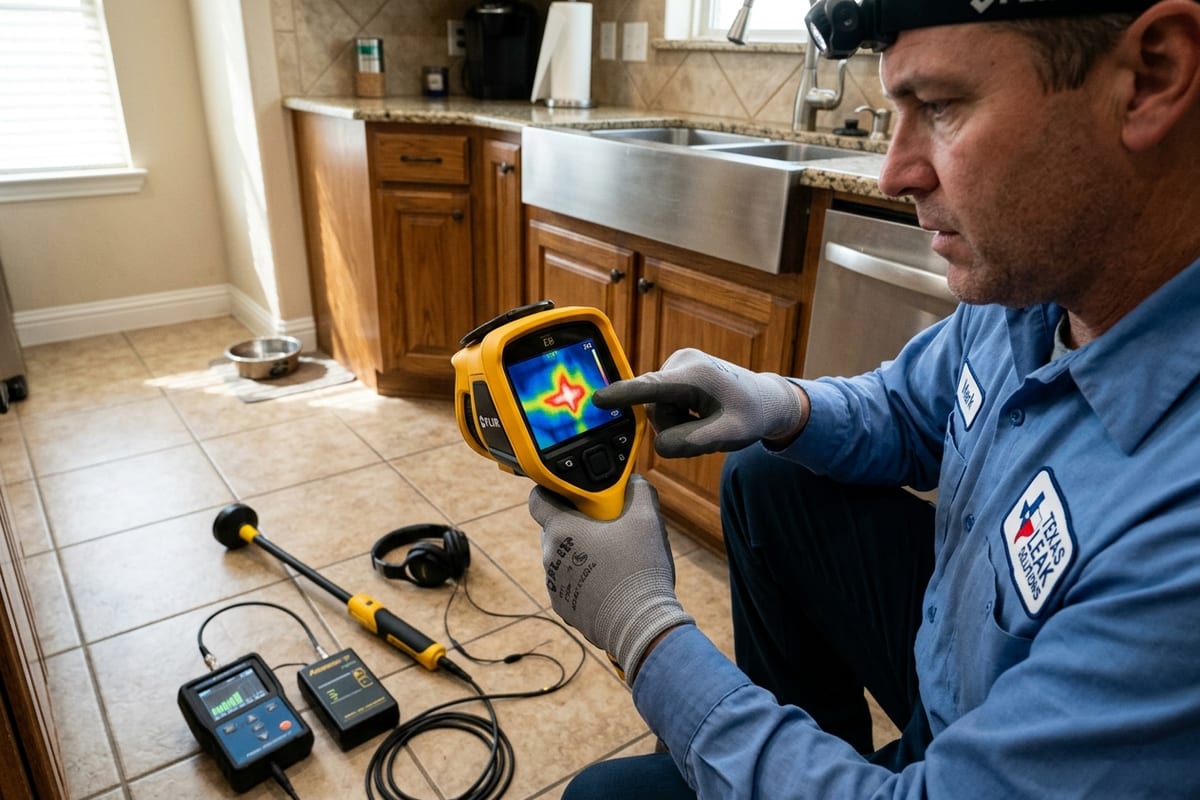
Slab leak water damage restoration extracts water migrating up through concrete foundation cracks into floors, baseboards, and walls, utilizing specialized desiccant dehumidifiers and drying mats to restore subfloor framing.
Check 45–60 Min Response Time for Your Las Vegas ZIP Code
WaterRestore Pro dispatches IICRC-certified emergency teams across Clark County 24 hours a day, 365 days a year. Verify rapid on-site coverage for your postal code:
Check Your ZIP Code Coverage
Verify immediate 45–60 minute emergency water extraction dispatch across our 50-state nationwide coverage network.
Frequently Asked Questions in Las Vegas, NV
Why do water heaters burst so frequently in Las Vegas homes?+
Garages and attics in Las Vegas reach temperatures well above 130°F in summer. Combined with high mineral scaling from hard water, pressure relief valves stick and tanks rupture, flooding living spaces. WaterRestore Pro extracts standing water and dries drywall and baseboards quickly.
How do flash floods penetrate slab-on-grade homes in Clark County?+
Due to the impermeable caliche layer, intense monsoon cloudbursts cannot seep into the desert ground. Torrential runoff channels along streets and enters homes under doors. WaterRestore Pro extracts contaminated flood water, applies hospital-grade disinfectants, and runs LGR dehumidifiers.
How quickly does mold develop in Las Vegas after a leak?+
Despite low outdoor humidity, water trapped under flooring, inside wall cavities, or behind cabinets creates an isolated humid pocket where mold colonies form within 24 to 48 hours. Professional moisture mapping and structural drying are essential.
Nearby Communities We Serve:
Standing Water in Your Home? Minutes Count.
Emergency water extraction units are on call 24 hours a day across all major metropolitan service areas. Call now for priority dispatch.