Water Damage Restoration in Portland, OR
Portland is Oregon's largest city, situated at the confluence of the Willamette and Columbia rivers against the backdrop of Mount Hood. Featuring iconic historic neighborhoods in Pearl District, Laurelhurst, Hawthorne, and the West Hills, local properties encounter severe moisture challenges from prolonged Pacific Northwest winter rainfall, high river water tables, and saturated hillside soils.
Portland, OR Coverage Facts
- Jurisdiction
- Multnomah County
- Target Response Time
- 45 to 60 Minutes On-Site
- Disaster Coverage
- 24/7, 365 Days a Year
- Covered ZIP Codes
- 97201, 97202, 97203, 97205, 97209, 97211, 97214, 97219
Housing Architecture & Water Risks in Portland, OR
Housing stock spans historic 1900s craftsman bungalows and Victorians with post-and-pier timber crawl spaces, mid-century daylight basements in the West Hills, and modern timber-framed condominiums. Elevated ambient humidity prevents wet framing from drying naturally, demanding immediate deployment of commercial LGR dehumidifiers, thermal imaging, and high-velocity axial air movers.
Key Local Restoration Issues in Portland
Willamette River Basin Groundwater Hydrostatic Pressure
Extended winter rainstorms swell the Willamette and Columbia rivers, driving groundwater through basement foundation walls in low-lying Eastside and waterfront neighborhoods.
West Hills Steep Topography Runoff & Seepage
Torrential rainfall on the steep West Hills saturates volcanic silt soils, sending high-velocity surface water against foundation perimeters and flooding daylight basements.
Post-and-Pier Timber Crawl Space Moisture & Mold
Unsealed crawl spaces in historic craftsman homes trap chronic dampness, rotting structural floor joists and promoting rapid fungal mold colonization when bathroom supply lines leak.
Regional Climate & Weather Risks in Portland
Geology, Soil & Foundation Dynamics in Portland
Building Stock & Primary Dispatch Triggers in Portland
Historic Craftsman bungalows with full basements, mid-century ranch homes with crawlspaces, modern timber-frame construction, and contemporary condominiums.
- •Perpetual crawlspace moisture leading to wood decay and mold proliferation
- •Basement seepage through concrete foundation walls from saturated ground
- •Roof leaks caused by moss accumulation damming water beneath shingles
- •Frozen supply pipes during Columbia River Gorge cold wind events
Local Water & Infrastructure Profile: Portland
Local Response & Property Access Protocols in Portland
Insurance Claim Documentation & Billing Guidelines in Oregon
In Oregon, water damage insurance claims operate under the Department of Consumer and Business Services (DCBS) Division of Financial Regulation pursuant to ORS 746.230 and OAR 836-080-0225. Carriers must acknowledge claim notifications within 15 calendar days and determine coverage within 30 days. Oregon homeowners have the right to select any certified restoration contractor. Technicians supply comprehensive moisture readings, dry logs, and itemized documentation in full compliance with ANSI/IICRC S500 standards. Oregon Division of Financial Regulation (DFR) rules under ORS 746.230 require complete and objective documentation of water mitigation procedures. Certified technicians provide daily psychrometric logs tracking grains per pound (GPP) and moisture probe readings from subflooring, framing studs, and drywall. Photographic evidence records the sudden pipe failure or fixture overflow. Standardized Xactimate invoices are submitted directly to insurance adjusters for direct carrier reimbursement.
Policyholder Rights & Independent Contractor Selection in Oregon
Under Oregon insurance regulations, residential and commercial property owners maintain the full legal authority to hire any licensed, independent disaster restoration contractor of their choice. Insurance carriers and claims adjusters are prohibited from steering or mandating the use of preferred network vendors. WaterRestore Pro dispatches certified local mitigation specialists who adhere strictly to ANSI/IICRC S500 standards, recording daily psychrometric logs, moisture baselines, and thermal imaging scans. All repair scopes are compiled using standardized Xactimate line items and submitted directly to your insurance company, supporting direct carrier billing and protecting homeowners from upfront costs on covered peril claims.
Common Emergency Calls in Portland
Local ProtocolWater Damage Restoration→
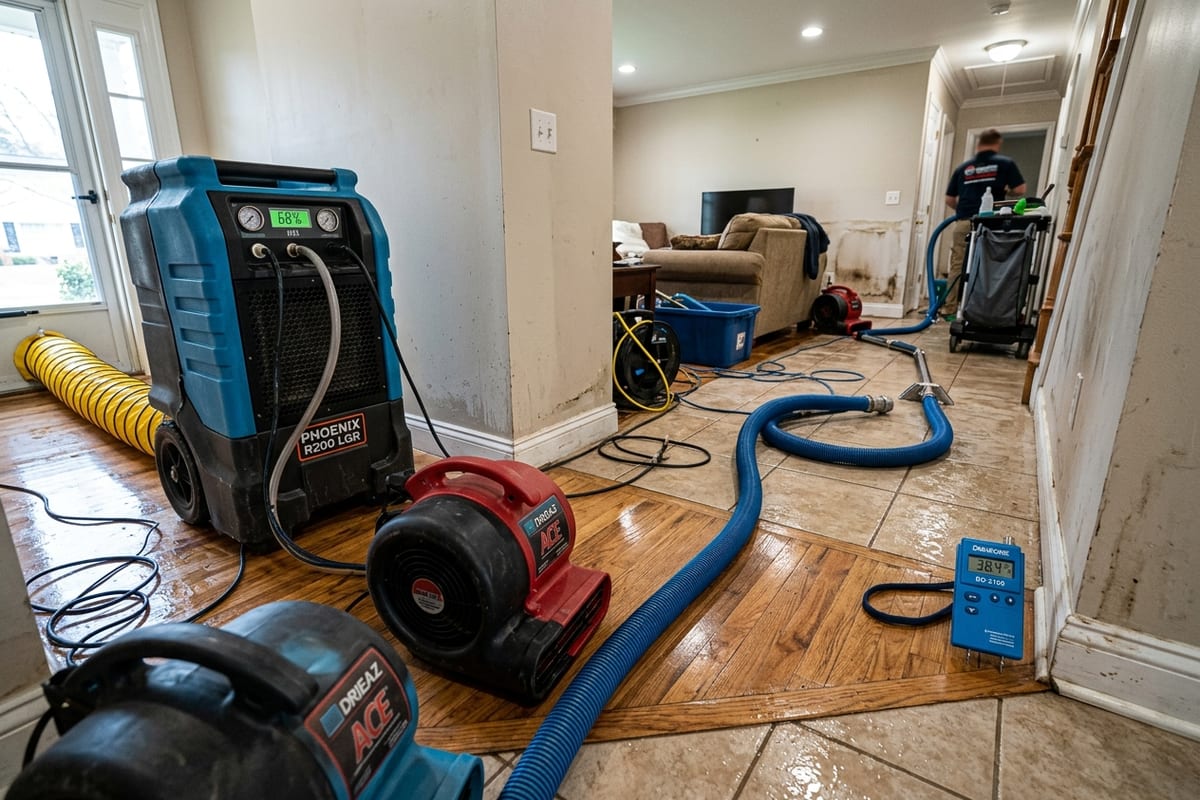
Professional water damage restoration stops progressive structural deterioration, extracts standing water with truck-mounted pumps, and dries internal wall cavities using industrial dehumidifiers within 72 hours to prevent hazardous mold growth.
 Local Protocol
Emergency Water Extraction→
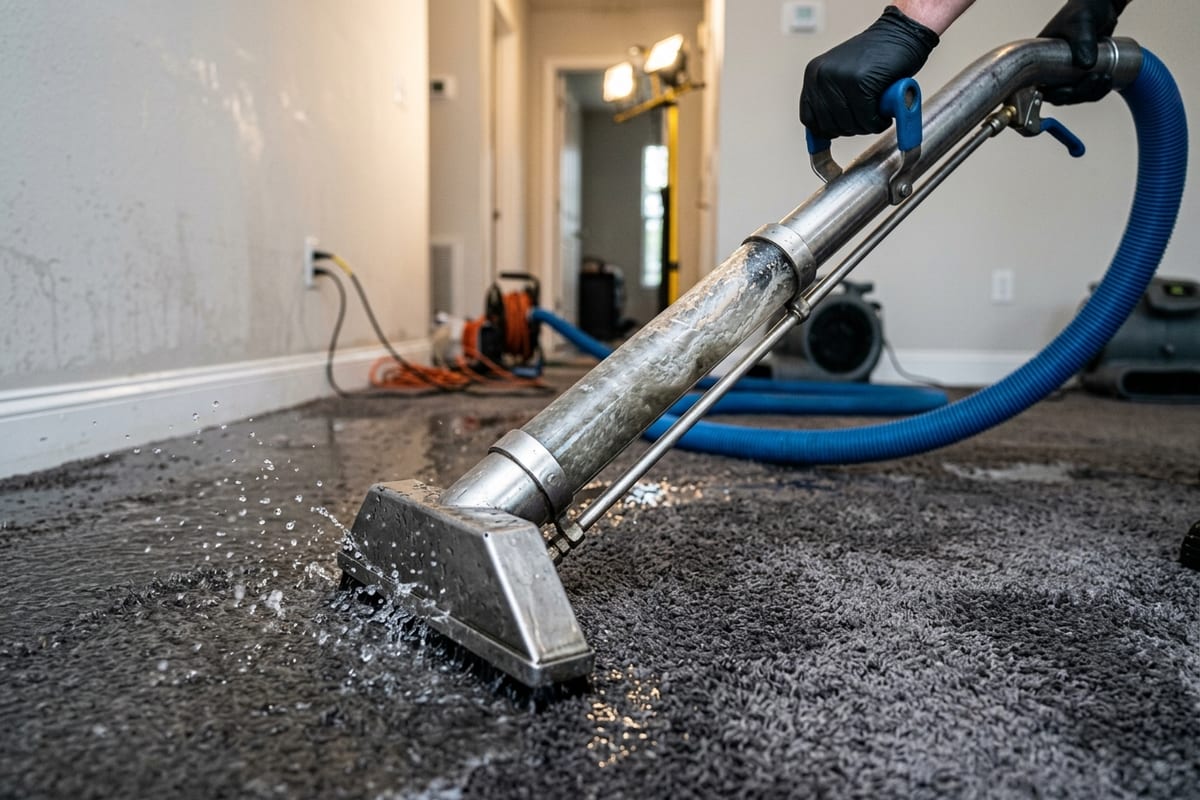
Emergency water extraction uses heavy-duty submersible pumps and truck-mounted vacuum units to physically extract hundreds of gallons of standing water per hour from flooded homes and businesses before structural framing absorbs it.
 Local Protocol
Burst & Frozen Pipe Cleanup→
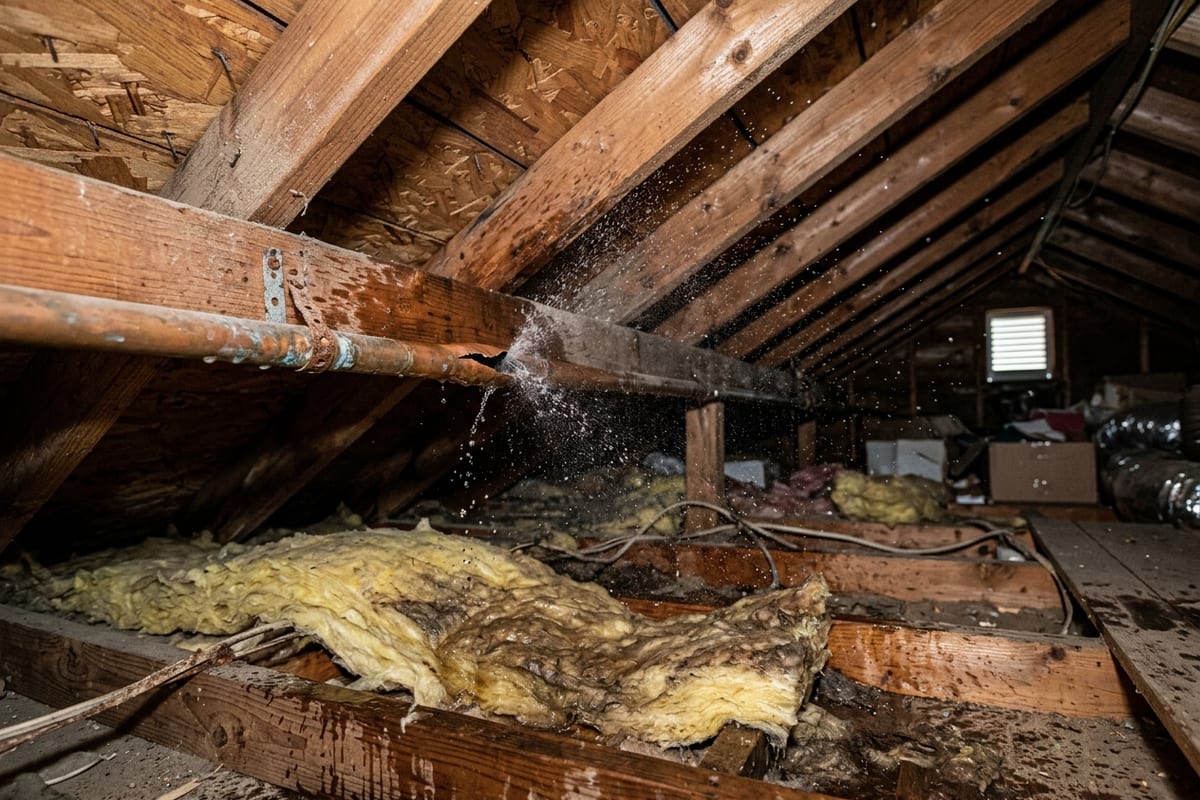
Burst pipe cleanup addresses high-pressure plumbing ruptures in attics, crawlspaces, and interior walls by immediately stopping water flow, extracting water cascading through ceilings, and drying framing to prevent structural rot.
 Local Protocol
Mold Remediation & Removal→
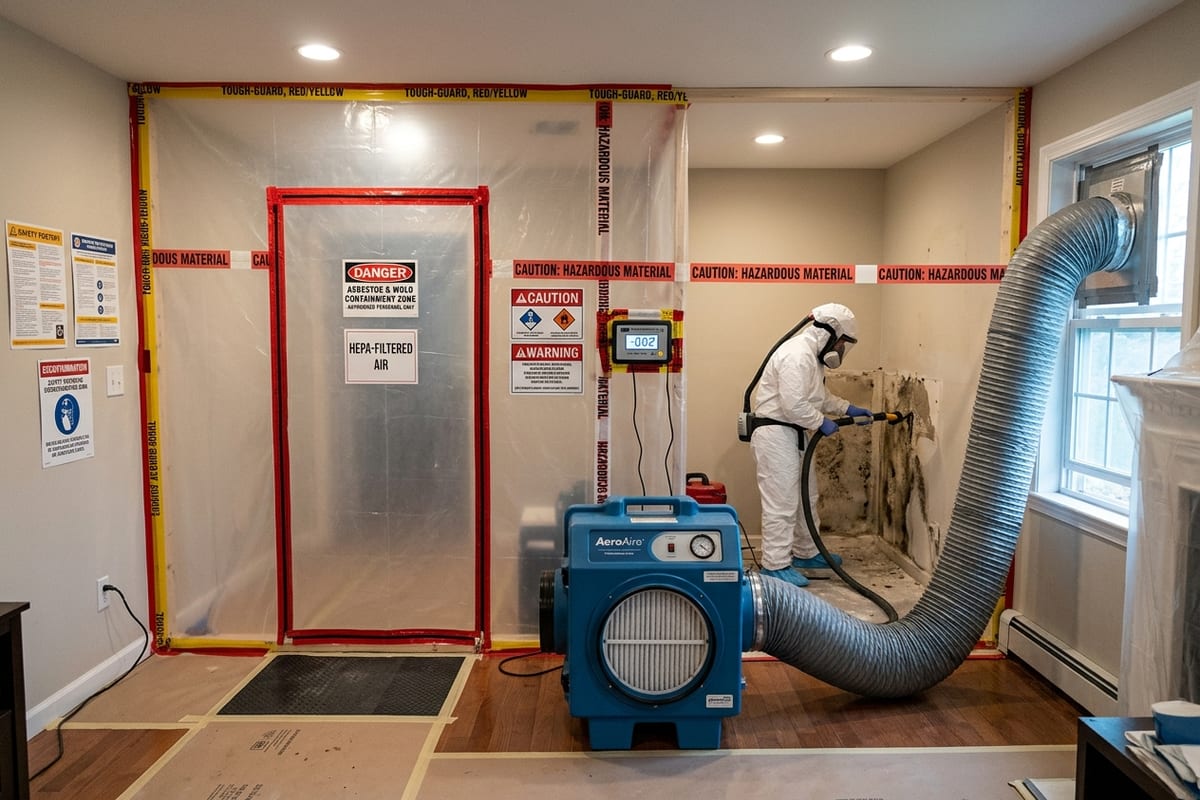
Certified mold remediation isolates active fungal colonies under negative air pressure, safely removes colonized building materials, and purifies indoor air with HEPA scrubbers to eliminate mycotoxins and prevent recurrence.
Check 45–60 Min Response Time for Your Portland ZIP Code
WaterRestore Pro dispatches IICRC-certified emergency teams across Multnomah County 24 hours a day, 365 days a year. Verify rapid on-site coverage for your postal code:
Check Your ZIP Code Coverage
Verify immediate 45–60 minute emergency water extraction dispatch across our 50-state nationwide coverage network.
Frequently Asked Questions in Portland, OR
How do you dry crawlspaces in Portland's wet winter climate?+
With outside air constantly near 100% relative humidity, opening crawlspace vents only introduces more moisture. WaterRestore Pro seals the crawlspace, pumps out standing water, applies antimicrobials to framing, and deploys high-capacity commercial dehumidifiers to dry joists safely.
What issues do Columbia River Gorge freezing winds cause in Portland?+
Sub-freezing air blasting through the Gorge drops temperatures rapidly in East Portland, freezing plumbing lines in exterior walls, unheated basements, and attics. WaterRestore Pro provides rapid emergency thawing, extraction, and structural drying.
Does Oregon homeowners insurance cover crawlspace water damage?+
Sudden pipe ruptures or drainage pipe breaks inside the crawlspace are covered under standard homeowners policies. Continuous ground seepage requires special endorsements. We provide clear, itemized documentation to confirm covered peril origin for your adjuster.
Nearby Communities We Serve:
Standing Water in Your Home? Minutes Count.
Emergency water extraction units are on call 24 hours a day across all major metropolitan service areas. Call now for priority dispatch.