Water Damage Restoration in Fort Smith, AR
Fort Smith is Arkansas's third-largest city, situated on the Arkansas River along the Oklahoma state border. Famous for the historic Fort Smith National Historic Site, Belle Grove Historic District, and manufacturing industries, properties contend with Arkansas River major flood stages, aging Victorian plumbing infrastructure, and winter freeze bursts.
Fort Smith, AR Coverage Facts
- Jurisdiction
- Sebastian County
- Target Response Time
- 45 to 60 Minutes On-Site
- Disaster Coverage
- 24/7, 365 Days a Year
- Covered ZIP Codes
- 72901, 72903, 72904, 72908
Housing Architecture & Water Risks in Fort Smith, AR
Residential properties in Fort Smith include 19th-century Victorian brick homes in Belle Grove, mid-century brick ranches in Massard, and contemporary single-family homes built on crawl spaces or concrete slabs. Situated along the Arkansas River, low-elevation areas outside flood protection levees experience severe river flood risks and high water tables during spring rainy seasons. In winter, freezing Arctic air masses funneled down the Arkansas River valley freeze domestic water lines in crawl spaces and exterior walls.
Key Local Restoration Issues in Fort Smith
Arkansas River Basin Major Flood Inundation
Spring river surges inundate riverfront streets and basements, requiring heavy-duty water pumping and structural decontamination.
Aging Galvanized & Cast-Iron Plumbing Failures
Historic homes throughout central Fort Smith suffer from interior rust scaling and sudden structural failures in aging domestic water and sewer pipes.
Winter Sub-Zero Freeze Uninsulated Crawl Space Bursts
Severe winter cold snaps freeze uninsulated domestic water lines in drafty crawl spaces, causing indoor flooding upon morning thawing.
Insurance Claim Documentation & Billing Guidelines in Arkansas
Arkansas water damage claims are regulated by the Arkansas Insurance Department (AID) under Ark. Code Ann. § 23-66-206. Carriers must acknowledge notice of a claim within 15 calendar days and process claims with reasonable promptness. Arkansas policyholders maintain the legal right to select an independent restoration contractor. Technicians provide photo proof, moisture logs, and itemized billing directly to adjusters. Arkansas Insurance Department (AID) standards under Ark. Code Ann. § 23-66-206 govern property insurance claim documentation. Certified restoration crews maintain daily psychrometric drying logs, recording moisture probe readings in framing studs, subflooring, and drywall cavities. High-resolution photographs verify the sudden accidental nature of the failure. Detailed Xactimate invoices are submitted directly to insurance adjusters for direct carrier settlement.
Policyholder Rights & Independent Contractor Selection in Arkansas
Under Arkansas insurance regulations, residential and commercial property owners maintain the full legal authority to hire any licensed, independent disaster restoration contractor of their choice. Insurance carriers and claims adjusters are prohibited from steering or mandating the use of preferred network vendors. WaterRestore Pro dispatches certified local mitigation specialists who adhere strictly to ANSI/IICRC S500 standards, recording daily psychrometric logs, moisture baselines, and thermal imaging scans. All repair scopes are compiled using standardized Xactimate line items and submitted directly to your insurance company, supporting direct carrier billing and protecting homeowners from upfront costs on covered peril claims.
Common Emergency Calls in Fort Smith
Local ProtocolWater Damage Restoration→
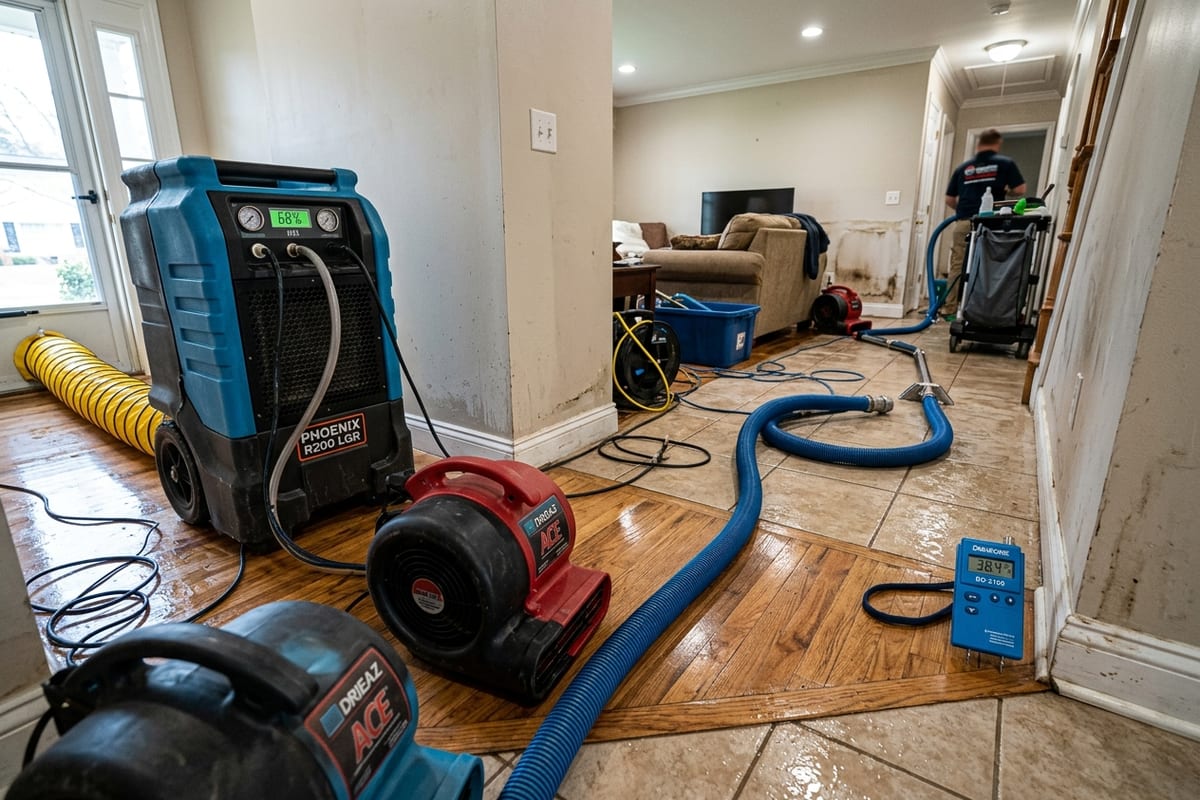
Professional water damage restoration stops progressive structural deterioration, extracts standing water with truck-mounted pumps, and dries internal wall cavities using industrial dehumidifiers within 72 hours to prevent hazardous mold growth.
 Local Protocol
Emergency Water Extraction→
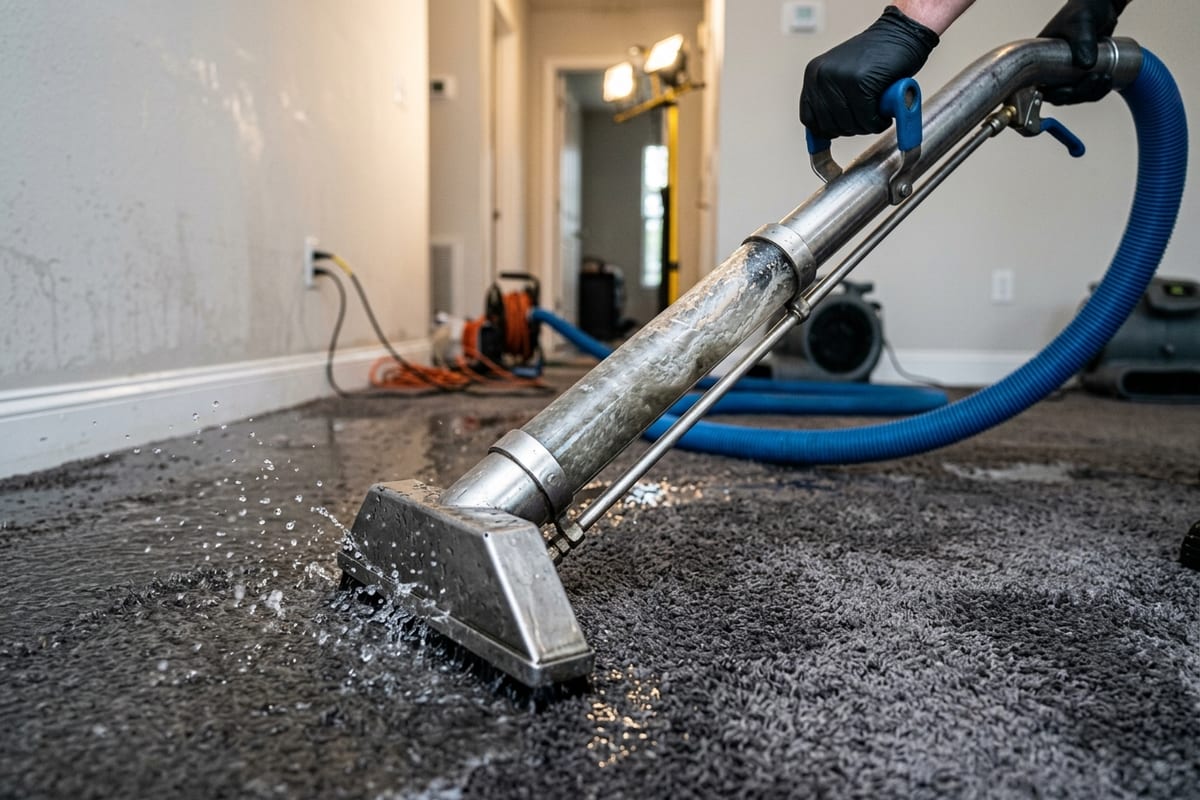
Emergency water extraction uses heavy-duty submersible pumps and truck-mounted vacuum units to physically extract hundreds of gallons of standing water per hour from flooded homes and businesses before structural framing absorbs it.
 Local Protocol
Burst & Frozen Pipe Cleanup→
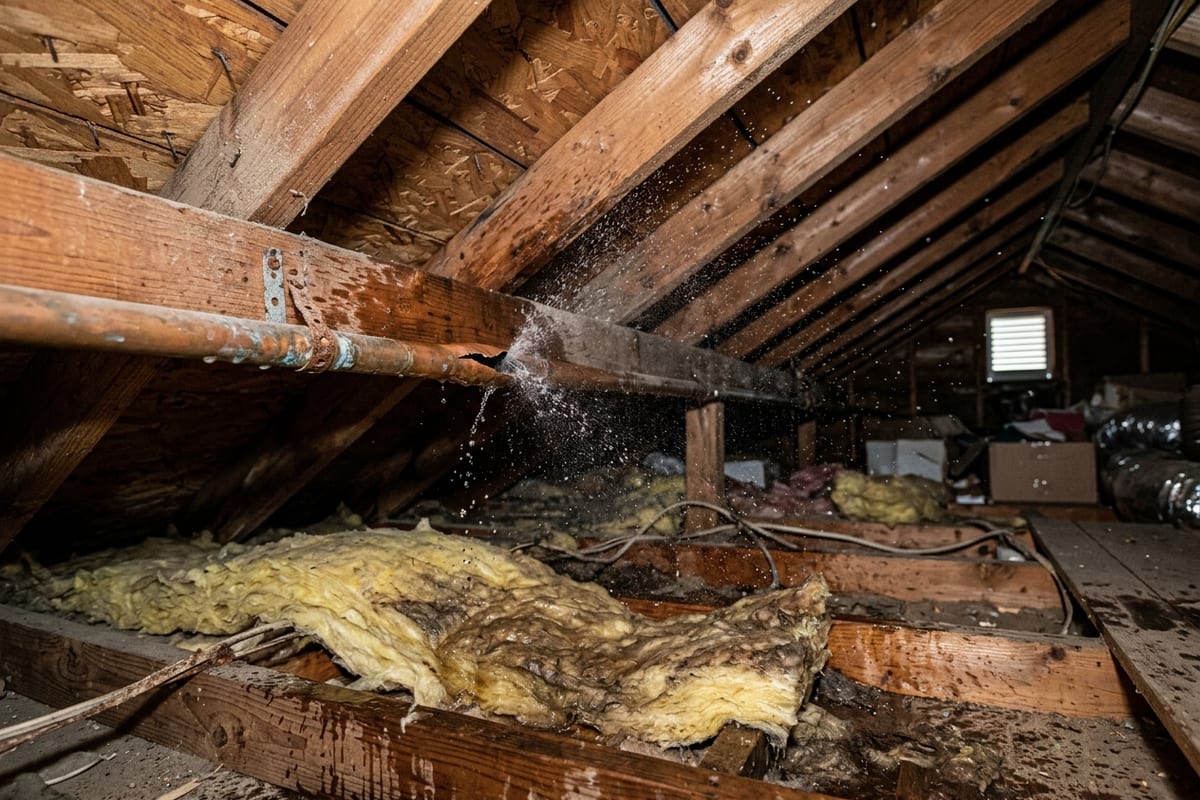
Burst pipe cleanup addresses high-pressure plumbing ruptures in attics, crawlspaces, and interior walls by immediately stopping water flow, extracting water cascading through ceilings, and drying framing to prevent structural rot.
 Local Protocol
Sewage Backup & Biohazard Cleanup→
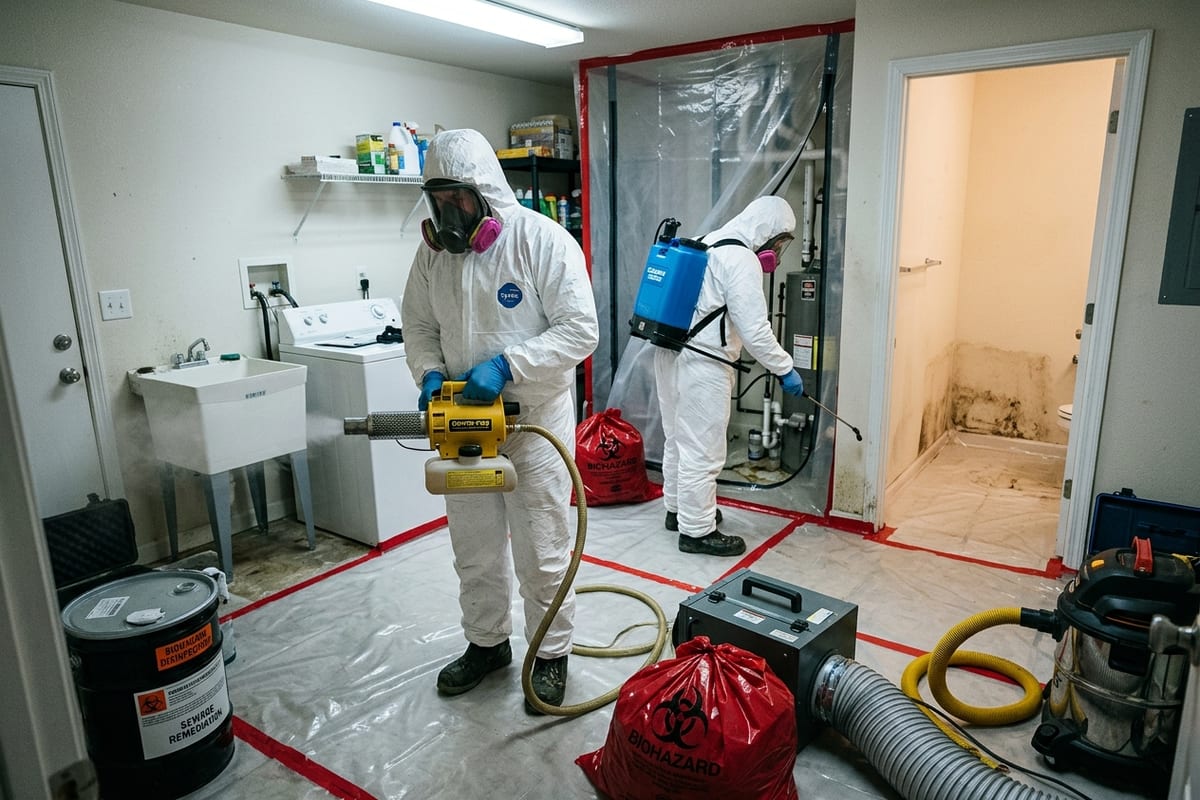
Sewage cleanup safely extracts hazardous Category 3 black water containing dangerous bacteria and pathogens, removes saturated porous building materials, and sanitizes contaminated surfaces with broad-spectrum disinfectants.
Check 45–60 Min Response Time for Your Fort Smith ZIP Code
WaterRestore Pro dispatches IICRC-certified emergency teams across Sebastian County 24 hours a day, 365 days a year. Verify rapid on-site coverage for your postal code:
Check Your ZIP Code Coverage
Verify immediate 45–60 minute emergency water extraction dispatch across our 50-state nationwide coverage network.
Frequently Asked Questions in Fort Smith, AR
How quickly do technicians arrive in Fort Smith?+
Emergency restoration specialists operate 24 hours a day across Sebastian and Crawford counties, arriving on-site within 45 to 60 minutes.
How do technicians dry historic stone and brick structures in Fort Smith?+
Specialists use non-destructive moisture meters and controlled desiccant drying to preserve vintage masonry without causing structural crumbling.
Nearby Communities We Serve:
Standing Water in Your Home? Minutes Count.
Emergency water extraction units are on call 24 hours a day across all major metropolitan service areas. Call now for priority dispatch.