Water Damage Restoration in Santa Clarita, CA
Santa Clarita is a high-growth master-planned valley community north of Los Angeles comprising Valencia, Saugus, Newhall, and Canyon Country. Surrounded by rugged chaparral mountain terrain, the city experiences dramatic seasonal weather swings, from summer triple-digit heat to freezing winter overnight lows, alongside intense winter flash flooding along the Santa Clara River basin.
Santa Clarita, CA Coverage Facts
- Jurisdiction
- Los Angeles County
- Target Response Time
- 45 to 60 Minutes On-Site
- Disaster Coverage
- 24/7, 365 Days a Year
- Covered ZIP Codes
- 91321, 91350, 91351, 91354, 91355, 91387
Housing Architecture & Water Risks in Santa Clarita, CA
Homes primarily consist of 1970s to 2010s master-planned multi-story single-family residences on slab foundations. Multi-story layouts frequently feature second-floor laundry rooms, master bathroom supply manifolds, and attic-routed PEX and copper pipes that cause multi-level flooding when ruptures occur, requiring heavy-duty structural extraction.
Key Local Restoration Issues in Santa Clarita
Attic & Upper-Floor Water Supply Line Ruptures
Extreme winter overnight freeze-thaw cycles stress exposed copper and early polybutylene lines in uninsulated attic spaces, leading to catastrophic pressurized pipe bursts that flood second-story subfloors and collapse downstairs drywall ceilings.
Santa Clara River Basin Storm Runoff Pooling
Severe winter convective storm systems dump high-volume precipitation across mountain watersheds, causing localized street flooding and ground-level water penetration into ground-level living areas and garages.
Wildfire Burn Scar Hydrophobic Runoff
Chaparral wildfires on surrounding canyon slopes leave hydrophobic soils that reject rain, creating high-velocity mud and stormwater surges that breach residential yard retaining walls and basement entries.
Insurance Claim Documentation & Billing Guidelines in California
In California, homeowner and commercial water damage insurance claims are governed by the California Insurance Code § 790.03 and the Fair Claims Settlement Practices Regulations (10 CCR § 2695). The California Department of Insurance (CDI) mandates that insurers acknowledge claim notices within 15 calendar days and complete their coverage determinations within 40 calendar days of receiving proof of claim. California law strictly prohibits insurer steering: policyholders have the absolute right to hire any qualified, licensed California C-33 or general building restoration contractor and cannot be compelled to use a carrier-affiliated franchise. Restoration documentation in California requires rigorous adherence to ANSI/IICRC S500 standards, including moisture psychrometric readings (ambient temperature, relative humidity, and grains per pound), moisture probe baselines for drywall and subflooring, and continuous dry logging to verify desiccation before structural closure. Because California HO-3 policies distinguish between sudden plumbing failures and ground surface water intrusion, emergency mitigation teams itemize the specific failure origin (e.g., pressurized supply line rupture, angle stop failure) with high-resolution photographic evidence to expedite claim settlement. The California Department of Insurance (CDI) requires objective, scientifically verifiable loss documentation before carrier disbursements are authorized. In compliance with 10 CCR § 2695 and IICRC S500 desiccation protocols, mitigation contractors compile daily psychrometric logs detailing grains-per-pound extraction rates, thermo-hygrometer readings, and continuous moisture baselines. For Southern and Northern California properties built over concrete slabs or post-and-beam foundations, non-destructive moisture meters verify that structural framing reaches the dry standard prior to wall reinstallation. Mitigation teams coordinate directly with insurance adjusters using standardized Xactimate line items, providing photo inventories of unsalvageable contents and moisture maps to facilitate direct insurance payment while safeguarding policyholders under California anti-steering statutes.
Policyholder Rights & Independent Contractor Selection in California
Under California insurance regulations, residential and commercial property owners maintain the full legal authority to hire any licensed, independent disaster restoration contractor of their choice. Insurance carriers and claims adjusters are prohibited from steering or mandating the use of preferred network vendors. WaterRestore Pro dispatches certified local mitigation specialists who adhere strictly to ANSI/IICRC S500 standards, recording daily psychrometric logs, moisture baselines, and thermal imaging scans. All repair scopes are compiled using standardized Xactimate line items and submitted directly to your insurance company, supporting direct carrier billing and protecting homeowners from upfront costs on covered peril claims.
Common Emergency Calls in Santa Clarita
Local ProtocolWater Damage Restoration→
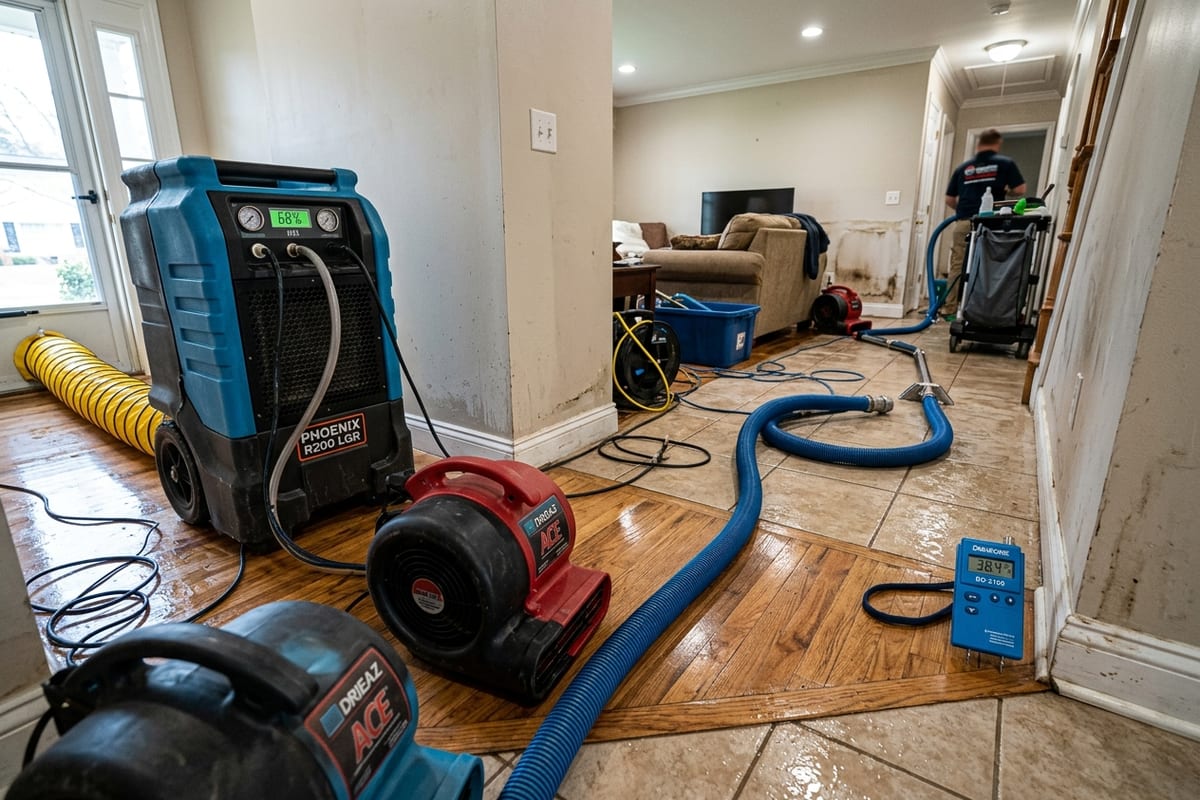
Professional water damage restoration stops progressive structural deterioration, extracts standing water with truck-mounted pumps, and dries internal wall cavities using industrial dehumidifiers within 72 hours to prevent hazardous mold growth.
 Local Protocol
Emergency Water Extraction→
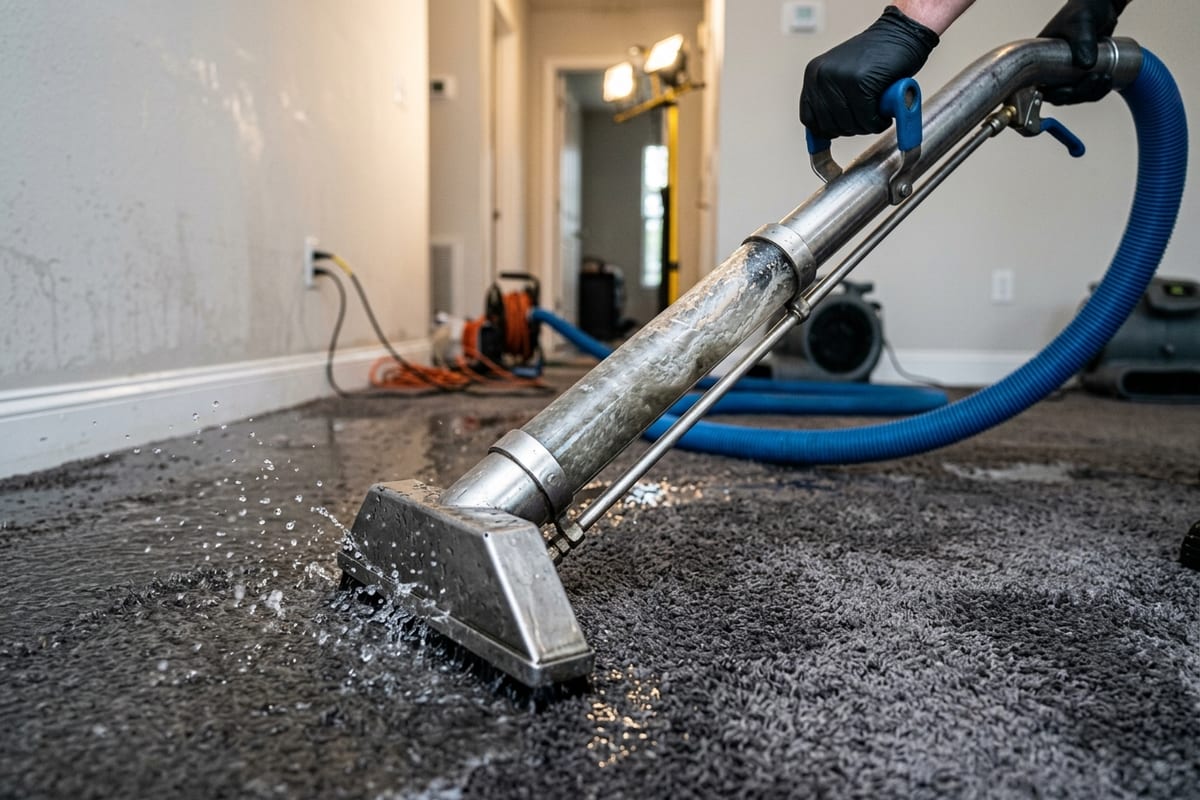
Emergency water extraction uses heavy-duty submersible pumps and truck-mounted vacuum units to physically extract hundreds of gallons of standing water per hour from flooded homes and businesses before structural framing absorbs it.
 Local Protocol
Burst & Frozen Pipe Cleanup→
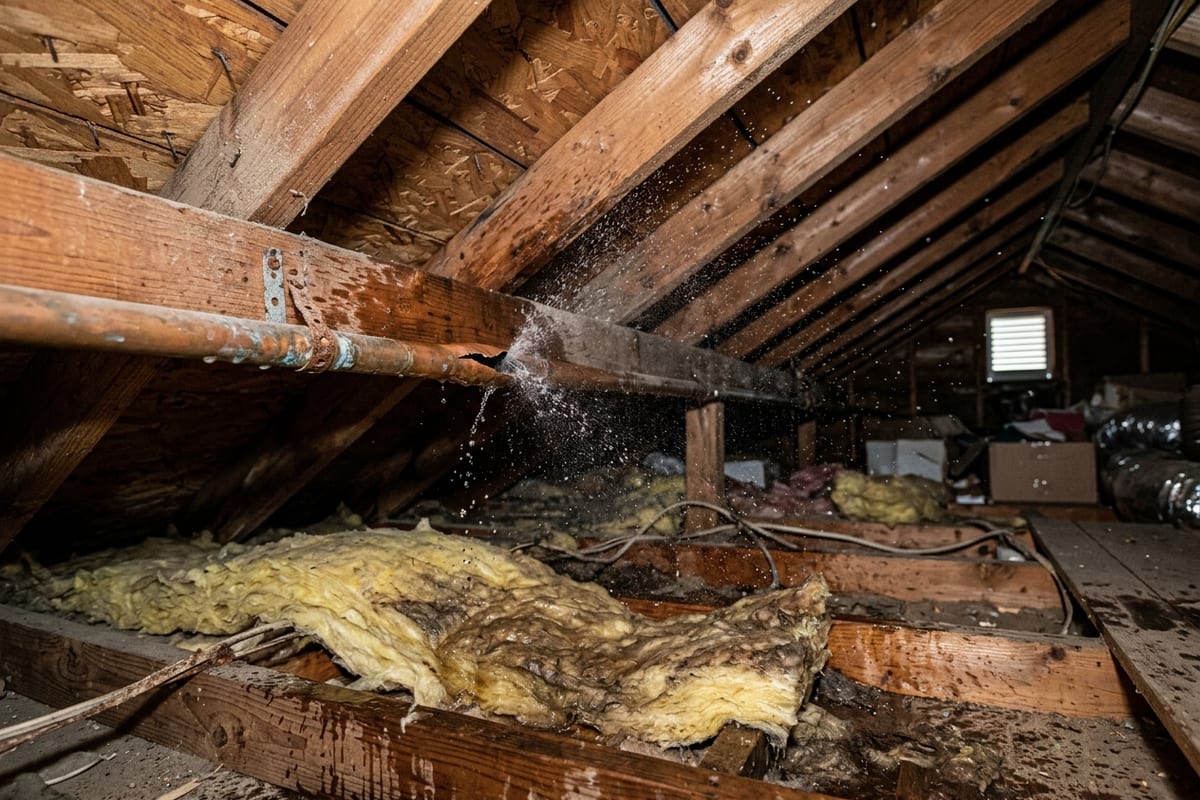
Burst pipe cleanup addresses high-pressure plumbing ruptures in attics, crawlspaces, and interior walls by immediately stopping water flow, extracting water cascading through ceilings, and drying framing to prevent structural rot.
 Local Protocol
Slab Leak Water Damage Cleanup→
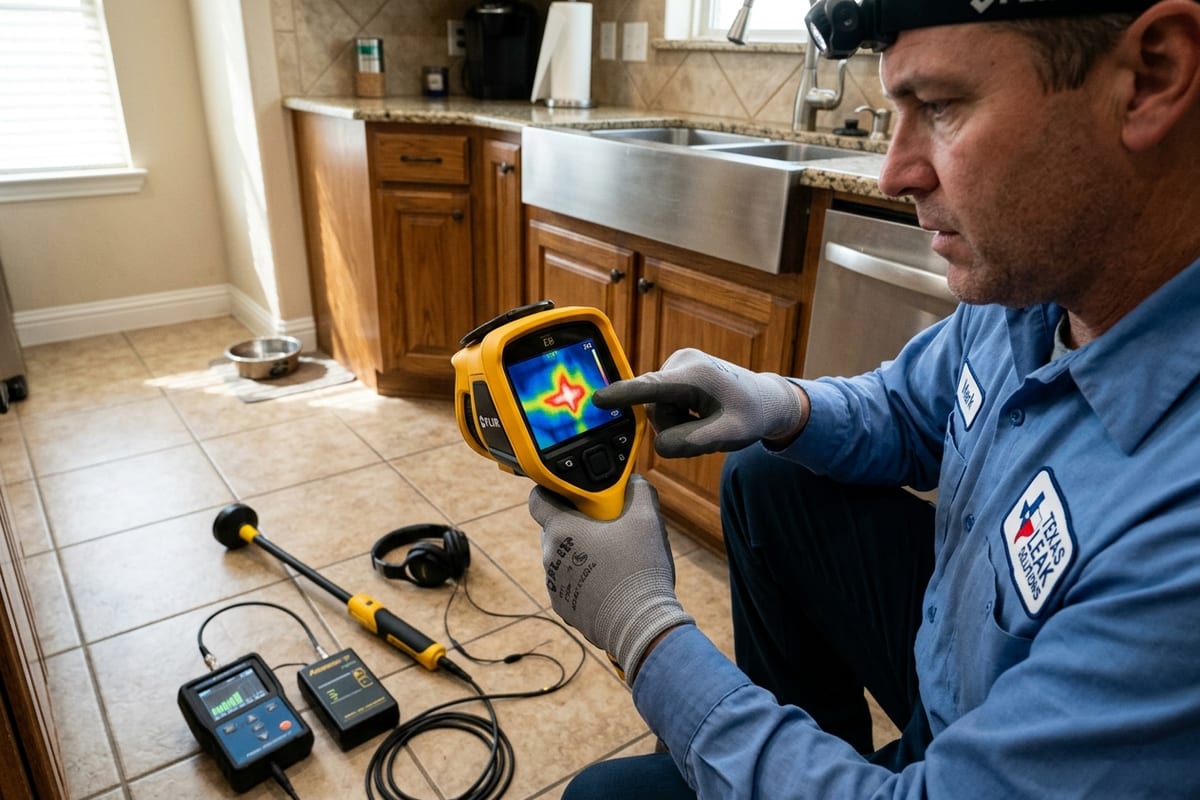
Slab leak water damage restoration extracts water migrating up through concrete foundation cracks into floors, baseboards, and walls, utilizing specialized desiccant dehumidifiers and drying mats to restore subfloor framing.
Check 45–60 Min Response Time for Your Santa Clarita ZIP Code
WaterRestore Pro dispatches IICRC-certified emergency teams across Los Angeles County 24 hours a day, 365 days a year. Verify rapid on-site coverage for your postal code:
Check Your ZIP Code Coverage
Verify immediate 45–60 minute emergency water extraction dispatch across our 50-state nationwide coverage network.
Frequently Asked Questions in Santa Clarita, CA
What should homeowners do first when an upstairs pipe bursts in Santa Clarita?+
Immediately locate and shut off the main water shutoff valve, turn off electrical power at the main breaker box to affected zones, and call WaterRestore Pro's 24/7 emergency dispatch line for rapid structural extraction.
How long does complete structural drying take in Santa Clarita homes?+
Under professional industrial desiccant and LGR dehumidification protocols, standard residential structural drying typically requires 3 to 5 days, verified daily by calibrated moisture meters.
Nearby Communities We Serve:
Standing Water in Your Home? Minutes Count.
Emergency water extraction units are on call 24 hours a day across all major metropolitan service areas. Call now for priority dispatch.