Water Damage Restoration in Durham, NC
Durham is a historic, culturally vibrant anchor of the Research Triangle, situated northwest of Raleigh along the Interstate 85 and NC-147 corridors. Renowned for Duke University, the revitalized American Tobacco Historic District, and established neighborhoods in Hope Valley, Durham properties sit atop the unique geology of the Durham Triassic Basin where expansive subsoils present foundation challenges.
Durham, NC Coverage Facts
- Jurisdiction
- Durham County
- Target Response Time
- 45 to 60 Minutes On-Site
- Disaster Coverage
- 24/7, 365 Days a Year
- Covered ZIP Codes
- 27701, 27705, 27707, 27713
Housing Architecture & Water Risks in Durham, NC
Residential properties in Durham range from historic 1920s bungalows in Trinity Park and Duke Park to mid-century ranches in Northgate and modern multi-story master-planned homes near Southpoint. Many older residences feature vented crawl spaces with aging cast-iron waste lines and copper plumbing that suffer from soil settlement.
Key Local Restoration Issues in Durham
Triassic Basin Expansive Clay Foundation Shear
Durham rests squarely in the Triassic Basin underlain by montmorillonite clay that swells and shrinks dramatically, shifting foundation piers and placing shear strain on under-slab water lines.
Ellerbe Creek & Third Fork Creek Watershed Surcharges
Torrential downpours cause rapid stage rises in urban creeks throughout central Durham, forcing stormwater backflow toward crawl spaces, walk-out basements, and foundation footings.
Crawl Space High Humidity Mold Colonization
Prolonged summer ambient humidity combined with damp clay subsoils creates continuous condensation under subflooring, triggering wood decay fungi and toxic mold proliferation within 48 hours.
Insurance Claim Documentation & Billing Guidelines in North Carolina
North Carolina residential and commercial water damage claims operate under the oversight of the North Carolina Department of Insurance (NCDOI) pursuant to N.C.G.S. § 58-63-15 and 11 NCAC 04.0119. Insurers must acknowledge claim communications promptly—typically within 15 calendar days—and render claim determinations within 30 days following receipt of all requested proof documents. North Carolina policyholders are entitled to choose any certified, insured restoration contractor to perform emergency extraction and structural stabilization. Because North Carolina properties experience diverse moisture perils ranging from Piedmont frozen supply lines to coastal wind-driven rain, mitigation partners document the precise moisture perimeter using non-invasive thermal imaging and daily drying records in full compliance with ANSI/IICRC S500 standards. North Carolina Department of Insurance (NCDOI) standards require objective proof of loss for emergency water damage extraction under 11 NCAC 04.0119. Certified mitigation crews maintain daily moisture monitoring records, logging pin and pinless meter readings from hardwood subflooring, wall studs, and drywall cavities. High-resolution photo documentation establishes the water source and moisture migration pathways. Restoration scopes are prepared in Xactimate and transmitted directly to insurance carriers, enabling direct billing and minimizing out-of-pocket costs for North Carolina homeowners.
Policyholder Rights & Independent Contractor Selection in North Carolina
Under North Carolina insurance regulations, residential and commercial property owners maintain the full legal authority to hire any licensed, independent disaster restoration contractor of their choice. Insurance carriers and claims adjusters are prohibited from steering or mandating the use of preferred network vendors. WaterRestore Pro dispatches certified local mitigation specialists who adhere strictly to ANSI/IICRC S500 standards, recording daily psychrometric logs, moisture baselines, and thermal imaging scans. All repair scopes are compiled using standardized Xactimate line items and submitted directly to your insurance company, supporting direct carrier billing and protecting homeowners from upfront costs on covered peril claims.
Common Emergency Calls in Durham
Local ProtocolWater Damage Restoration→
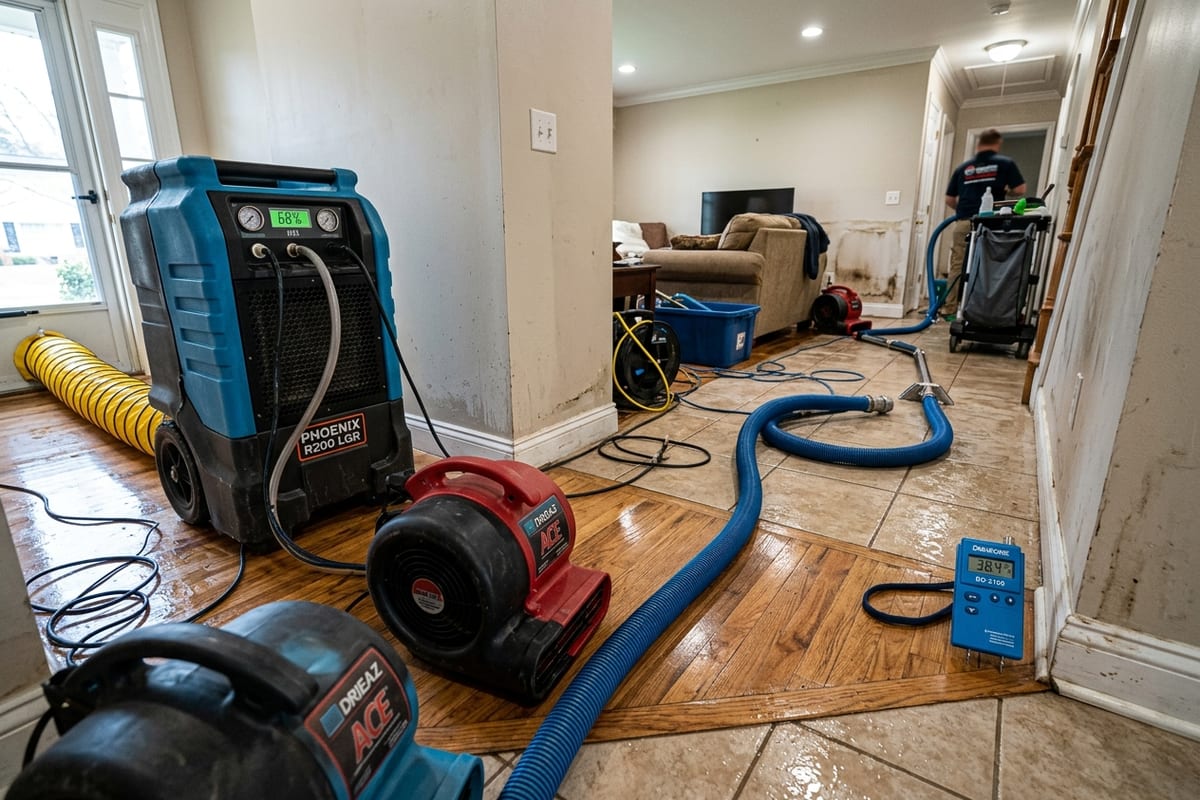
Professional water damage restoration stops progressive structural deterioration, extracts standing water with truck-mounted pumps, and dries internal wall cavities using industrial dehumidifiers within 72 hours to prevent hazardous mold growth.
 Local Protocol
Emergency Water Extraction→
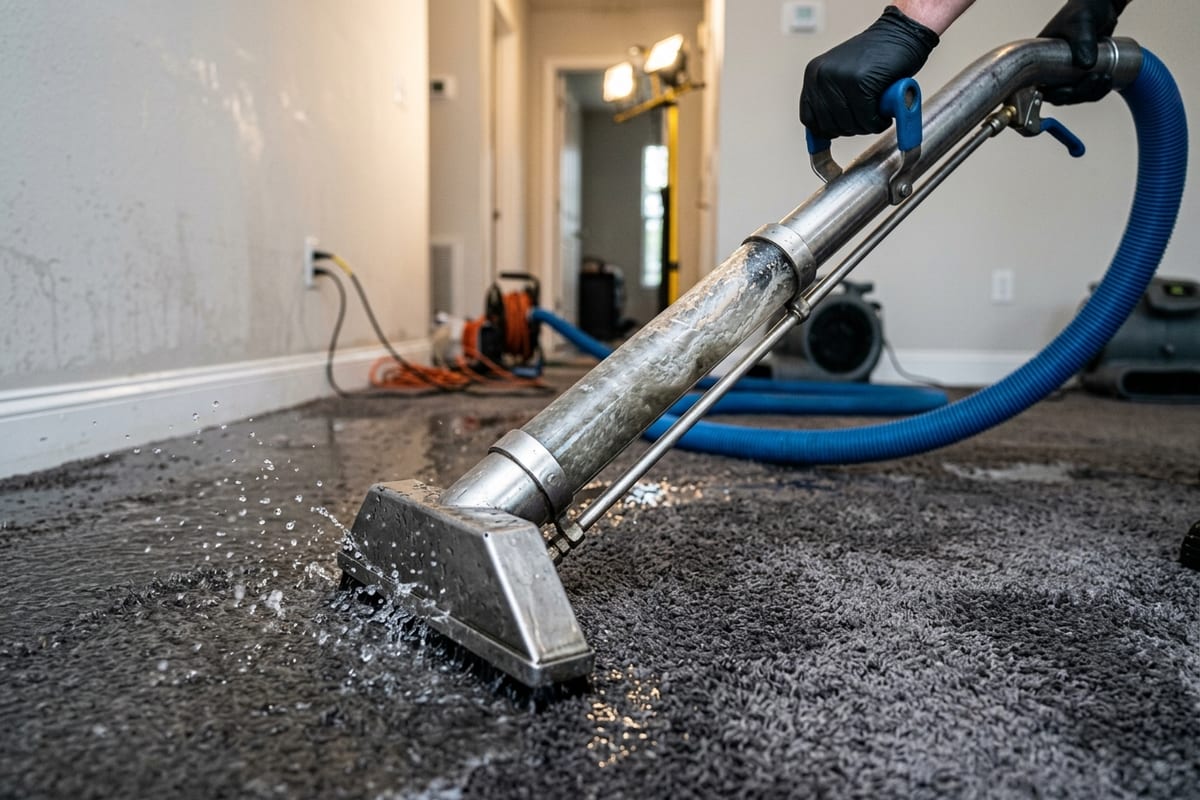
Emergency water extraction uses heavy-duty submersible pumps and truck-mounted vacuum units to physically extract hundreds of gallons of standing water per hour from flooded homes and businesses before structural framing absorbs it.
 Local Protocol
Burst & Frozen Pipe Cleanup→
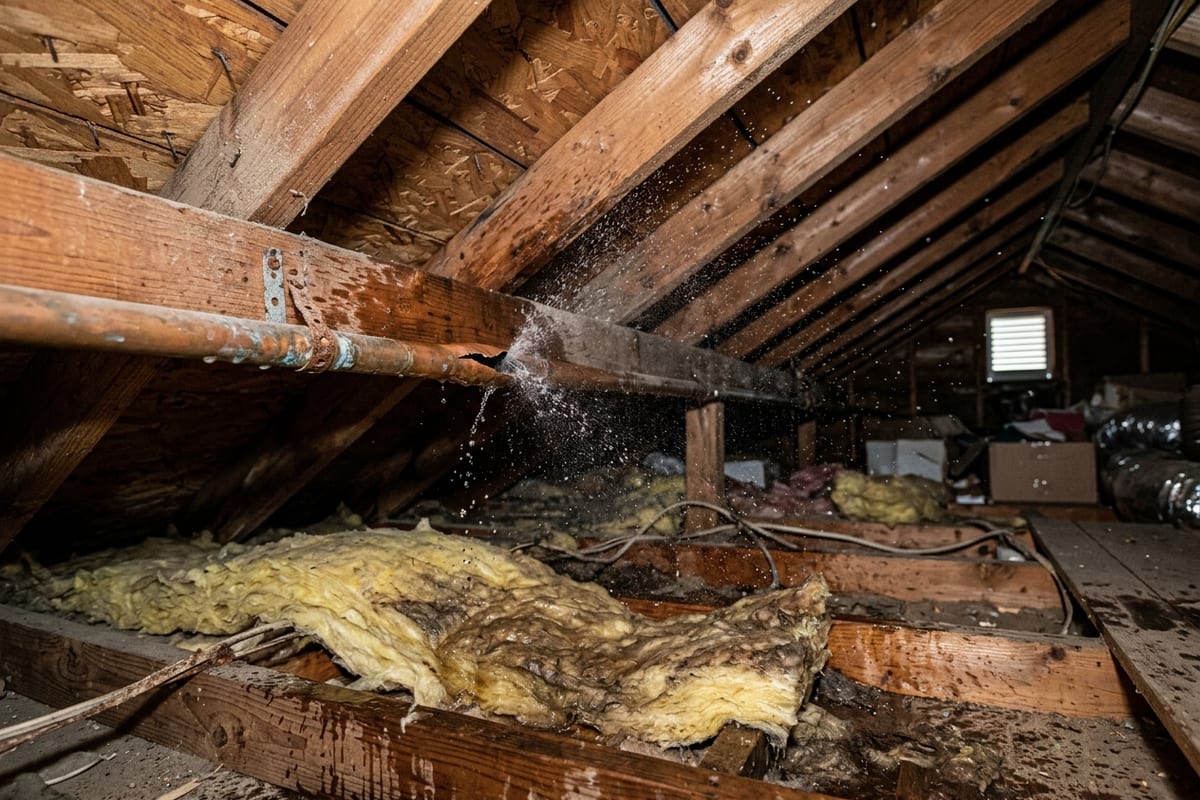
Burst pipe cleanup addresses high-pressure plumbing ruptures in attics, crawlspaces, and interior walls by immediately stopping water flow, extracting water cascading through ceilings, and drying framing to prevent structural rot.
 Local Protocol
Mold Remediation & Removal→
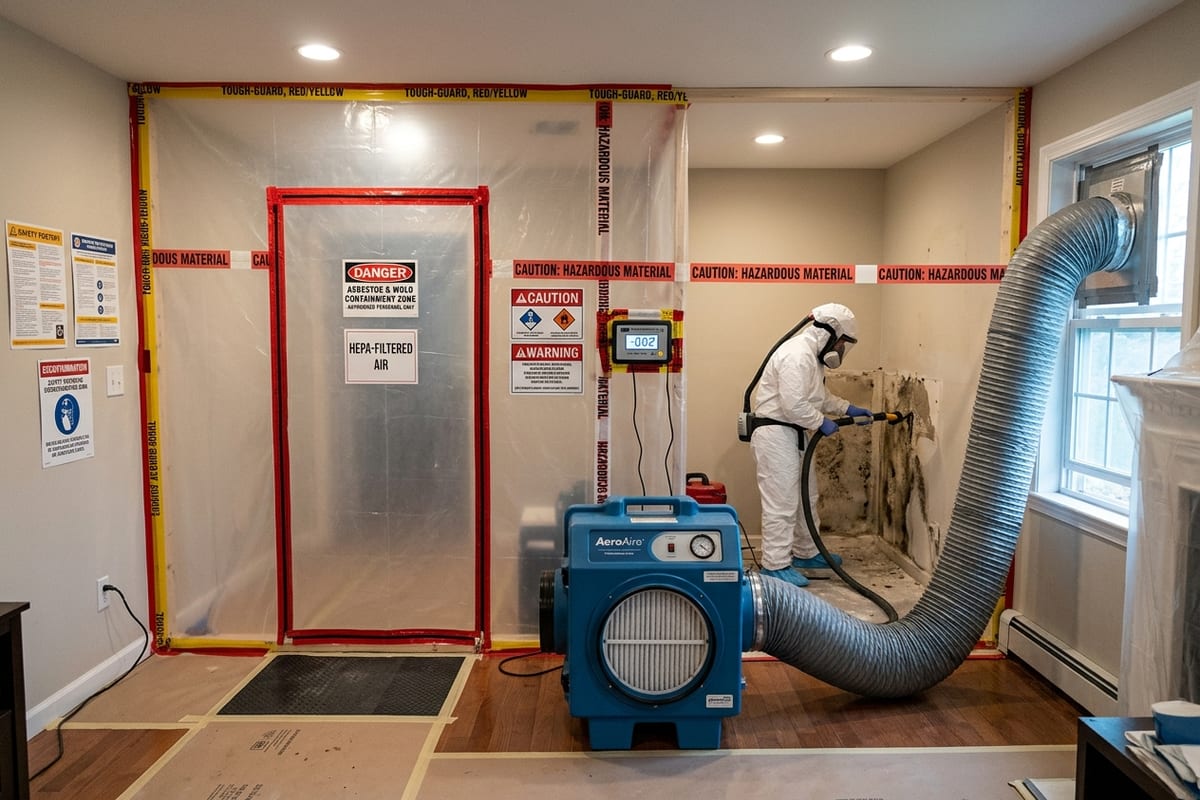
Certified mold remediation isolates active fungal colonies under negative air pressure, safely removes colonized building materials, and purifies indoor air with HEPA scrubbers to eliminate mycotoxins and prevent recurrence.
Check 45–60 Min Response Time for Your Durham ZIP Code
WaterRestore Pro dispatches IICRC-certified emergency teams across Durham County 24 hours a day, 365 days a year. Verify rapid on-site coverage for your postal code:
Check Your ZIP Code Coverage
Verify immediate 45–60 minute emergency water extraction dispatch across our 50-state nationwide coverage network.
Frequently Asked Questions in Durham, NC
How do you treat mold in a Durham crawl space?+
Crews install HEPA containment, remove contaminated vapor barriers, treat framing with antimicrobial solutions, and deploy commercial dehumidifiers to lower structural wood moisture content.
Nearby Communities We Serve:
Standing Water in Your Home? Minutes Count.
Emergency water extraction units are on call 24 hours a day across all major metropolitan service areas. Call now for priority dispatch.