Water Damage Restoration in Raleigh, NC
Raleigh is the state capital of North Carolina and the dynamic anchor of the Research Triangle, home to nearly 480,000 residents within city limits and over 1.4 million across the metropolitan region. Known as the 'City of Oaks' for its dense canopy of historic oak trees, rolling Piedmont topography, and complex drainage corridors along Walnut Creek and Crabtree Creek, Raleigh properties face seasonal flash flooding and shifting subsoil moisture conditions.
Raleigh, NC Coverage Facts
- Jurisdiction
- Wake County
- Target Response Time
- 45 to 60 Minutes On-Site
- Disaster Coverage
- 24/7, 365 Days a Year
- Covered ZIP Codes
- 27601, 27607, 27609, 27615
Housing Architecture & Water Risks in Raleigh, NC
Housing stock in Raleigh features historic Victorian and Craftsman residences in Oakwood and Five Points, mid-century brick ranches inside the I-440 Beltline, and modern master-planned communities in North Hills and Brier Creek. Foundations vary from crawl spaces with aging copper or galvanized supply lines to walk-out basements and post-tension slabs.
Key Local Restoration Issues in Raleigh
Crabtree Creek & Walnut Creek Flash Inundation
Severe summer thunderstorm complexes and tropical storm remnants rapidly overwhelm urban drainage, causing Crabtree Creek to overflow into crawl spaces, basements, and low-lying ground-floor rooms.
Piedmont Clay Hydrostatic Pressure on Basement Walls
Dense, expansive Wake County red clay swells significantly when saturated, exerting heavy lateral hydrostatic pressure against foundation walls and forcing groundwater through mortar joints.
Winter Arctic Plunge Crawl Space Pipe Ruptures
Sudden Arctic cold fronts drop overnight temperatures below 15°F, freezing exposed domestic water lines in uninsulated crawl spaces and perimeter wall chases across established Raleigh neighborhoods.
Regional Climate & Weather Risks in Raleigh
Geology, Soil & Foundation Dynamics in Raleigh
Building Stock & Primary Dispatch Triggers in Raleigh
Historic southern frame homes, sprawling suburban ranch homes with crawlspaces, modern two-story infill, and master-planned communities.
- •Crawlspace humidity saturation leading to mold growth on subfloor framing
- •Polybutylene plumbing line failures in 1980s and 1990s suburban developments
- •Attic HVAC air handler condensate pan overflows during hot, humid summer months
- •Roof leaks from wind-driven rain during tropical storm remnants
Local Water & Infrastructure Profile: Raleigh
Local Response & Property Access Protocols in Raleigh
Insurance Claim Documentation & Billing Guidelines in North Carolina
North Carolina residential and commercial water damage claims operate under the oversight of the North Carolina Department of Insurance (NCDOI) pursuant to N.C.G.S. § 58-63-15 and 11 NCAC 04.0119. Insurers must acknowledge claim communications promptly—typically within 15 calendar days—and render claim determinations within 30 days following receipt of all requested proof documents. North Carolina policyholders are entitled to choose any certified, insured restoration contractor to perform emergency extraction and structural stabilization. Because North Carolina properties experience diverse moisture perils ranging from Piedmont frozen supply lines to coastal wind-driven rain, mitigation partners document the precise moisture perimeter using non-invasive thermal imaging and daily drying records in full compliance with ANSI/IICRC S500 standards. North Carolina Department of Insurance (NCDOI) standards require objective proof of loss for emergency water damage extraction under 11 NCAC 04.0119. Certified mitigation crews maintain daily moisture monitoring records, logging pin and pinless meter readings from hardwood subflooring, wall studs, and drywall cavities. High-resolution photo documentation establishes the water source and moisture migration pathways. Restoration scopes are prepared in Xactimate and transmitted directly to insurance carriers, enabling direct billing and minimizing out-of-pocket costs for North Carolina homeowners.
Policyholder Rights & Independent Contractor Selection in North Carolina
Under North Carolina insurance regulations, residential and commercial property owners maintain the full legal authority to hire any licensed, independent disaster restoration contractor of their choice. Insurance carriers and claims adjusters are prohibited from steering or mandating the use of preferred network vendors. WaterRestore Pro dispatches certified local mitigation specialists who adhere strictly to ANSI/IICRC S500 standards, recording daily psychrometric logs, moisture baselines, and thermal imaging scans. All repair scopes are compiled using standardized Xactimate line items and submitted directly to your insurance company, supporting direct carrier billing and protecting homeowners from upfront costs on covered peril claims.
Common Emergency Calls in Raleigh
Local ProtocolWater Damage Restoration→
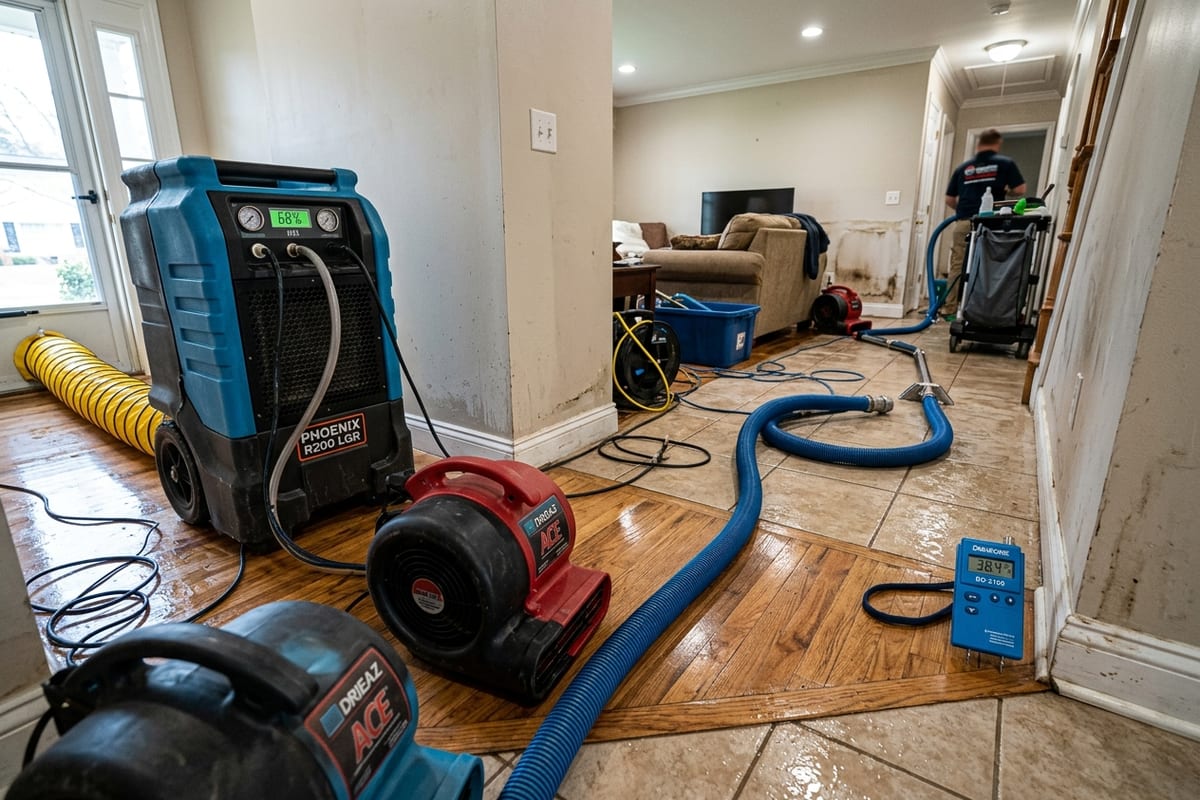
Professional water damage restoration stops progressive structural deterioration, extracts standing water with truck-mounted pumps, and dries internal wall cavities using industrial dehumidifiers within 72 hours to prevent hazardous mold growth.
 Local Protocol
Emergency Water Extraction→
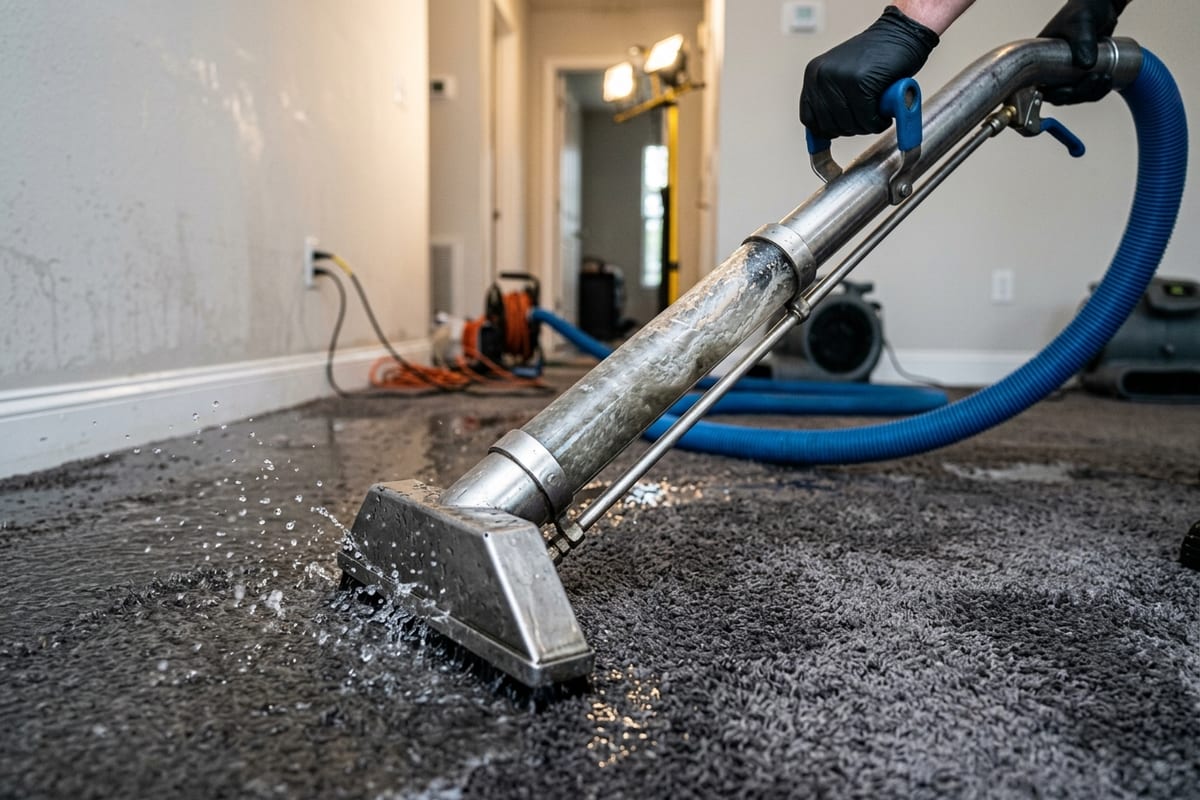
Emergency water extraction uses heavy-duty submersible pumps and truck-mounted vacuum units to physically extract hundreds of gallons of standing water per hour from flooded homes and businesses before structural framing absorbs it.
 Local Protocol
Burst & Frozen Pipe Cleanup→
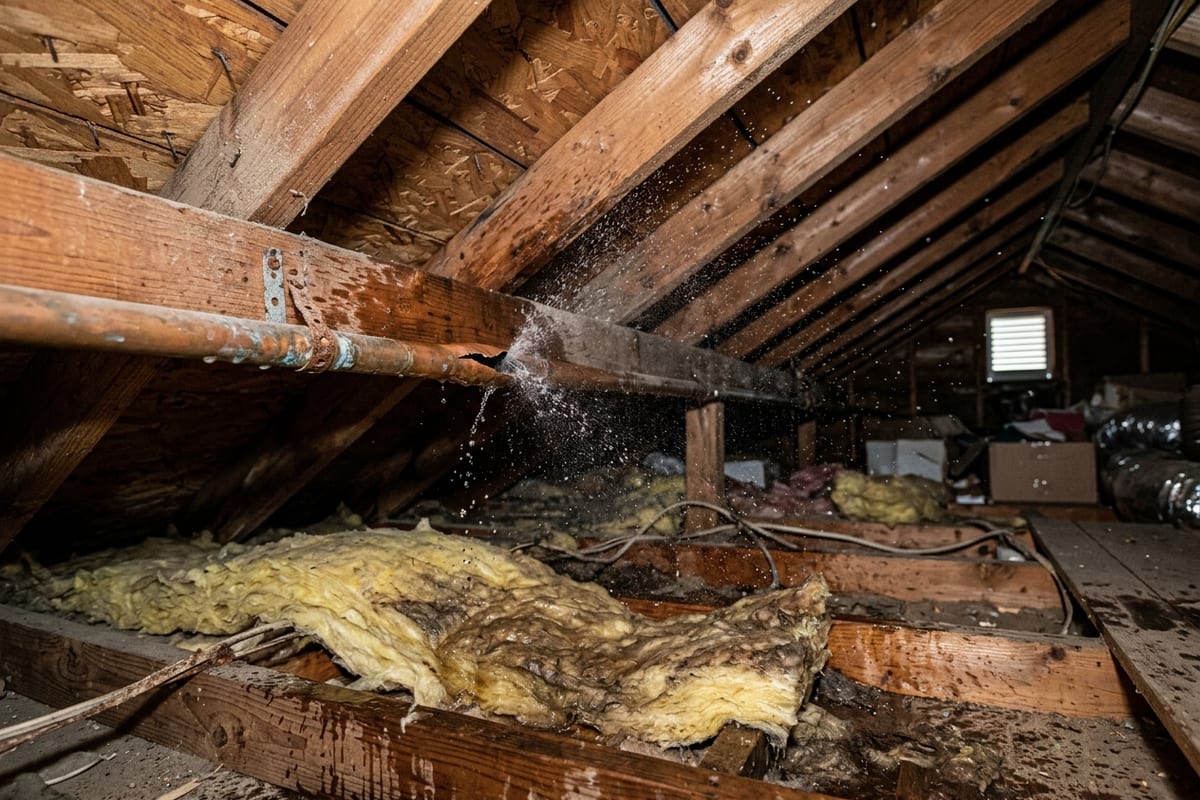
Burst pipe cleanup addresses high-pressure plumbing ruptures in attics, crawlspaces, and interior walls by immediately stopping water flow, extracting water cascading through ceilings, and drying framing to prevent structural rot.
 Local Protocol
Mold Remediation & Removal→
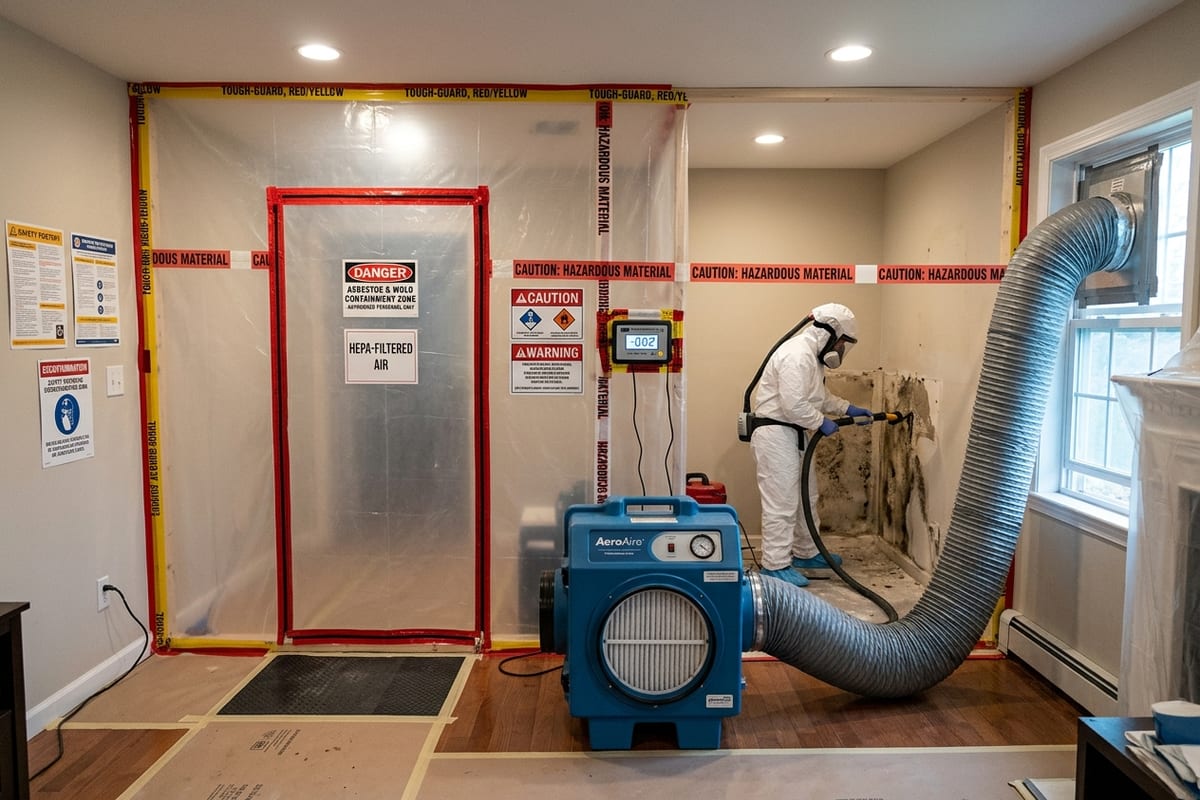
Certified mold remediation isolates active fungal colonies under negative air pressure, safely removes colonized building materials, and purifies indoor air with HEPA scrubbers to eliminate mycotoxins and prevent recurrence.
Check 45–60 Min Response Time for Your Raleigh ZIP Code
WaterRestore Pro dispatches IICRC-certified emergency teams across Wake County 24 hours a day, 365 days a year. Verify rapid on-site coverage for your postal code:
Check Your ZIP Code Coverage
Verify immediate 45–60 minute emergency water extraction dispatch across our 50-state nationwide coverage network.
Frequently Asked Questions in Raleigh, NC
How do you handle polybutylene pipe bursts in Raleigh homes?+
Polybutylene pipes become brittle and crack suddenly, often flooding entire floors. WaterRestore Pro extracts standing water, removes wet insulation and drywall, and operates commercial dehumidifiers to dry wall cavities thoroughly.
How is crawlspace mold remediated in Wake County residences?+
Raleigh's humid summers trap moisture in vented crawlspaces, fostering wood-destroying mold. WaterRestore Pro extracts water, cleans joists with botanical antimicrobials, installs sealed 20-mil vapor barriers, and operates continuous drying equipment.
Does North Carolina homeowners insurance cover water damage from a ruptured pipe?+
Yes, sudden and accidental pipe breaks are covered under standard HO-3 policies. WaterRestore Pro provides direct billing and documentation through Xactimate to ensure all drying and remediation costs are approved.
Nearby Communities We Serve:
Standing Water in Your Home? Minutes Count.
Emergency water extraction units are on call 24 hours a day across all major metropolitan service areas. Call now for priority dispatch.