Water Damage Restoration in Arlington, TX
Located at the geographic center of the DFW metroplex, Arlington is home to nearly 400,000 residents across mature suburban neighborhoods surrounding Lake Arlington and the vibrant entertainment district. The city's predominant housing stock—built during the suburban boom of the 1970s and 1980s—is reaching an age where copper supply lines under foundation slabs and aging water heaters in attics fail with high frequency across mature subdivisions.
Arlington, TX Coverage Facts
- Jurisdiction
- Tarrant County
- Target Response Time
- 45 to 60 Minutes On-Site
- Disaster Coverage
- 24/7, 365 Days a Year
- Covered ZIP Codes
- 76001, 76002, 76006, 76010, 76011, 76012, 76013, 76015, 76016, 76017, 76018
Housing Architecture & Water Risks in Arlington, TX
Most Arlington single-family homes are traditional single-story and split-level brick ranch properties built on concrete slab foundations resting on shifting prairie clay. Polybutylene plumbing installed during the late 1970s and 1980s represents a substantial burst risk throughout central and southwest Arlington, alongside deteriorating galvanized transition fittings that corrode internally over decades of service.
Key Local Restoration Issues in Arlington
Aging Polybutylene & Copper Line Ruptures
Thousands of 1980s homes throughout central and south Arlington feature deteriorating polybutylene or first-generation copper piping that develops sudden pinhole leaks inside wall cavities.
Lake Arlington Storm Runoff Surcharge
Properties adjacent to Rush Creek and Village Creek face severe flash runoff during spring storms, backing up street drainage directly toward residential foundations.
Tarrant County Clay Slab Deflection
Intense summer drying shrinks clay foundation soil away from Arlington residential footings, causing uneven slab movement that breaks embedded sewer pipes.
Regional Climate & Weather Risks in Arlington
Geology, Soil & Foundation Dynamics in Arlington
Building Stock & Primary Dispatch Triggers in Arlington
Single-story and two-story brick veneer homes on post-tensioned slab-on-grade foundations, and sprawling suburban residential subdivisions.
- •Under-slab hot and cold water line ruptures from expansive clay foundation movement
- •Roof penetrations from severe hail storms allowing rainwater entry into attics
- •Attic water heater tank bursts in unconditioned spaces during hot summer months
- •Burst sprinkler backflows and uninsulated exterior hose bibbs during winter freezes
Local Water & Infrastructure Profile: Arlington
Local Response & Property Access Protocols in Arlington
Insurance Claim Documentation & Billing Guidelines in Texas
Property owners in Texas filing a water damage insurance claim are protected under the Texas Insurance Code Chapter 542 (Prompt Payment of Claims Act). Under Texas law, insurance carriers must acknowledge receipt of a claim, commence investigation, and request all necessary documentation within 15 calendar days (or 30 days during state-declared disaster weather events). Following receipt of required proofs of loss, carriers must accept or reject the claim within 15 business days and disburse payment within 5 business days of approval. Under Texas Department of Insurance (TDI) regulations, policyholders retain the statutory right to select their own independent, IICRC-certified restoration contractor rather than accepting a preferred carrier vendor. To ensure coverage approval, mitigation contractors must provide itemized Xactimate line-item estimates, daily psychrometric chamber logs, FLIR thermal imaging documentation establishing the moisture boundary, and clear evidence separating sudden accidental discharge from gradual deterioration. For covered peril claims, direct contractor billing can be coordinated under policy authorization forms to minimize upfront policyholder out-of-pocket costs aside from the statutory policy deductible. Under Texas Department of Insurance (TDI) oversight and ANSI/IICRC S500 guidelines, mitigation specialists in Texas must provide adjusters with a complete digital claim substantiation package. This requires initial FLIR thermal imaging surveys establishing the exact perimeter of moisture migration, daily psychrometric logs recording ambient temperature, relative humidity, and humidity ratio (GPP), and calibrated moisture probe readings across drywall, framing studs, and subfloors. Because Texas homes frequently experience slab foundation shifting from expansive clay, crews document that plumbing breaches occurred suddenly and accidentally. Itemized Xactimate estimates adhering to regional Texas unit pricing enable seamless carrier review and direct insurance billing, shielding policyholders from out-of-pocket costs aside from their statutory policy deductible.
Policyholder Rights & Independent Contractor Selection in Texas
Under Texas insurance regulations, residential and commercial property owners maintain the full legal authority to hire any licensed, independent disaster restoration contractor of their choice. Insurance carriers and claims adjusters are prohibited from steering or mandating the use of preferred network vendors. WaterRestore Pro dispatches certified local mitigation specialists who adhere strictly to ANSI/IICRC S500 standards, recording daily psychrometric logs, moisture baselines, and thermal imaging scans. All repair scopes are compiled using standardized Xactimate line items and submitted directly to your insurance company, supporting direct carrier billing and protecting homeowners from upfront costs on covered peril claims.
Common Emergency Calls in Arlington
Local ProtocolWater Damage Restoration→
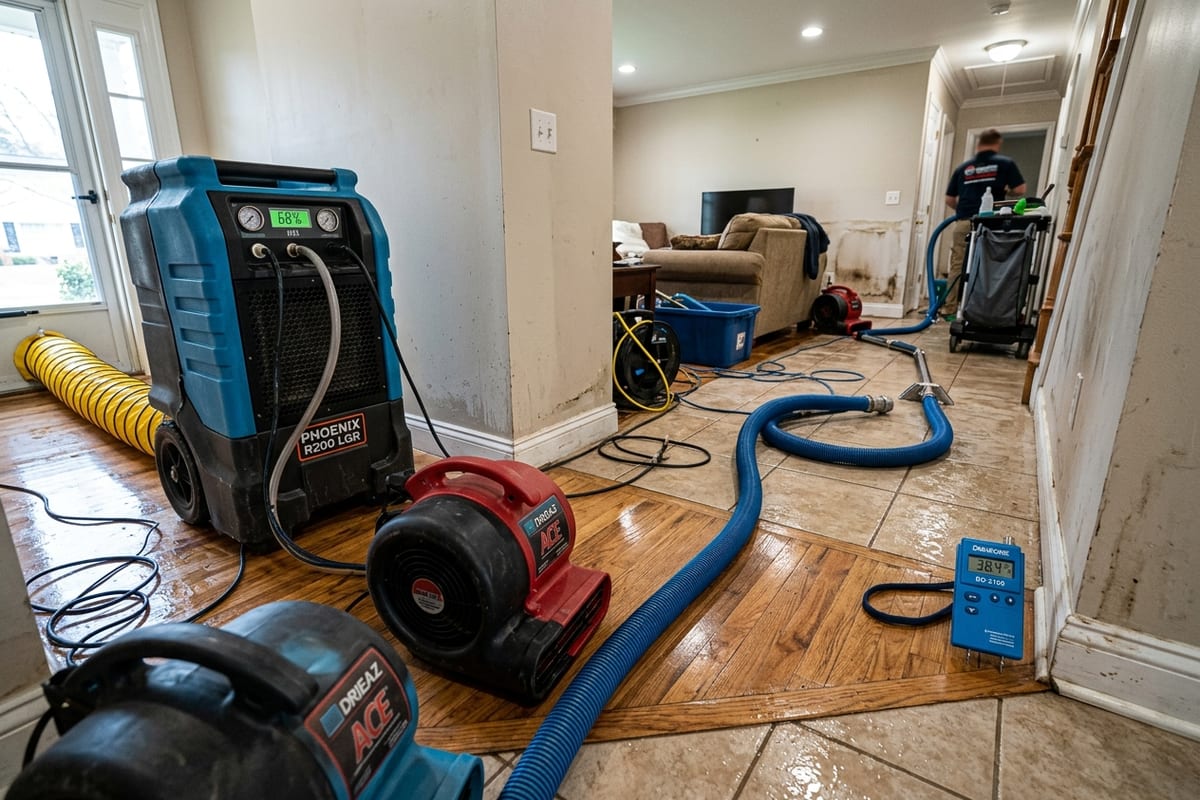
Professional water damage restoration stops progressive structural deterioration, extracts standing water with truck-mounted pumps, and dries internal wall cavities using industrial dehumidifiers within 72 hours to prevent hazardous mold growth.
 Local Protocol
Burst & Frozen Pipe Cleanup→
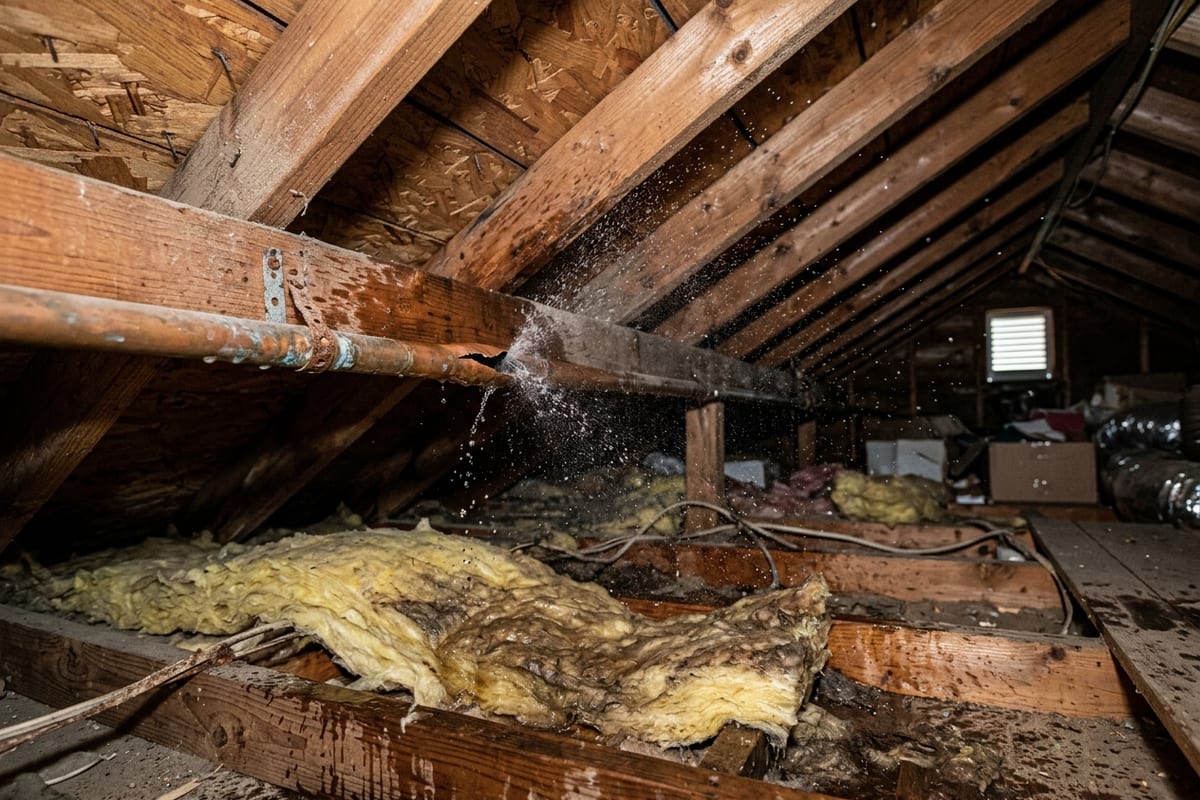
Burst pipe cleanup addresses high-pressure plumbing ruptures in attics, crawlspaces, and interior walls by immediately stopping water flow, extracting water cascading through ceilings, and drying framing to prevent structural rot.
 Local Protocol
Slab Leak Water Damage Cleanup→
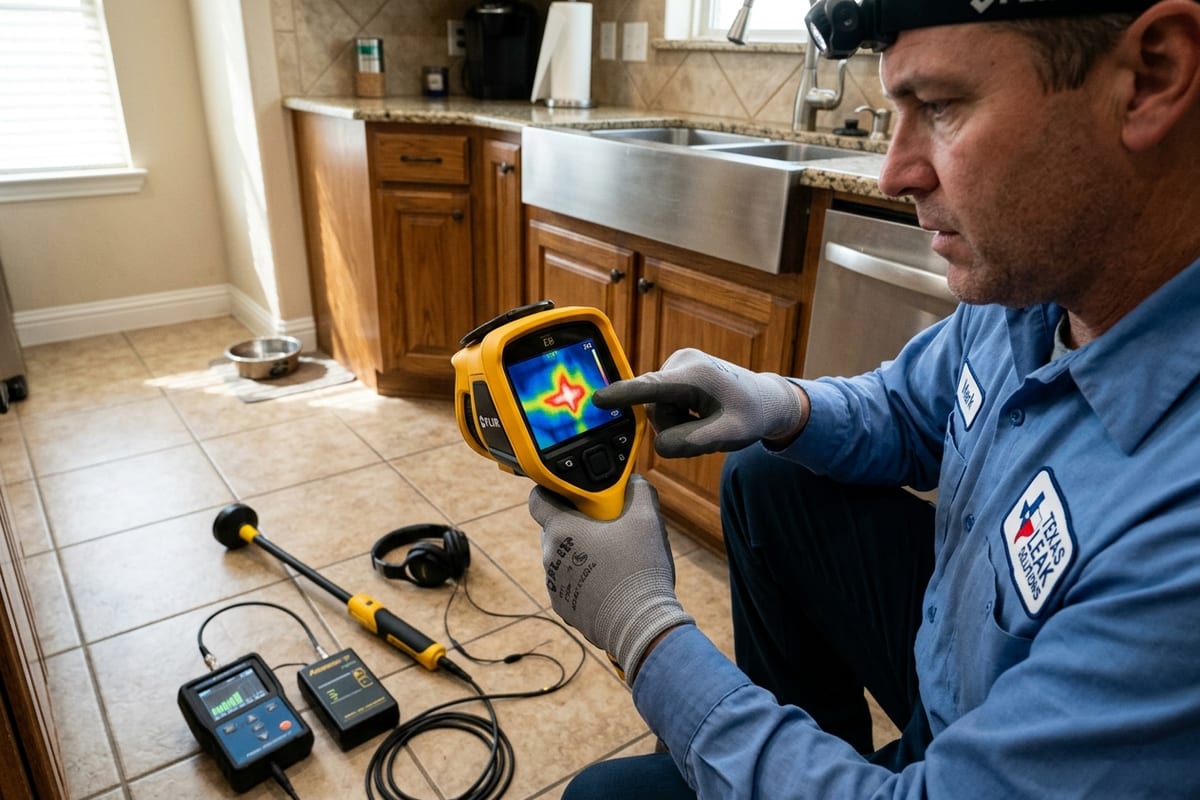
Slab leak water damage restoration extracts water migrating up through concrete foundation cracks into floors, baseboards, and walls, utilizing specialized desiccant dehumidifiers and drying mats to restore subfloor framing.
 Local Protocol
Sewage Backup & Biohazard Cleanup→
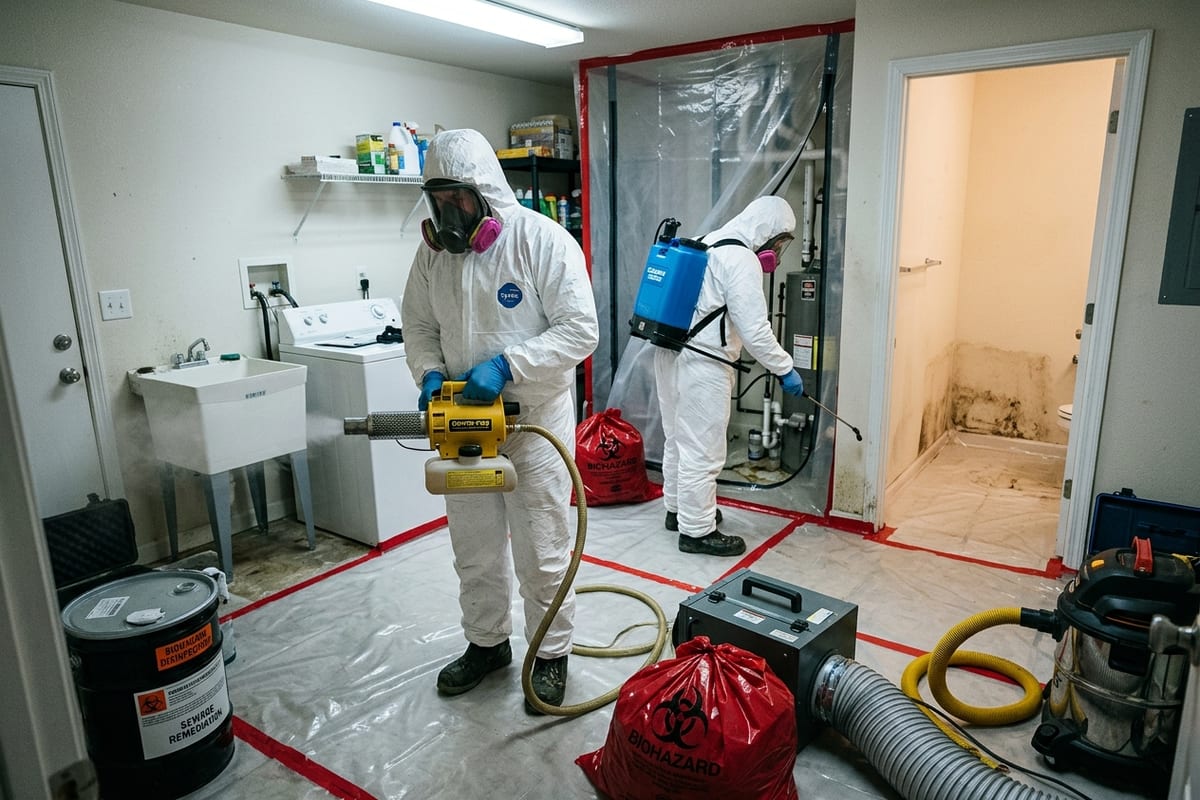
Sewage cleanup safely extracts hazardous Category 3 black water containing dangerous bacteria and pathogens, removes saturated porous building materials, and sanitizes contaminated surfaces with broad-spectrum disinfectants.
Check 45–60 Min Response Time for Your Arlington ZIP Code
WaterRestore Pro dispatches IICRC-certified emergency teams across Tarrant County 24 hours a day, 365 days a year. Verify rapid on-site coverage for your postal code:
Check Your ZIP Code Coverage
Verify immediate 45–60 minute emergency water extraction dispatch across our 50-state nationwide coverage network.
Frequently Asked Questions in Arlington, TX
Why are slab leaks so common in Arlington residential neighborhoods?+
Arlington sits on deep Eagle Ford shale clay that expands when wet and shrinks dramatically during dry summer months. This cyclic movement bends concrete slabs, stressing or breaking buried copper and PEX lines. WaterRestore Pro detects leaks non-invasively and dries affected building materials.
What is WaterRestore Pro's response time in Arlington?+
We maintain dedicated local emergency response units in Arlington, targeting on-site arrival within 45 to 60 minutes for priority flood and water damage emergencies across Tarrant County.
Will Texas insurance pay for water damage from a burst attic water heater?+
Yes, sudden water heater ruptures are covered by standard homeowners policies. Insurance covers water extraction, drying of drywall, framing, and flooring, and necessary mold prevention treatments. We bill your carrier directly through Xactimate.
Nearby Communities We Serve:
Standing Water in Your Home? Minutes Count.
Emergency water extraction units are on call 24 hours a day across all major metropolitan service areas. Call now for priority dispatch.