What to Do When a Pipe Freezes and Bursts in Winter
If a frozen pipe bursts, immediately turn off your main water valve to prevent flooding during thaw, open faucets to relieve expansion pressure, turn off power if water is near electrical lines, and call emergency water mitigation crews before water saturates ceiling insulation.
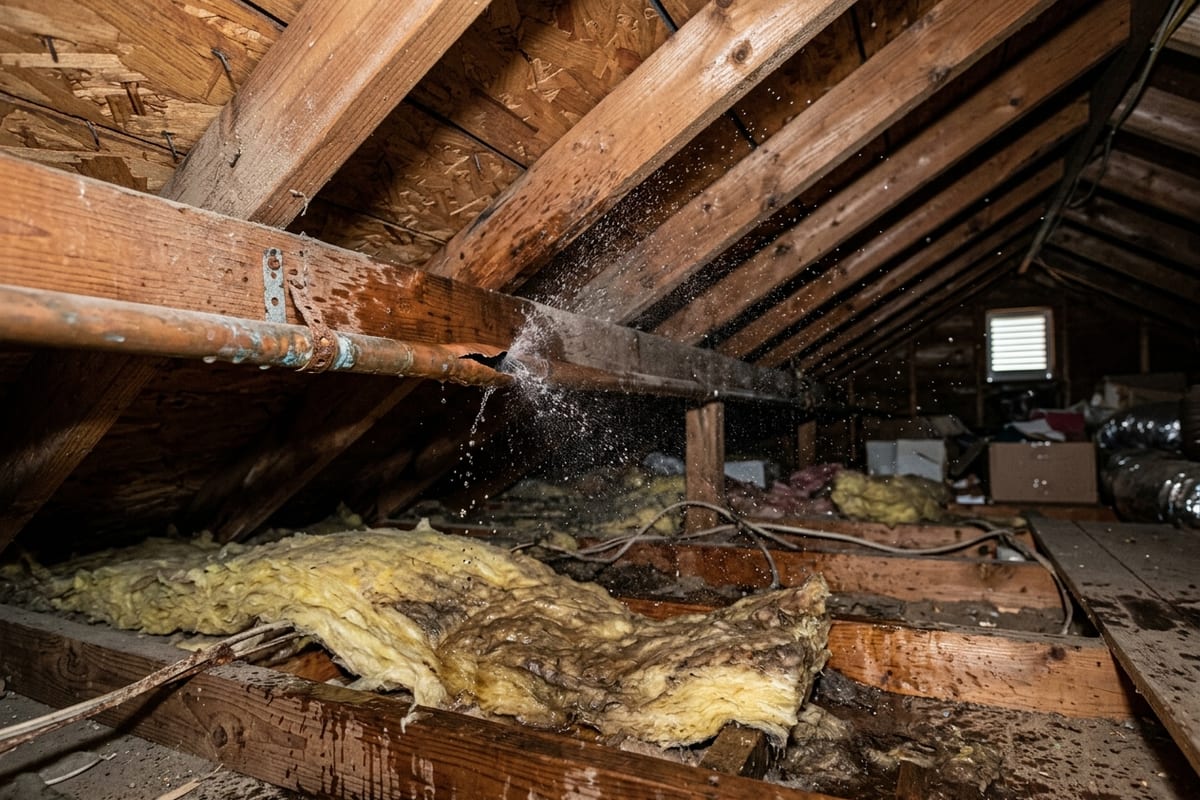
Why Pipes Burst During Thawing, Not Freezing
Water expands by 9% when it freezes into ice, forming an ice plug inside the copper or PEX pipe. The actual pipe rupture happens because of hydrostatic pressure trapped between the ice blockage and the closed faucet.
When ambient temperatures rise above freezing, the ice plug melts, allowing full municipal line pressure (60–80 PSI) to pour through the split pipe at 10 to 20 gallons per minute.
Safe Steps to Thaw Frozen Lines
Open cold and hot faucets slightly throughout the house so melting water has an escape route.
Use a handheld hair dryer, electric heating pad, or warm towels wrapped around exposed pipes in garages or under sinks. **Never use an open flame torch, propane heater, or heat gun**, as this ignites surrounding insulation and framing studs.
Handling Ceiling Water Collapses
If an attic pipe has ruptured, water will pool on top of ceiling drywall, creating large, heavy sagging blisters. Place plastic trash bins beneath the bulge and use a long screwdriver to punch a small center hole, draining the water safely before the drywall sheet collapses.
Frequently Asked Questions
How long should you leave water dripping during a freeze?+
Maintain a steady pencil-lead stream of water from both hot and cold faucets whenever temperatures are projected to stay below 28°F for more than four consecutive hours.
Standing Water in Your Home? Minutes Count.
Emergency water extraction units are on call 24 hours a day across all major metropolitan service areas. Call now for priority dispatch.