What to Do in the First 60 Minutes of a House Flood
During the first hour of a home flood, immediately shut off the main water valve, switch off electrical circuit breakers to flooded areas if safe, document standing water with photos, and call a 24/7 disaster restoration service before water migrates into structural drywall.
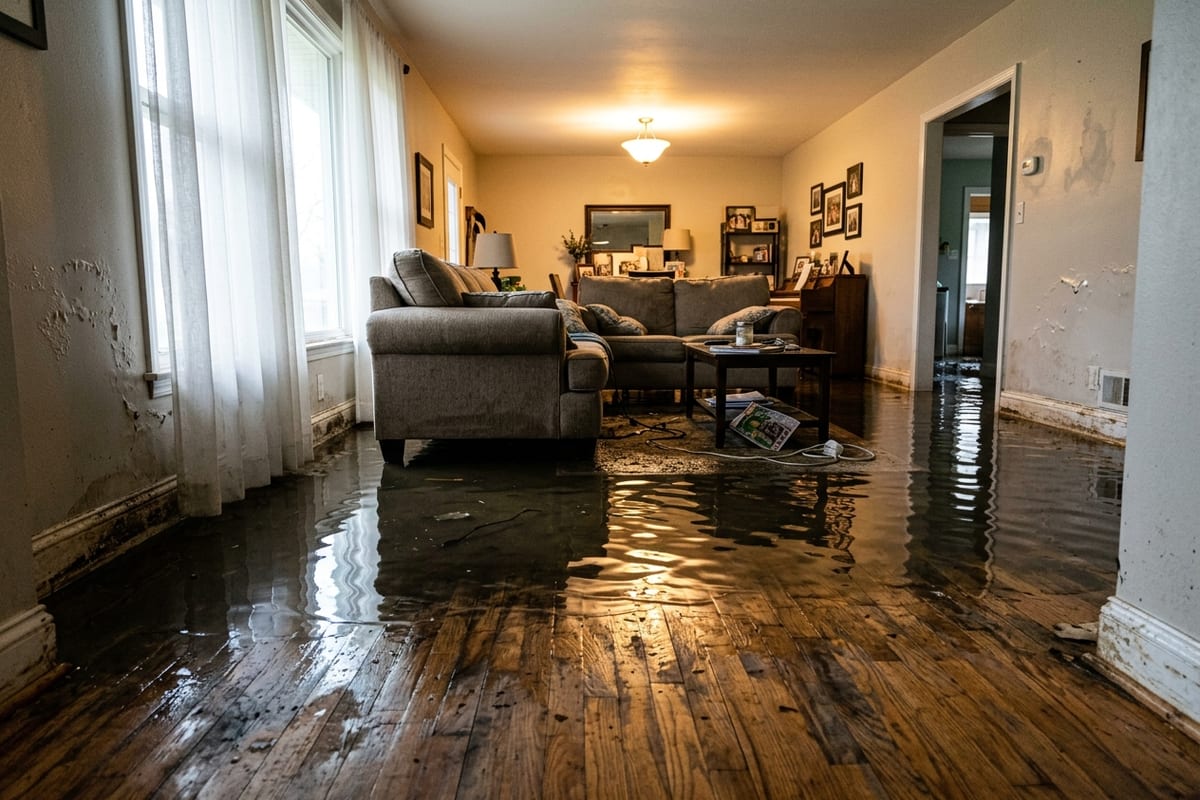
1. Prioritize Electrical & Personal Safety
Before stepping into standing water, determine whether electrical wiring, extension cords, or low wall outlets are submerged. Standing water energized by household electricity is lethal.
If your electrical breaker panel is located in a dry, accessible area (such as a dry garage or exterior wall), shut off power to the affected rooms immediately. If the electrical panel is in a flooded basement or utility closet, do not touch it—evacuate and call your electric utility provider.
2. Locate & Close the Main Water Shutoff Valve
If the flooding is caused by an internal plumbing failure (burst pipe, water heater rupture, or supply line blowout), every second the line flows adds 10 to 20 gallons of water into your home.
Turn your main interior shutoff valve clockwise until it stops. If the interior valve is stuck or missing, proceed to the municipal water meter box at the street curb and use a water meter curb key to rotate the valve 90 degrees.
3. Document the Scene Before Cleanup
Grab your smartphone and record extensive video footage and high-resolution photographs of the water source, maximum water height on baseboards, and all affected furniture and personal property.
This immediate photo evidence is crucial for your homeowners insurance adjuster to prove the flood was sudden and accidental rather than a gradual pre-existing leak.
4. Prevent Furniture & Fabric Secondary Damage
Wooden furniture resting on wet carpet will leach dark wood tannins and dyes directly into carpeting within hours, permanently staining fibers. Fold small squares of aluminum foil or place plastic food containers under wooden and metal furniture legs.
Lift curtains and draperies off wet floors and drape them over coat hangers. Remove loose area rugs, books, electronics, and shoes to dry areas.
5. What the Professional Restoration Crew Does Upon Arrival
When WaterRestore Pro's partner restoration crews arrive, they conduct a full thermal imaging moisture audit to map the boundary of water migration behind walls and underneath subfloors.
Truck-mounted extractors immediately pull standing water out of the structure, followed by the strategic installation of industrial air movers and desiccant dehumidifiers to halt mold germination within the critical 48-hour window.
Frequently Asked Questions
Should I open windows to help dry out a flooded room?+
Only if outdoor relative humidity is lower than indoor humidity (typically under 45%). On humid days, opening windows introduces warm moisture into the home, which accelerates mold colonization. Keep windows closed and let commercial dehumidifiers control the atmosphere.
Can I use my standard household vacuum to suck up flood water?+
No. Standard domestic vacuum cleaners are not rated for wet extraction and create an immediate electrical shock and motor fire hazard. Only industrial, sealed wet extractors should be used.
Standing Water in Your Home? Minutes Count.
Emergency water extraction units are on call 24 hours a day across all major metropolitan service areas. Call now for priority dispatch.