Can Wet Hardwood Floors Be Saved After a Flood?
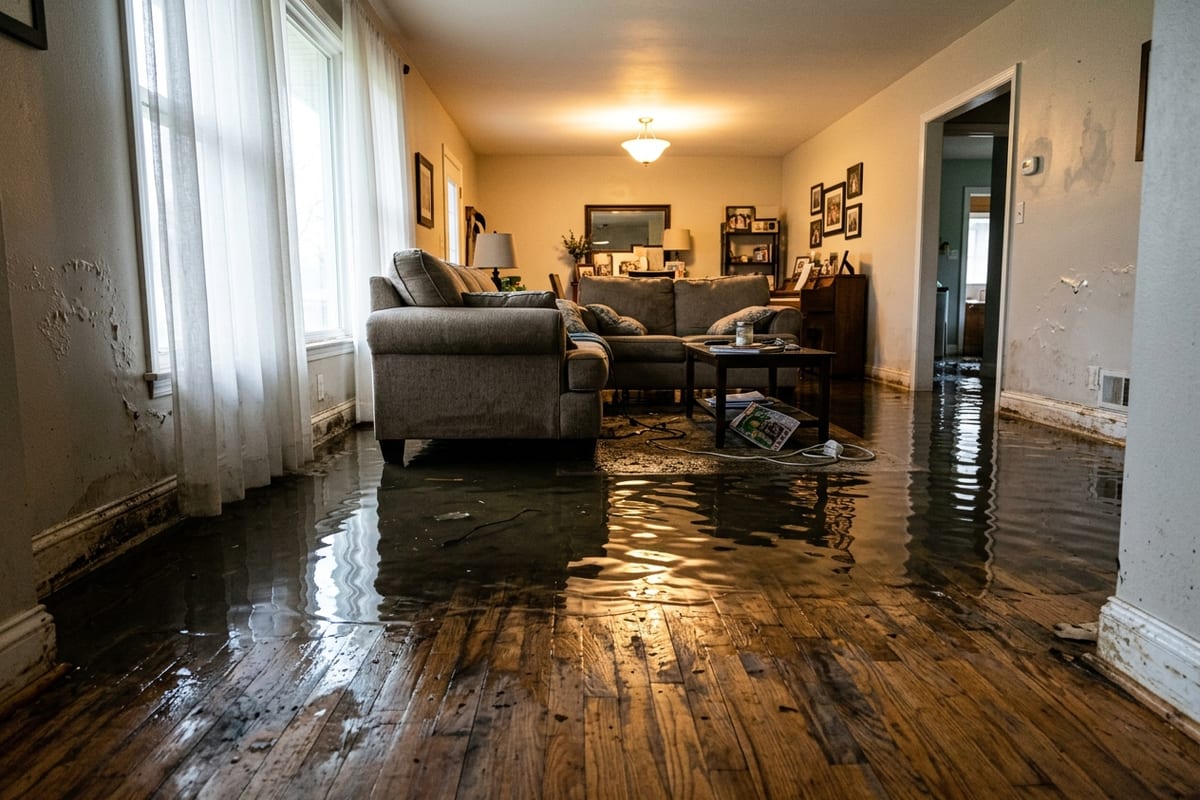
Yes, wet solid hardwood and engineered wood floors can often be completely saved without replacement if specialized negative-pressure vacuum drying mats and desiccant dehumidifiers are deployed within 24 to 48 hours of clean water intrusion.
Understanding Cupping vs. Crowning
**Cupping:** The edges of individual wood planks rise higher than the center, creating a concave profile. This occurs when the bottom of the wood plank absorbs moisture from the damp concrete slab or subfloor faster than the top surface can evaporate.
**Crowning:** The center of the plank bulges higher than the edges. This typically happens if the top surface was prematurely sanded flat while the underside remained saturated.
The Negative-Pressure Vacuum Mat System
Traditional fans cannot draw water trapped beneath tongue-and-groove hardwood planks. Certified restoration crews install commercial vacuum drying mats taped air-tight across the floor.
Heavy-duty vacuum blowers draw continuous suction, pulling moisture vapor up through the wood cells and out of the subfloor into a separation chamber.
Why You Must Never Sand Cupped Floors Immediately
Sanding cupped floorboards while they are still wet is the single most common homeowner mistake. Once the wood eventually dries to normal equilibrium, the sanded planks will shrink, creating severe permanent crowning.
Floors must be dried back to within 2% to 4% of their baseline moisture content before any refinishing or sanding is considered.
Frequently Asked Questions
Can engineered hardwood floors be saved after water damage?+
Engineered hardwood is thinner and more susceptible to adhesive delamination than solid hardwood. However, if water is extracted immediately with vacuum mats before adhesive breaks down, engineered floors can often be salvaged.
Standing Water in Your Home? Minutes Count.
Emergency water extraction units are on call 24 hours a day across all major metropolitan service areas. Call now for priority dispatch.