How Long Does Water Damage Take to Dry Out?
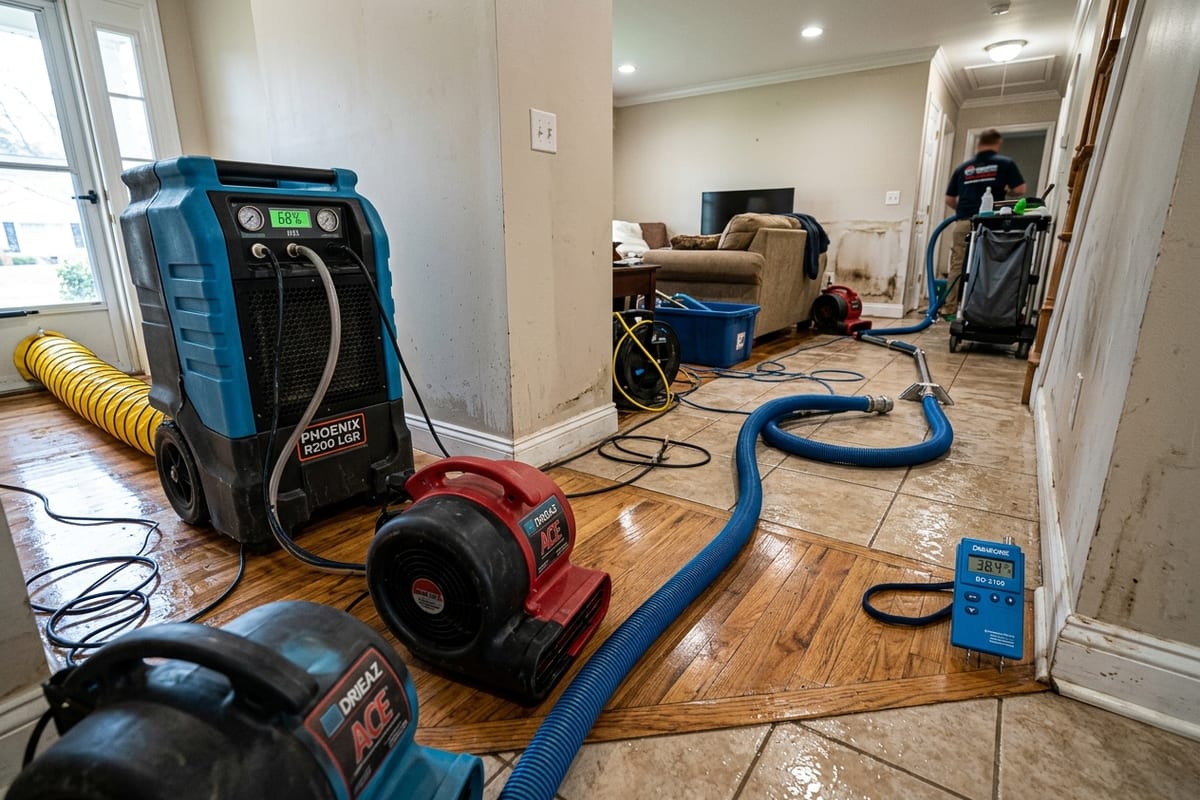
A standard residential water damage event takes between 3 to 5 days to reach dry standard thresholds when dried with commercial LGR dehumidifiers and high-velocity air movers. Saturated concrete slabs and hardwood floors may require 7 to 10 days.
Drying Timeline & Restoration Estimation Matrix
Category 1 (Clean Water)
3 to 5 DaysHigh-velocity centrifugal air movers, Low-Grain Refrigerant (LGR) dehumidifiers, weighted extraction tools.
High Salvageability: Drywall, baseboards, framing, and clean carpets are dried in-place without demolition if addressed within 48h.
Square footage of affected rooms, number of drying units deployed, equipment running days, thermal moisture mapping logs.
Category 2 (Grey Water)
4 to 6 DaysCommercial LGR dehumidifiers, negative air scrubbers with HEPA filtration, botanical antimicrobial ULV foggers.
Selective Salvage: Carpet padding removed and discarded; carpets disinfected; structural framing and subfloor saved.
Padding disposal, antimicrobial applications, targeted flood cuts (24-inch drywall cuts), extended drying duration.
Category 3 (Black Water)
5 to 7+ DaysNegative pressure air scrubbers, desiccant dehumidifiers, hospital-grade biocidal washes, full Level C PPE.
Non-Salvageable: All saturated porous materials (carpet, pad, drywall, insulation) must be removed per health codes.
Hazardous waste disposal, containment barriers, controlled demolition, thorough antimicrobial scrub, reconstruction.
| Water Category | Standard Drying Timeline | Commercial Equipment Deployed | Material Salvageability | Primary Cost Drivers |
|---|---|---|---|---|
| Category 1 (Clean Water) | 3 to 5 Days | High-velocity centrifugal air movers, Low-Grain Refrigerant (LGR) dehumidifiers, weighted extraction tools. | High Salvageability: Drywall, baseboards, framing, and clean carpets are dried in-place without demolition if addressed within 48h. | Square footage of affected rooms, number of drying units deployed, equipment running days, thermal moisture mapping logs. |
| Category 2 (Grey Water) | 4 to 6 Days | Commercial LGR dehumidifiers, negative air scrubbers with HEPA filtration, botanical antimicrobial ULV foggers. | Selective Salvage: Carpet padding removed and discarded; carpets disinfected; structural framing and subfloor saved. | Padding disposal, antimicrobial applications, targeted flood cuts (24-inch drywall cuts), extended drying duration. |
| Category 3 (Black Water) | 5 to 7+ Days | Negative pressure air scrubbers, desiccant dehumidifiers, hospital-grade biocidal washes, full Level C PPE. | Non-Salvageable: All saturated porous materials (carpet, pad, drywall, insulation) must be removed per health codes. | Hazardous waste disposal, containment barriers, controlled demolition, thorough antimicrobial scrub, reconstruction. |
Direct Insurance Billing Notice (Xactimate Pricing Standard):
Restoration contractors utilize Xactimate®—the standardized estimating software used by State Farm, Allstate, Travelers, Liberty Mutual, and all major insurance carriers—ensuring line-item pre-negotiated rates for equipment, labor, and materials.
The 3 Stages of the Structural Drying Curve
Scientific psychrometric structural drying follows three predictable thermodynamic phases:
1. **Initial Surface Evaporation (Day 1):** Heavy water extraction followed by high-velocity air movement evaporates free surface water rapidly, dropping ambient relative humidity.
2. **Bound Moisture Migration (Days 2–3):** Trapped moisture inside wood cell walls and gypsum drywall cores migrates toward the surface via vapor pressure differentials created by dehumidifiers.
3. **Equilibrium Stabilization (Days 4–5):** Deep structural framing reaches balance with target ambient moisture content, confirming structural safety.
Why Material Density Dictates Drying Speed
Drywall and fiberglass insulation are porous and dry relatively quickly if treated within 24 hours, often reaching dry standard in 48 to 72 hours.
In contrast, dense building components like solid oak hardwood flooring, subfloor plywood, and concrete foundation slabs have high moisture retention. Drying a slab-on-grade foundation after a hot slab leak requires specialized desiccant drying mats and 5 to 8 continuous days.
What Happens If Equipment Is Turned Off Early?
Homeowners occasionally turn off commercial air movers at night because of equipment noise. Doing so immediately resets the moisture evaporation cycle.
When airflow stops, relative humidity inside the room spikes back above 60%, allowing trapped bound moisture to re-saturate drywall surfaces and triggering mold colonization.
Frequently Asked Questions
How do restoration contractors know when drying is complete?+
Technicians take daily readings using calibrated pin-type moisture meters comparing the affected material against an unaffected baseline 'dry standard' taken in a dry room of your home. Equipment is removed only when readings match.
Standing Water in Your Home? Minutes Count.
Emergency water extraction units are on call 24 hours a day across all major metropolitan service areas. Call now for priority dispatch.