Water Damage Restoration in Pomona, CA
Pomona is located in the eastern Pomona Valley between the San Gabriel Valley and the Inland Empire. The city combines historic craftsman and Victorian districts with mid-century suburban neighborhoods and modern residential developments. Properties face unique water risks from aging municipal infrastructure, alluvial valley soil shifts, and severe winter mountain runoff.
Pomona, CA Coverage Facts
- Jurisdiction
- Los Angeles County
- Target Response Time
- 45 to 60 Minutes On-Site
- Disaster Coverage
- 24/7, 365 Days a Year
- Covered ZIP Codes
- 91766, 91767, 91768
Housing Architecture & Water Risks in Pomona, CA
Housing stock includes historic raised-foundation homes in Lincoln Park, post-war slab ranches, and contemporary subdivisions. Older neighborhoods feature aging sewer laterals prone to tree root intrusion and heavy clay soil movement that fractures underground water service lines and causes foundation differential settlement.
Key Local Restoration Issues in Pomona
Alluvial Clay Soil Foundation Settling & Pipe Shearing
Pomona Valley's expansive alluvial soils shrink and swell with seasonal rain cycles, shifting concrete foundation slabs and shearing pressurized under-slab copper lines and cast-iron sewer connections.
Aging Sanitary Sewer Line Root Intrusion & Backups
Mature eucalyptus and oak trees penetrate aging vitrified clay sewer laterals across older neighborhoods, causing severe Category 3 blackwater toilet and tub backups during heavy winter rainfall.
San Jose Creek Basin Groundwater Surcharges
Heavy winter precipitation saturates the San Jose Creek watershed, driving local groundwater tables upward and pushing water through cracked concrete basement slabs and low-elevation garage floors.
Insurance Claim Documentation & Billing Guidelines in California
In California, homeowner and commercial water damage insurance claims are governed by the California Insurance Code § 790.03 and the Fair Claims Settlement Practices Regulations (10 CCR § 2695). The California Department of Insurance (CDI) mandates that insurers acknowledge claim notices within 15 calendar days and complete their coverage determinations within 40 calendar days of receiving proof of claim. California law strictly prohibits insurer steering: policyholders have the absolute right to hire any qualified, licensed California C-33 or general building restoration contractor and cannot be compelled to use a carrier-affiliated franchise. Restoration documentation in California requires rigorous adherence to ANSI/IICRC S500 standards, including moisture psychrometric readings (ambient temperature, relative humidity, and grains per pound), moisture probe baselines for drywall and subflooring, and continuous dry logging to verify desiccation before structural closure. Because California HO-3 policies distinguish between sudden plumbing failures and ground surface water intrusion, emergency mitigation teams itemize the specific failure origin (e.g., pressurized supply line rupture, angle stop failure) with high-resolution photographic evidence to expedite claim settlement. The California Department of Insurance (CDI) requires objective, scientifically verifiable loss documentation before carrier disbursements are authorized. In compliance with 10 CCR § 2695 and IICRC S500 desiccation protocols, mitigation contractors compile daily psychrometric logs detailing grains-per-pound extraction rates, thermo-hygrometer readings, and continuous moisture baselines. For Southern and Northern California properties built over concrete slabs or post-and-beam foundations, non-destructive moisture meters verify that structural framing reaches the dry standard prior to wall reinstallation. Mitigation teams coordinate directly with insurance adjusters using standardized Xactimate line items, providing photo inventories of unsalvageable contents and moisture maps to facilitate direct insurance payment while safeguarding policyholders under California anti-steering statutes.
Policyholder Rights & Independent Contractor Selection in California
Under California insurance regulations, residential and commercial property owners maintain the full legal authority to hire any licensed, independent disaster restoration contractor of their choice. Insurance carriers and claims adjusters are prohibited from steering or mandating the use of preferred network vendors. WaterRestore Pro dispatches certified local mitigation specialists who adhere strictly to ANSI/IICRC S500 standards, recording daily psychrometric logs, moisture baselines, and thermal imaging scans. All repair scopes are compiled using standardized Xactimate line items and submitted directly to your insurance company, supporting direct carrier billing and protecting homeowners from upfront costs on covered peril claims.
Common Emergency Calls in Pomona
Local ProtocolWater Damage Restoration→
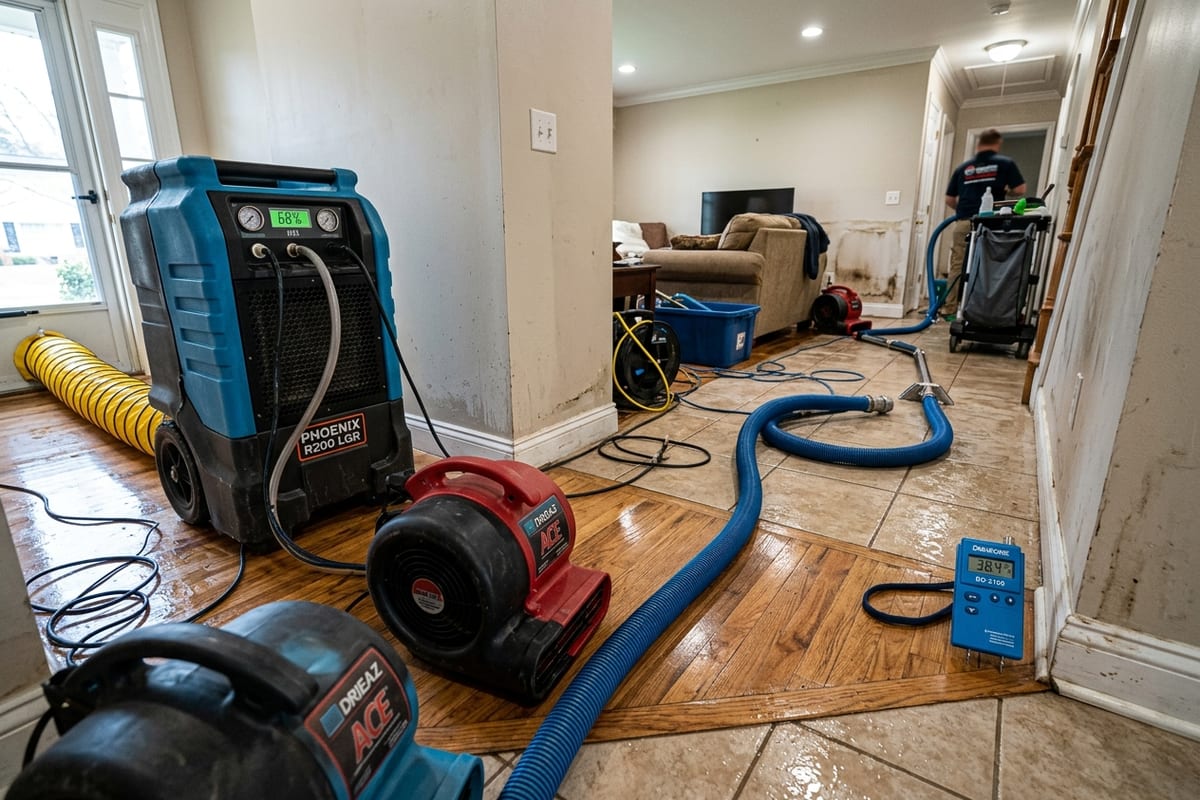
Professional water damage restoration stops progressive structural deterioration, extracts standing water with truck-mounted pumps, and dries internal wall cavities using industrial dehumidifiers within 72 hours to prevent hazardous mold growth.
 Local Protocol
Emergency Water Extraction→
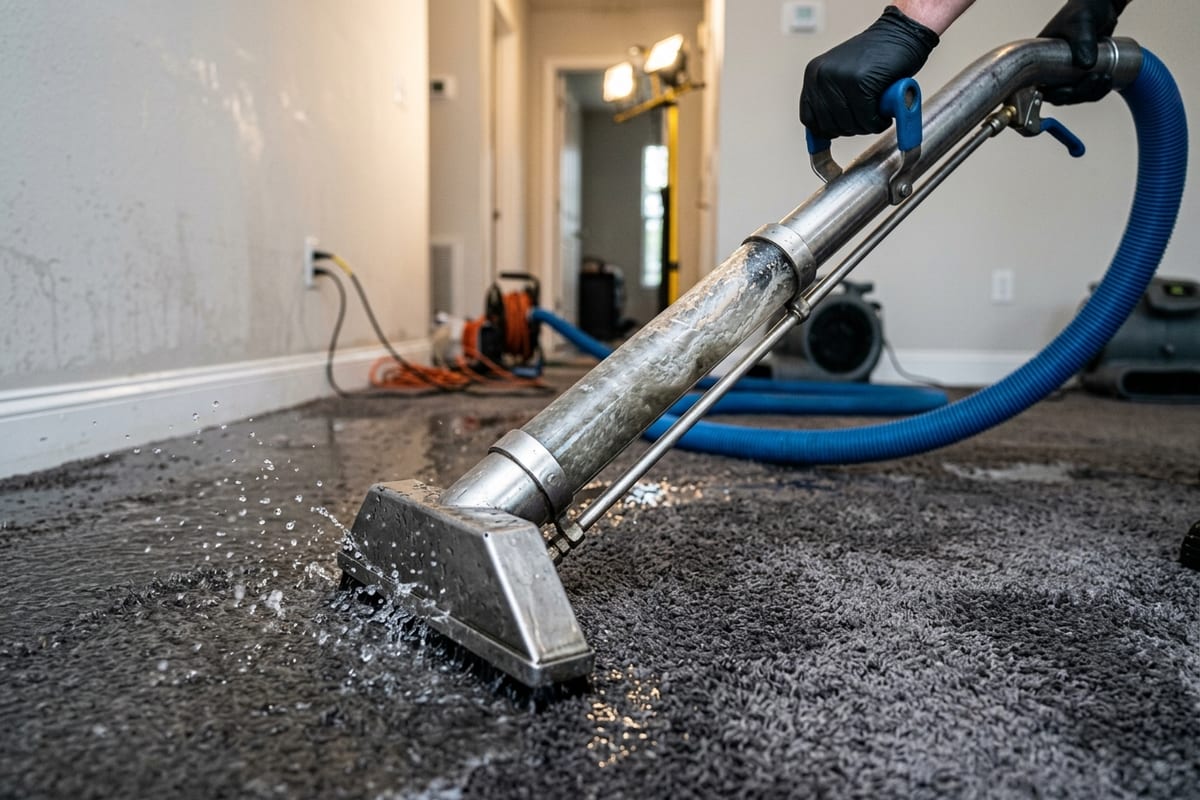
Emergency water extraction uses heavy-duty submersible pumps and truck-mounted vacuum units to physically extract hundreds of gallons of standing water per hour from flooded homes and businesses before structural framing absorbs it.
 Local Protocol
Burst & Frozen Pipe Cleanup→
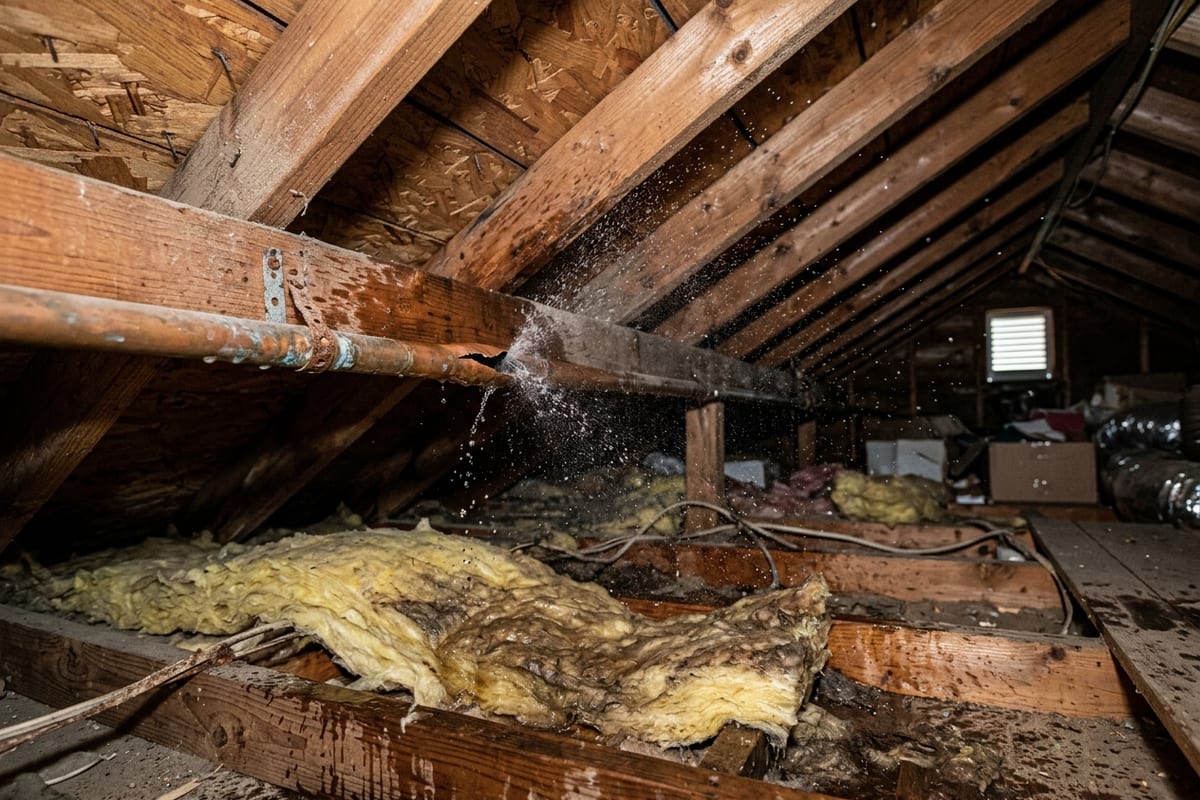
Burst pipe cleanup addresses high-pressure plumbing ruptures in attics, crawlspaces, and interior walls by immediately stopping water flow, extracting water cascading through ceilings, and drying framing to prevent structural rot.
 Local Protocol
Sewage Backup & Biohazard Cleanup→
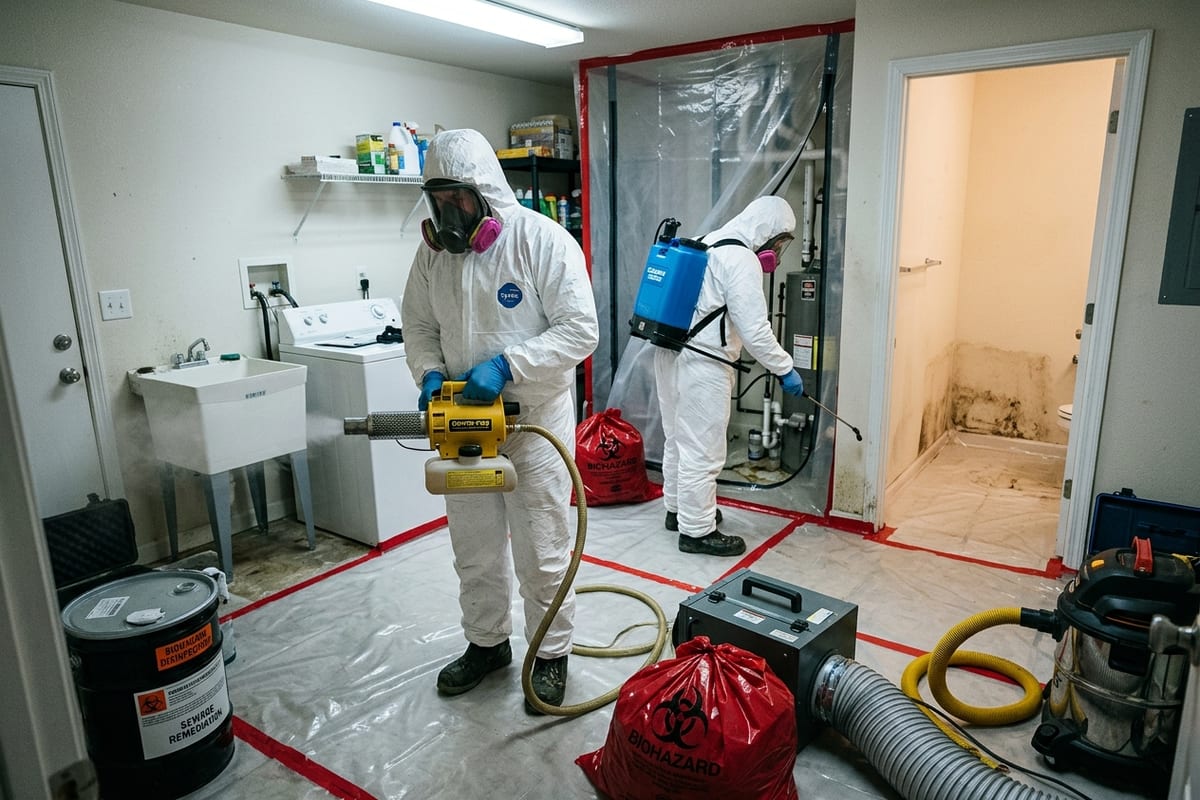
Sewage cleanup safely extracts hazardous Category 3 black water containing dangerous bacteria and pathogens, removes saturated porous building materials, and sanitizes contaminated surfaces with broad-spectrum disinfectants.
Check 45–60 Min Response Time for Your Pomona ZIP Code
WaterRestore Pro dispatches IICRC-certified emergency teams across Los Angeles County 24 hours a day, 365 days a year. Verify rapid on-site coverage for your postal code:
Check Your ZIP Code Coverage
Verify immediate 45–60 minute emergency water extraction dispatch across our 50-state nationwide coverage network.
Frequently Asked Questions in Pomona, CA
Is raw sewage backup considered hazardous in Pomona homes?+
Yes. Sewage backups are classified as Category 3 blackwater containing pathogenic bacteria, viruses, and parasites. Professional certified technicians utilize full personal protective equipment, EPA hospital-grade biocides, and commercial HEPA filtration to safely decontaminate affected structures.
How fast do emergency crews respond to Pomona plumbing emergencies?+
Emergency restoration crews arrive on-site across Pomona and Phillips Ranch within 45 to 60 minutes 24/7, equipped for immediate water extraction and containment.
Nearby Communities We Serve:
Standing Water in Your Home? Minutes Count.
Emergency water extraction units are on call 24 hours a day across all major metropolitan service areas. Call now for priority dispatch.